Agilent Lithium-Ion Battery Complete Lifecycle Solutions
As the demand for battery manufacturing and research grows… Agilent is here to help.
Decarbonization is driving the need for energy storage, and lithium-ion batteries are critical to the infrastructure and mobility needed to deliver our energy needs. Agilent offers support in material testing that is critical to the performance, longevity, and safety of batteries during the stringent processes and quality control that is required when manufacturing batteries.
Analytical Measurements and Vacuum Solutions for the Battery Industry
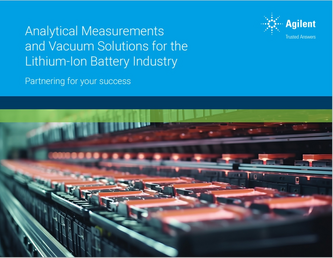
Interested in finding out how analytical measurement and vacuum processes play a part in ensuring safety, performance and manufacturing efficiency across the battery value-chain:
This primer provides more insight and information.
DownloadA Practical Guide To Elemental Analysis of Lithium Ion Battery Materials Using ICP-OES
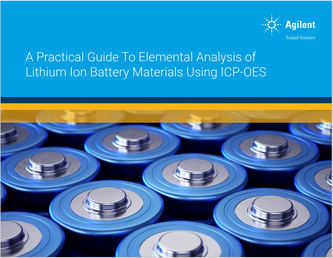
This eBook offers practical solutions to common problems associated with ICP-OES analysis of raw materials and battery component materials.
DownloadAnode Manufacturing

Lithium-Ion battery (LiB) anodes have relatively straightforward construction and chemistry. Typically, anodes are simply graphite coated copper foil. Much research is focused on reducing the weight and manufacturing costs of this anode material. Hybrid graphite-silicon coatings can offer higher energy density, while copper-plated metals and polymers offer lower cost and lighter anode substrates.
Why start from scratch if you don't need to? Agilent has a fully developed standard operating procedure (SOP) for impurity testing of graphite and silicon-graphite anode materials (as per the GB/T 24533-2019 method). Supplied in Word format, the SOP just needs to be copied and pasted into your company's template.
View a sample of the SOP.Cathode Manufacturing

The cathode in a lithium-ion battery (LiB) plays a major role in the performance. The chemical composition of the cathode, or precursor cathode active material (pCAM), and its mechanical construction will have an impact on battery characteristics and specifications such as safety, longevity, and energy density.
DownloadElectrolyte Manufacturing
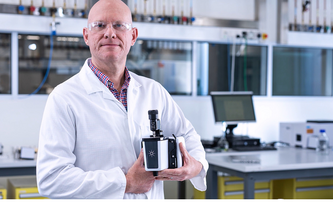
Optimal battery performance and longevity require the electrolyte to have the correct balance of lithium salt, organic solvents, and protective and performance enhancing additives. Confirming starting material purity, precursor mixtures and electrolyte formulations are important quality control steps, particularly for lithium salts, the costliest component (by weight) of electrolyte slurries.
View videoSeparator manufacturing
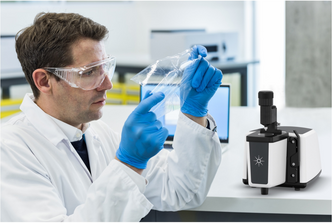
The separator in a lithium-ion battery (LiB) electrically isolates the anode from the cathode while allowing a flow of lithium ions between the two electrodes. The design and quality of the separator impacts battery safety, thermal stability, and overall performance.
DownloadCell Assembly & Leak Testing

In the final stage of battery production, individual cells are combined into battery packs. Production requirements vary, depending on final battery configuration and application. However, as with other stages of production, high quality must be maintained to ensure optimal lifetime, performance, and safety. Leak tightness of both the battery module and final battery assembly are critical.
Download