Environmental testing solutions from SCIEX:
Designed around regulations to safeguard human and environmental health.
Traditional methods for environmental testing have some drawbacks, including extensive sample preparation protocols, a lack of sensitivity and limits on the number and classes of compounds that can be targeted per analysis. LC-MS/MS environmental and water testing solutions from SCIEX can help you overcome these challenges.
SCIEX environmental testing solutions can be used to analyze a variety of sample types, such as industrial effluents, agricultural and urban runoff, municipal wastewater, soil, air and landfill leachates. Methods are provided for detecting many common pollutants, from novel chemical species to low-level regulated contaminants.
The SCIEX clinical diagnostic portfolio is For In Vitro Diagnostic Use. Rx Only. Product(s) not available in all countries. For information on availability, please contact your local sales representative or refer to www.sciex.com/diagnostics. All other products are For Research Use Only. Not for use in Diagnostic Procedures.
Trademarks and/or registered trademarks mentioned herein, including associated logos, are the property of AB Sciex Pte. Ltd. or their respective owners in the United States and/or certain other countries (see www.sciex.com/trademarks).
© 2024 DH Tech. Dev. Pte. Ltd. MKT-34201-A
Direct analysis of polar pesticides in water: a routine accredited method
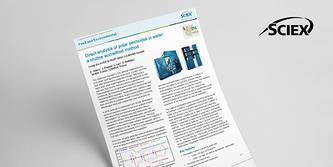
Polar pesticides are some of the most commonly used agricultural products globally, but present significant challenges in their analysis. This SCIEX solution removes the complexity of sample preparation, shows excellent separation and robustness and has become the go-to method for routine accredited water labs.
Read the technical note nowAn ultra-high sensitivity analysis of nitrosamines in multiple water sources

Nitrosamines have been a cause for concern for years, with some known to be genotoxic (carcinogenic), yet current regulations for these chemicals in water vary widely across regions. This SCIEX method is designed to provide drinking water companies with a sensitive method to meet the most challenging anticipated regulations.
Read the technical note nowTargeted quantitation and screening of multi-class chemical pollutants (PPCPs, pesticides and illicit drugs) in coastal environments
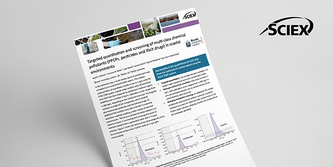
Insufficient contaminant degradation within at treatment and the discharge of untreated sewage has increased concern around the impact of chemical exposure to the environment. Here, the SCIEX solution for water contaminants has been used to extensively monitor harbour water with the aim of improving understanding of the problem.
Read the technical note nowComprehensive methods for drinking water analysis based on European Directive 2020/2184

The European Drinking Water Directive has the aims to protect people and the environment from the harmful effects of contamination and to improve access to drinking water. Many challenges are faced by water testing laboratories required to meet these regulations, but SCIEX solutions, which are easy to implement, help ensure that they can.
Read the technical note nowDirect aqueous analysis of pesticides and PPCPs in drinking and bottled water at parts per trillion levels
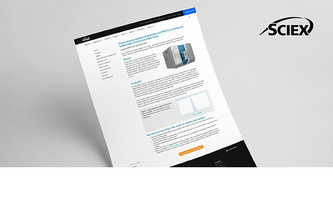
Water testing laboratories need highly sensitive instrumentation to quantify beyond PCV limits with precision and confidence and handle the challenge of often complex water matrices. SCIEX solutions are used to test several types of water samples for hundreds of contaminants, including pesticides, pharmaceuticals and personal care products.
Read the technical note nowSCIEX 7500+ system

Setting a new standard for instrument resilience.
The SCIEX 7500+ system is a triple quadrupole engineered to maintain our highest sensitivity for up to twice as long in complex matrices.
Learn moreZenoTOF 7600+ system

Take quantitative accuracy to the next level. Combine fast scanning and sensitivity on a Zeno trap-enabled QTOF system to maximize the total number of high-quality MS/MS spectra generated per cycle. Extend the depth and certainty of quantitative measurements to unravel the complexity of proteomics samples.
Learn more