Maximize Your Laboratory’s Revenue with New Agilent GC/MS Solutions
When one instrument goes down, it can cost your lab thousands of dollars per day...
Want to minimize that unexpected downtime? Agilent's new GC/MS solutions – with instrument intelligence, self-cleaning hardware, and diagnostic software – aim to maximize productivity and revenue. Invest wisely in your lab today and discover what’s possible with the latest features of the new Agilent 5977C GC/MSD, 7000E GC/TQ, and 7010C GC/TQ systems.
Agilent Inert Plus GC/MS System with HydroInert Source
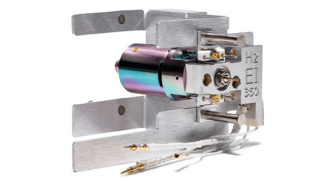
With increased price and pressure on the helium market, laboratories are looking for a more sustainable alternative and exploring the option of hydrogen (H2) carrier gas. The benefits of hydrogen in gas chromatography are widely accepted, but hydrogenation and dechlorination reactions can and do occur in the mass spectrometer electron ionization source. Now, a newly designed extractor source for the Agilent 5977B Inert Plus GC/MSD and Agilent 7000D/E Inert Plus triple quadrupole GC-MS systems address these hydrogen-related issues and can improve performance with hydrogen carrier gas in GC/MS and GC-MS/MS.
More informationAnalysis of Semivolatile Organic Compounds Using Hydrogen Carrier Gas and the Agilent HydroInert Source by Gas Chromatography/Mass Spectrometry

Gas chromatography/mass spectrometry is integral to the analysis of SVOCs in environmental matrices. This application note demonstrates the ability of the HydroInert source to allow the use of H2 carrier gas, while retaining critical functional groups, such as nitro groups and halogens. The Agilent HydroInert source retains the ability to analyze a wide calibration range (0.1 to 100 µg/mL) and meet the US Environmental Protection Agency (EPA) method 8270 calibration criteria when using hydrogen carrier gas.
More informationAnalysis of Semivolatile Organic Compounds with Hydrogen Carrier Gas and HydroInert Source by Gas Chromatography/Triple Quadrupole Mass Spectrometry (GC/MS/MS)

Some methods used in GC/MS to analyze SVOCs in environmental matrices have extended instrumentation to include gas chromatography/triple quadrupole mass spectrometry (GC/MS/MS) as users push towards lower detection limits. Here, an Agilent 7000E Inert Plus triple quadrupole GC/MS system and an Agilent HydroInert source retained the ability to analyze a wide calibration range – for some compounds from 0.02 to 100 µg/mL – while also meeting the EPA method 8270 calibration criteria when using hydrogen carrier gas.
More informationVolatile Organic Compounds Analysis in Drinking Water with Headspace GC/MSD Using Hydrogen Carrier Gas and HydroInert Source

In this app note, an Agilent 8890/5977C GC/MSD system coupled with an Agilent 8697 headspace sampler was successfully used with hydrogen carrier gas for the analysis of volatile organic compounds (VOCs) in drinking water. In addition to the new Hydrolnert source, the chromatographic conditions were optimized to provide separation of 80 volatile compounds in 7 minutes. The results demonstrated excellent results for the analysis of VOCs in drinking water.
More informationFive Keys to Unlock Maximum Performance in the Analysis of Over 200 Pesticides in challenging Food Matrices by GC/MS/MS

This application note describes five best practices to enhance analytical performance in the analysis of over 200 pesticides in challenging matrices including spinach, walnut, and cayenne pepper. The novel Agilent Captiva EMR passthrough cleanup procedure following the Agilent QuEChERS extraction enabled a cleaner matrix background. It was shown that the Agilent 8890/7000E triple quadrupole GC/MS system achieved excellent linearity over a concentration range of 0.1 to 5,000 ppb, and demonstrated superior sensitivity yielding a higher signal-to-noise ratio at lower concentrations.
More informationA Fast and Robust GC/MS/MS Analysis of 203 Pesticides in 10 Minutes in Spinach

This application note describes two approaches for achieving robust, multiresidue pesticide analysis in 10 minutes by GC/MS/MS, while maintaining sufficient chromatographic resolution for the analysis of over 200 pesticides in spinach – a challenging high chlorophyll, fresh matrix. The results demonstrate that the Agilent 7000E and 7010C triple quadrupole GC/MS systems delivered excellent linearity over a concentration range of 0.1 to 1,000 parts per billion (ppb). The method was robust, with 700 consecutive injections of a spinach extract, spiked with pesticides at 20 ppb, that spanned over 175 hours of continuous running of the GC/TQ.
More informationDynamic MRM/Scan Mode: Adding More Confidence to Sensitive Quantitation in Complex Foods by Triple Quadrupole GC/MS (GC/TQ)
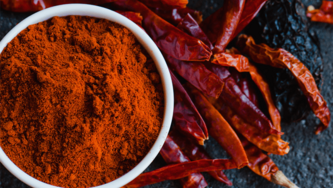
Here, novel simultaneous dynamic multiple reaction monitoring (dMRM) and scan (dMRM/scan) data acquisition mode for triple quadrupole gas chromatography mass spectrometry (GC/TQ) was used to analyze pesticides in challenging food matrices. The simultaneous dMRM/scan capability enables identification of the unknown compounds and retrospective analysis, while maintaining sensitivity and dynamic range of the method comparable to a conventional dMRM analysis. Additionally, scan data enables more confidence in compound identification by library spectrum matching. Finally, the full scan data allows the analyst to evaluate the sample matrix to ensure the most efficient performance of the GC/TQ system.
More informationAnalysis of Semivolatile Organic Compounds with US EPA 8270E Using the Agilent 7000E Triple Quadrupole GC/MS
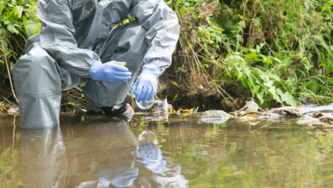
This application note illustrates a sensitive method used to analyze SVOCs on an Agilent 7000E triple quadrupole GC/MS system (GC/TQ). GC/TQ has excellent selectivity – afforded by multiple reaction monitoring mode – and sensitivity – which reduces waste and decreases costs associated with sample preparation. And a primary objective of this work was to demonstrate the ability of a GC/TQ to detect SVOCs at low levels to meet these laboratory needs while maintaining an excellent dynamic range.
More information