Conexiant
Login
  • The Analytical Scientist
  • The Cannabis Scientist
  • The Medicine Maker
  • The Ophthalmologist
  • The Pathologist
  • The Traditional Scientist
The Analytical Scientist
  • Explore

    Explore

    • Latest
    • News & Research
    • Trends & Challenges
    • Keynote Interviews
    • Opinion & Personal Narratives
    • Product Profiles
    • App Notes
    • The Product Book

    Featured Topics

    • Mass Spectrometry
    • Chromatography
    • Spectroscopy

    Issues

    • Latest Issue
    • Archive
  • Topics

    Techniques & Tools

    • Mass Spectrometry
    • Chromatography
    • Spectroscopy
    • Microscopy
    • Sensors
    • Data and AI

    • View All Topics

    Applications & Fields

    • Clinical
    • Environmental
    • Food, Beverage & Agriculture
    • Pharma and Biopharma
    • Omics
    • Forensics
  • People & Profiles

    People & Profiles

    • Power List
    • Voices in the Community
    • Sitting Down With
    • Authors & Contributors
  • Business & Education

    Business & Education

    • Innovation
    • Business & Entrepreneurship
    • Career Pathways
  • Events
    • Live Events
    • Webinars
  • Multimedia
    • Video
    • Content Hubs
Subscribe
Subscribe

False

The Analytical Scientist / App Notes / 2017 / 10 reasons why academics should be using multi-detector SEC for polymer characterisation

10 reasons why academics should be using multi-detector SEC for polymer characterisation

03/30/2017

Share

Featured Image

Introduction

Polymers are fundamental in our everyday life. Thanks to their numerous properties they can be used in plastics, fibres, adhesives or rubber, but polymers are also in our bodies in the form of proteins. The large number of polymers produced nowadays by both the industrial and the academic world includes polymers with different chemical natures and structure. Polymer scientists are constantly developing new types of synthetic polymers and modifying natural polymers to create materials with a wide variety of properties. The continuous research to produce better performing polymers has driven the academic world to synthesise novel polymers by means of several polymerisation techniques. The polymer synthesis process is continuously developing in order to produce model polymers with the desired characteristics. A ‘perfect’ polymer or, at least, a well-characterised polymer, is what scientists need in order to gain a better understanding of the relationship between structure and properties. Being able to correlate the polymers molecular characteristics with their physical properties leads to a better formulation and application of the polymers produced. Thus, it is evident that the full characterisation of the materials synthesised is fundamental for polymer scientists. The use of multi-detector Size Exclusion Chromatography (SEC), allows researchers to measure the absolute molecular weight, dispersity and structure of their materials. Having accurate and precise information about the polymers produced quickly is fundamental for the synthesis and modification of novel materials, which can be tailored to have desired physical properties.

SEC, also known as Gel Permeation Chromatography (GPC), is a liquid chromatography technique commonly used for the characterisation of polymers. The analysis of the materials is based on a separation mechanism that involves the distribution of the molecules between the pores of the column and the eluent. The distribution of the molecules within the pores and the eluent is a diffusion mechanism and the molecules do not interact with the column. This leads to the separation of the polymers in terms of their molecular size, as the name Size Exclusion Chromatography suggests, and not in terms of their molecular weight. The technique is carried out under good solvent conditions and can utilise a variety of good solvents for different types of polymers making this a universal technique that most polymer scientists find useful to have. This white paper lists ten reasons why an academic scientist should use a multi-detector SEC system.
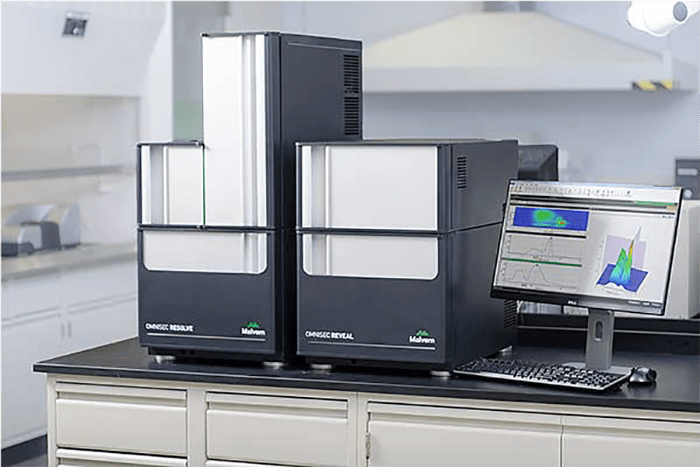
Figure 1 - Advanced multi-detector SEC system: OMNISEC
>> Download the full Application Note as PDF

Newsletters

Receive the latest pathologist news, personalities, education, and career development – weekly to your inbox.

Newsletter Signup Image

Explore More in Pathology

Dive deeper into the world of pathology. Explore the latest articles, case studies, expert insights, and groundbreaking research.

False

Advertisement

Recommended

False

Related Content

Solvents & Inorganics for accurate, brilliant results

January 9, 2017

Now that the life science business of Merck KGaA, ...

Discovery of Sulfur-Containing Compounds in Broccoli with GC-TOFMS

January 16, 2017

Analyzing samples of a raw broccoli and a broccoli that was processed to be sold frozen we show the sample-distinguishing differences that occur during food processing...

Aquastar® reagents for brilliant Karl Fischer titration results

January 23, 2017

Determining the water content of gases, liquids and solids can be achieved with a high degree of accuracy using Karl Fischer titration together with our Aquastar® reagents and standards from Merck...

REACH Polymer Status determined with GPC/SEC

January 27, 2017

Polymers are “special substances” in terms of REACH...

Thank you for reading The Analytical Scientist

To continue reading, either register for a free account below or login.

Register or Login

False

The Analytical Scientist
Subscribe

About

  • About Us
  • Work at Conexiant Europe
  • Terms and Conditions
  • Privacy Policy
  • Advertise With Us
  • Contact Us

Copyright © 2026 Texere Publishing Limited (trading as Conexiant), with registered number 08113419 whose registered office is at Booths No. 1, Booths Park, Chelford Road, Knutsford, England, WA16 8GS.