Conexiant
Login
  • The Analytical Scientist
  • The Cannabis Scientist
  • The Medicine Maker
  • The Ophthalmologist
  • The Pathologist
  • The Traditional Scientist
The Analytical Scientist
  • Explore

    Explore

    • Latest
    • News & Research
    • Trends & Challenges
    • Keynote Interviews
    • Opinion & Personal Narratives
    • Product Profiles
    • App Notes
    • The Product Book

    Featured Topics

    • Mass Spectrometry
    • Chromatography
    • Spectroscopy

    Issues

    • Latest Issue
    • Archive
  • Topics

    Techniques & Tools

    • Mass Spectrometry
    • Chromatography
    • Spectroscopy
    • Microscopy
    • Sensors
    • Data and AI

    • View All Topics

    Applications & Fields

    • Clinical
    • Environmental
    • Food, Beverage & Agriculture
    • Pharma and Biopharma
    • Omics
    • Forensics
  • People & Profiles

    People & Profiles

    • Power List
    • Voices in the Community
    • Sitting Down With
    • Authors & Contributors
  • Business & Education

    Business & Education

    • Innovation
    • Business & Entrepreneurship
    • Career Pathways
  • Events
    • Live Events
    • Webinars
  • Multimedia
    • Video
    • Content Hubs
Subscribe
Subscribe

False

The Analytical Scientist / App Notes / 2017 / Rapid forensic analysis of fire debris using headspace sampling onto sorbent tubes with TD–GC–MS

Rapid forensic analysis of fire debris using headspace sampling onto sorbent tubes with TD–GC–MS

11/15/2017

Share

Featured Image
Summary

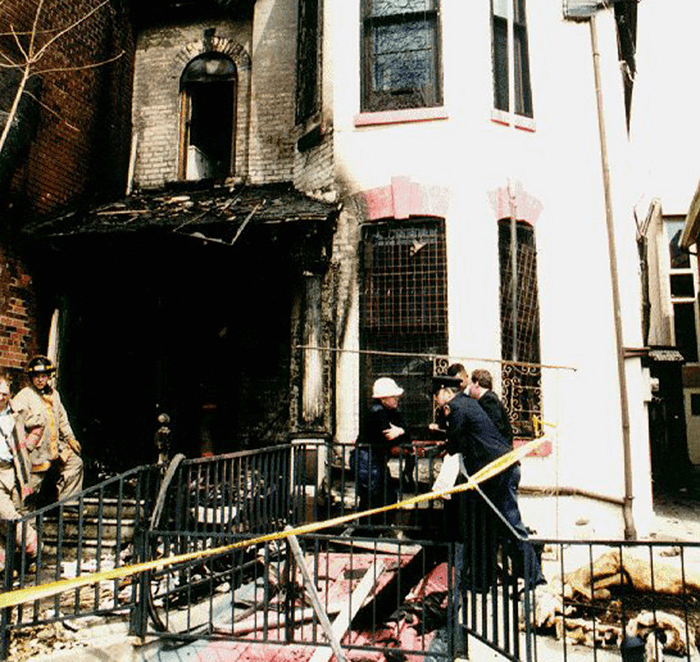
This Application Note describes the analysis of ignitable liquid residues (ILRs) from fire debris, using static or dynamic headspace sampling onto sorbent tubes, in conjunction with thermal desorption–gas chromatography–mass spectrometry (TD–GC–MS). Key points demonstrated are the ease with which samples can be compared and conditions optimised, the benefits of sample re-collection for repeat analysis, and the very low levels of carryover (even for heavy petroleum distillates).

Introduction

Analysis of fire debris offers vital evidence to forensic studies, because the detection of accelerants in ignitable liquid residues (ILRs) can indicate that the fire was not accidental but the result of arson. Various methodologies are used for such analyses, and some of these are described in ASTM methods.1–5 The oldest method, direct solvent extraction,1 as well as having the drawbacks of solvent use (such as cost and risk of sample contamination) involves the destruction of the sample. Methods that preserve the sample are therefore increasingly favoured, especially those using static2 or dynamic3 collection of sample headspace onto activated charcoal strips,4 SPME fibres,5 PLOT columns6 or sorbent tubes.7–9 Sorbent tubes are the most versatile of these sampling methods, and are widely used for sampling headspace in many fields, in conjunction with thermal desorption (TD) pre-concentration and gas chromatography–mass spectrometry (GC–MS) analysis. Key benefits of sorbent tubes for forensic applications are the low detection limits (due to the large sorbent area), and quantitative analysis of C3 to C44 without analyte bias. There are also several practical advantages – the use of sorbent tubes completely eliminates the issues of solvent cost and disposal, they are much less likely than SPME fibres to be damaged due to operator error or incorrect storage, and automated sequential desorption of up to 100 tubes is easily achieved using modern instrumentation. In this Application Note, we illustrate the advantages of sorbent-tube sampling and TD–GC–MS analysis for the investigation of ILRs in fire debris. Specifically, we highlight the ability of TD to interface with a variety of sampling devices – in this case, collection of static headspace vapours using a manually-operated pump, and dynamic sampling with a microchamber device.

>> Download the full Application Note as PDF

Newsletters

Receive the latest pathologist news, personalities, education, and career development – weekly to your inbox.

Newsletter Signup Image

Explore More in Pathology

Dive deeper into the world of pathology. Explore the latest articles, case studies, expert insights, and groundbreaking research.

False

Advertisement

Recommended

False

Related Content

Solvents & Inorganics for accurate, brilliant results

January 9, 2017

Now that the life science business of Merck KGaA, ...

Discovery of Sulfur-Containing Compounds in Broccoli with GC-TOFMS

January 16, 2017

Analyzing samples of a raw broccoli and a broccoli that was processed to be sold frozen we show the sample-distinguishing differences that occur during food processing...

Aquastar® reagents for brilliant Karl Fischer titration results

January 23, 2017

Determining the water content of gases, liquids and solids can be achieved with a high degree of accuracy using Karl Fischer titration together with our Aquastar® reagents and standards from Merck...

REACH Polymer Status determined with GPC/SEC

January 27, 2017

Polymers are “special substances” in terms of REACH...

Thank you for reading The Analytical Scientist

To continue reading, either register for a free account below or login.

Register or Login

Affiliations:

Specialties:

Areas of Expertise:

View Full Profile Follow
Contributions:

False

The Analytical Scientist
Subscribe

About

  • About Us
  • Work at Conexiant Europe
  • Terms and Conditions
  • Privacy Policy
  • Advertise With Us
  • Contact Us

Copyright © 2026 Texere Publishing Limited (trading as Conexiant), with registered number 08113419 whose registered office is at Booths No. 1, Booths Park, Chelford Road, Knutsford, England, WA16 8GS.