Conexiant
Login
  • The Analytical Scientist
  • The Cannabis Scientist
  • The Medicine Maker
  • The Ophthalmologist
  • The Pathologist
  • The Traditional Scientist
The Analytical Scientist
  • Explore

    Explore

    • Latest
    • News & Research
    • Trends & Challenges
    • Keynote Interviews
    • Opinion & Personal Narratives
    • Product Profiles
    • App Notes
    • The Product Book

    Featured Topics

    • Mass Spectrometry
    • Chromatography
    • Spectroscopy

    Issues

    • Latest Issue
    • Archive
  • Topics

    Techniques & Tools

    • Mass Spectrometry
    • Chromatography
    • Spectroscopy
    • Microscopy
    • Sensors
    • Data and AI

    • View All Topics

    Applications & Fields

    • Clinical
    • Environmental
    • Food, Beverage & Agriculture
    • Pharma and Biopharma
    • Omics
    • Forensics
  • People & Profiles

    People & Profiles

    • Power List
    • Voices in the Community
    • Sitting Down With
    • Authors & Contributors
  • Business & Education

    Business & Education

    • Innovation
    • Business & Entrepreneurship
    • Career Pathways
  • Events
    • Live Events
    • Webinars
  • Multimedia
    • Video
    • Content Hubs
Subscribe
Subscribe

False

The Analytical Scientist / App Notes / 2017 / Top tips for avoiding particle sizing failures with your laser diffraction method

Top tips for avoiding particle sizing failures with your laser diffraction method

06/02/2017

Share

Featured Image

Abstract

In this whitepaper, we provide some helpful tips on how to develop a robust method that will deliver reliable and reproducible data, efficiently, every time it is used. ISO13320, the standard for laser diffraction places considerable emphasis on the importance of method development, arguably ‘the last expert task’ associated with laser diffraction, and there is a wealth of helpful information in the public domain. Here we focus on what you really need to know to develop a new method, to troubleshoot if things go wrong, and the tools that can be helpful.

Introduction

Particle size defines the performance of a wide range of different products, including cement, paints, inks, metal powders, cosmetics, foods and drinks. Measuring relevant particle size data is therefore essential in many industries, with laser diffraction usually the technique of choice. Fast, highly automated and suitable for measurement across a broad size range, 0.01 to 3500 μm, modern laser diffraction systems have reduced particle sizing to a matter of sample loading and push button operation, providing that a suitable method is in place. 

Control sampling

Sampling, the first step in any analysis, is now the greatest potential source of error for a laser diffraction measurement. Exerting control at this stage is essential to measure representative data.
Obtaining a representative sample from a larger bulk is a key challenge with any laboratory-based particle characterization technique. With modern laser diffraction particle size analyzers sampling is now the greatest potential source of error, especially when measuring large particles and/or when the specification is based on size parameters close to the extremes of the distribution. This is because the technique is volume-based and consequently extremely sensitive to small changes in the amount of coarse particles within a sample. The effect of sampling on reproducibility increases with particle size and with the width of the size distribution, as the volume of sample required to ensure representative sampling of the coarse particle fraction increases. For this reason, it can become necessary to measure a relatively large sample (often greater than 1-2 g) in order to ensure reproducible results. Further detailed discussion of sampling, a topic in its own right, is beyond the scope of this paper but Sampling for particle size analysis [2] is a great source of information for those requiring more detail.
>> Download the full Application Note as PDF

Newsletters

Receive the latest pathologist news, personalities, education, and career development – weekly to your inbox.

Newsletter Signup Image

Explore More in Pathology

Dive deeper into the world of pathology. Explore the latest articles, case studies, expert insights, and groundbreaking research.

False

Advertisement

Recommended

False

Related Content

Solvents & Inorganics for accurate, brilliant results

January 9, 2017

Now that the life science business of Merck KGaA, ...

Discovery of Sulfur-Containing Compounds in Broccoli with GC-TOFMS

January 16, 2017

Analyzing samples of a raw broccoli and a broccoli that was processed to be sold frozen we show the sample-distinguishing differences that occur during food processing...

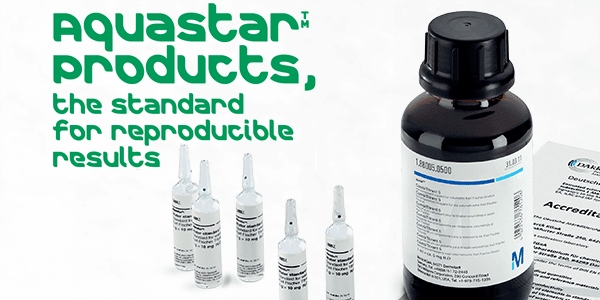
Aquastar® reagents for brilliant Karl Fischer titration results

January 23, 2017

Determining the water content of gases, liquids and solids can be achieved with a high degree of accuracy using Karl Fischer titration together with our Aquastar® reagents and standards from Merck...

REACH Polymer Status determined with GPC/SEC

January 27, 2017

Polymers are “special substances” in terms of REACH...

Thank you for reading The Analytical Scientist

To continue reading, either register for a free account below or login.

Register or Login

False

The Analytical Scientist
Subscribe

About

  • About Us
  • Work at Conexiant Europe
  • Terms and Conditions
  • Privacy Policy
  • Advertise With Us
  • Contact Us

Copyright © 2025 Texere Publishing Limited (trading as Conexiant), with registered number 08113419 whose registered office is at Booths No. 1, Booths Park, Chelford Road, Knutsford, England, WA16 8GS.