Conexiant
Login
  • The Analytical Scientist
  • The Cannabis Scientist
  • The Medicine Maker
  • The Ophthalmologist
  • The Pathologist
  • The Traditional Scientist
The Analytical Scientist
  • Explore

    Explore

    • Latest
    • News & Research
    • Trends & Challenges
    • Keynote Interviews
    • Opinion & Personal Narratives
    • Product Profiles
    • App Notes
    • The Product Book

    Featured Topics

    • Mass Spectrometry
    • Chromatography
    • Spectroscopy

    Issues

    • Latest Issue
    • Archive
  • Topics

    Techniques & Tools

    • Mass Spectrometry
    • Chromatography
    • Spectroscopy
    • Microscopy
    • Sensors
    • Data and AI

    • View All Topics

    Applications & Fields

    • Clinical
    • Environmental
    • Food, Beverage & Agriculture
    • Pharma and Biopharma
    • Omics
    • Forensics
  • People & Profiles

    People & Profiles

    • Power List
    • Voices in the Community
    • Sitting Down With
    • Authors & Contributors
  • Business & Education

    Business & Education

    • Innovation
    • Business & Entrepreneurship
    • Career Pathways
  • Events
    • Live Events
    • Webinars
  • Multimedia
    • Video
    • Content Hubs
Subscribe
Subscribe

False

The Analytical Scientist / App Notes / 2018 / The Do’s and Don’ts of Working with Purified Water

The Do’s and Don’ts of Working with Purified Water

09/10/2018

Share

Featured Image

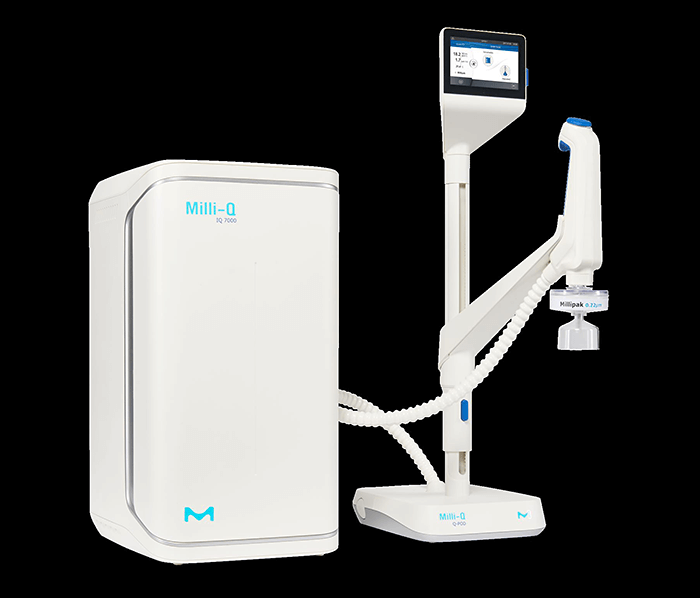
Estelle Riche and Stephane Mabic, Merck, Milli-Q® Lab Water Solutions, Guyancourt, FranceEstelle Riche and Stephane Mabic, MilliporeSigma, Milli-Q® Lab Water Solutions, Guyancourt, FranceWater is probably the most commonly used reagent in every laboratory. From reagent and buffer preparation, to sample and standards dilution, used as experimental blanks, and for simple glassware rinsing, water is everywhere. The potential impact of water quality on experimental results cannot be overlooked, especially as analytical techniques are becoming increasingly sensitive.

Water is probably the most commonly used reagent in every laboratory. From reagent and buffer preparation, to sample and standards dilution, used as experimental blanks, and for simple glassware rinsing, water is everywhere. The potential impact of water quality on experimental results cannot be overlooked, especially as analytical techniques are becoming increasingly sensitive.

It is important to learn to follow a few simple ‘Do’s and Don’ts’ when handling purified water. This will help you obtain the highest quality water from your laboratory’s water purification system, and to avoid common mistakes when handling high purity water for your sensitive applications.

>> Download the full Application Note as PDF


Newsletters

Receive the latest pathologist news, personalities, education, and career development – weekly to your inbox.


Newsletter Signup Image

Explore More in Pathology

Dive deeper into the world of pathology. Explore the latest articles, case studies, expert insights, and groundbreaking research.

False

Advertisement

Recommended

False

Related Content

Download the latest Lab Trends Report

January 8, 2018

To better understand the view from the lab, we asked nearly 500 scientists some searching questions...

Confocal Raman Imaging – Depth profiling of polymer films and coatings

January 16, 2018

This application note demonstrates how confocal Raman imaging is capable of acquiring depth profiles of polymers coatings that allow individual layers to be distinguished and measured...

Real-Time Speciation of Ethylbenzene from the Xylenes Using Direct MS

January 18, 2018

This application note describes how selected ion flow tube mass spectrometry (SIFT-MS) readily achieves real-time speciation of the xylenes from ethylbenzene...

Monitoring and Controlling the Electrode Particle Characteristics and Viscosity of Battery Slurries

January 26, 2018

Using Morphologi G3 to monitor and control the electrode particle characteristics and viscosity of battery slurries...

Thank you for reading The Analytical Scientist

To continue reading, either register for a free account below or login.

Register or Login

False

The Analytical Scientist
Subscribe

About

  • About Us
  • Work at Conexiant Europe
  • Terms and Conditions
  • Privacy Policy
  • Advertise With Us
  • Contact Us

Copyright © 2026 Texere Publishing Limited (trading as Conexiant), with registered number 08113419 whose registered office is at Booths No. 1, Booths Park, Chelford Road, Knutsford, England, WA16 8GS.