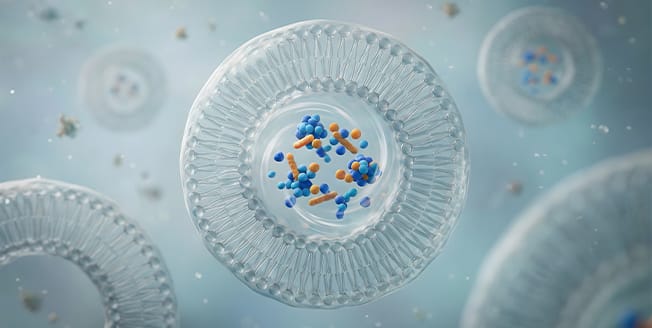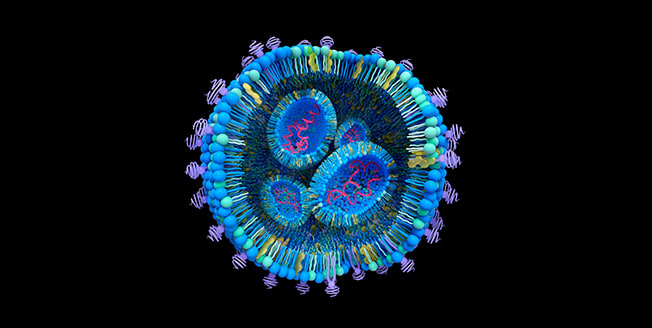
Lipid-based nanocarriers, including lipid nanoparticles (LNPs) and liposomes, are widely used to encapsulate and deliver therapeutic payloads ranging from nucleic acids to small-molecule drugs. Since particle size, size distribution, aggregation, and heterogeneity directly affect product performance and stability, robust analytical methods are required to characterize these systems under gentle, native-like conditions that preserve particle integrity [1].
Asymmetrical Flow Field-Flow Fractionation (AF4) is well established for the separation and characterization of LNPs and other lipid nanocarriers, as it provides separation without a stationary phase and can be coupled online to concentration and multi-angle light scattering (MALS) detectors [2,3]. However, conventional analytical AF4 channels typically require relatively long analysis times and high sample and eluent consumption, which can become a bottleneck in formulation screening or when sample material is limited. To address this, a miniaturized AF4 (“micro AF4”) channel with reduced channel dimensions had been developed enabling lower flow rates and shorter run times, while still providing sufficient resolution if the method is properly optimized [4].
In this application note, we compare the performance of a standard analytical AF4 channel with a micro AF4 channel for the separation of two LNP variants (LNP1 and LNP2). We demonstrate that micro AF4 can achieve a comparable separation quality while reducing analysis time from 60 min to 20 min at significantly lower sample and carrier consumption.
Newsletters
Receive the latest pathologist news, personalities, education, and career development – weekly to your inbox.