A new study of complex aerosol mixtures suggests that wildfire smoke and urban haze may persist longer in the atmosphere than current models predict, because organic aerosol molecules can evaporate more slowly than models assume.
To examine whether surrounding molecules alter aerosol behavior, researchers led by Alexander Laskin at Purdue University analyzed more than 1,500 chemical species across 33 organic aerosol mixtures. The dataset spanned simplified proxies, biomass-burning aerosol, ambient urban aerosol, e-cigarette aerosol, and particles generated from pyrolysis of wood, fiberboard, and plastic materials.
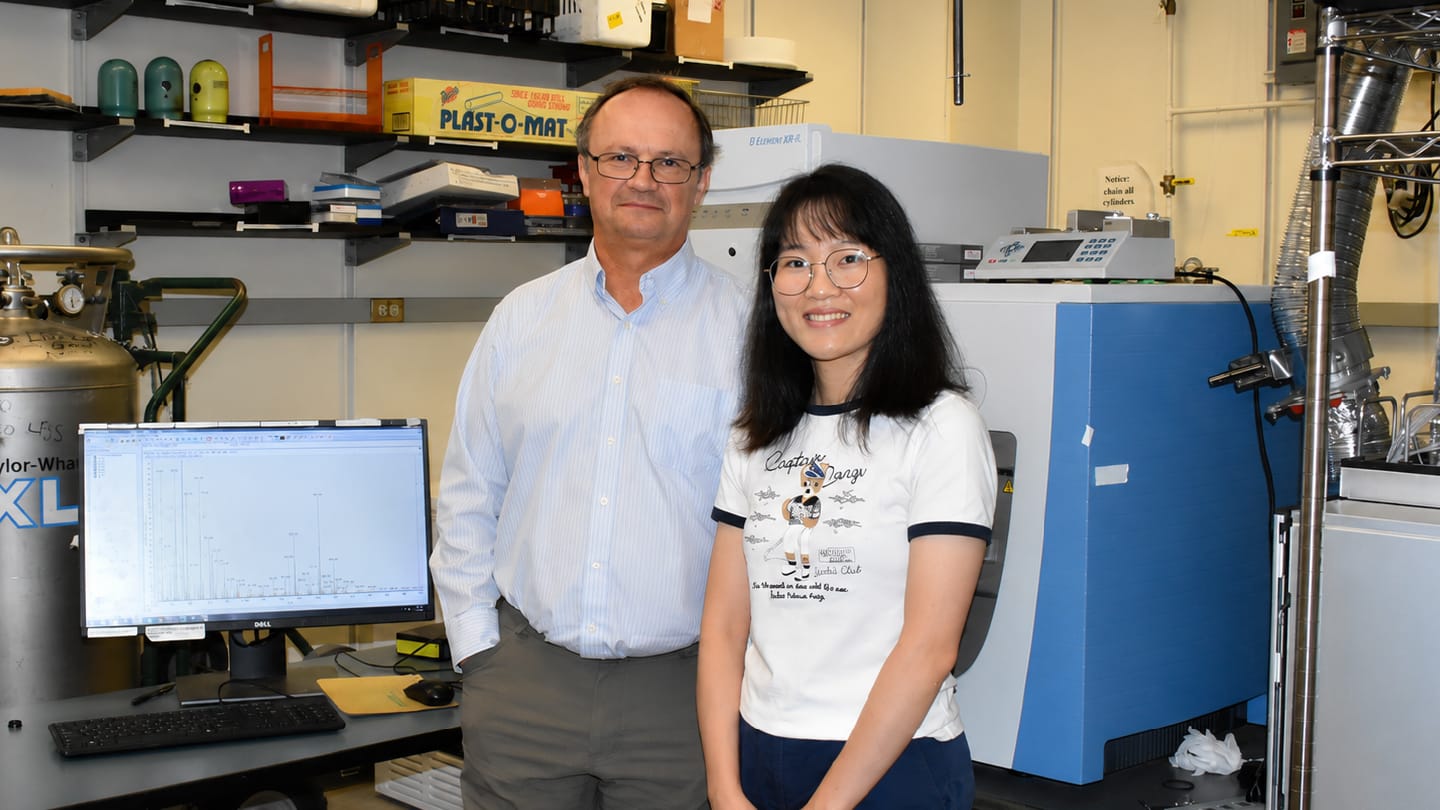
The team measured volatility using temperature-programmed desorption coupled with direct analysis in real time ionization and high-resolution mass spectrometry. As samples were heated, molecules released from the particles were ionized and tracked, allowing the researchers to assign molecular formulas and calculate apparent volatility within each mixture.
Species in simple proxies and reference mixtures behaved closer to expected pure-compound volatility. In ambient and biomass-burning aerosol mixtures, however, apparent volatility was systematically reduced. For levoglucosan, a common biomass-burning tracer, apparent volatility in complex mixtures was reduced by up to four orders of magnitude, suggesting that surrounding molecules were stabilizing compounds in the particle phase.
“Spray perfume onto a glass plate and the scent disappears quickly. Spray the same perfume onto a thick wool sweater and the smell lingers for days because the fabric traps the fragrance molecules,” Laskin said in a recent press release. “An aerosol mixture acts like the wool sweater, holding molecules much more strongly than if they were alone.”
The team also used machine learning to compare compound-specific and mixture-level molecular descriptors. Mixture-averaged properties were generally more predictive of apparent volatility, reinforcing the idea that aerosol evaporation is shaped by the surrounding matrix rather than by individual molecular structure alone.
“This research lays the foundation for a new generation of machine learning models that can predict the volatility of complex environmental mixtures by accounting for interactions among thousands of molecules rather than treating each compound independently,” Laskin said.
When the researchers incorporated reduced volatility into WRF-Chem atmospheric simulations, predicted organic aerosol mass increased, particularly downwind of biomass-burning emissions. Under stronger suppression scenarios, some localized increases exceeded 200 percent, while cloud condensation nuclei concentrations rose by about 15 to 60 percent.
Although the modeling was intended as a sensitivity test, the results suggest that volatility estimates based on pure compounds may underestimate how long smoke-derived organic aerosols remain airborne. Accounting for those matrix effects could sharpen future forecasts of pollution transport, cloud formation, and regional exposure.
Newsletters
Receive the latest analytical science news, personalities, education, and career development – weekly to your inbox.