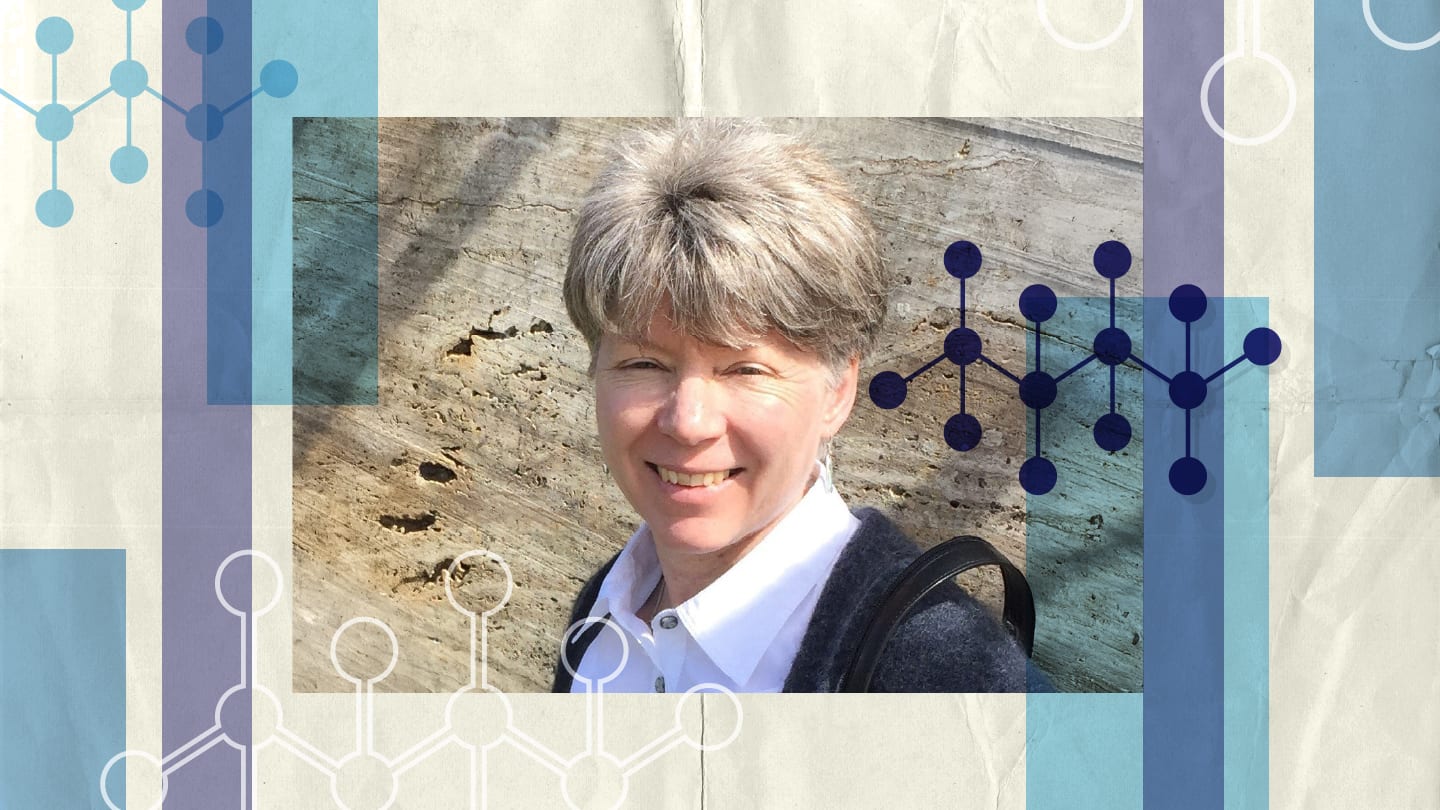
PFAS analysis has come a long way from the days of handwritten sample requests and improvised derivatization reactions. Few have witnessed that transformation as closely as Jennifer Field, whose work at Oregon State University has helped shape how scientists detect, quantify, and interpret these elusive chemicals.
Field was one of the earliest pioneers in the field. And like her colleague Chris Higgins – whom we interviewed in the first installment of our PFAS: New Frontiers, Emerging Solutions series – she remembers where she was, as a graduate student in 1985 at the Colorado School of Mines, when she first heard about PFAS. “I was in the office of my advisor, Don Macalady, who had this habit of picking up the phone even while he was in the middle of a conversation,” she says. “One day, the phone rang, and he answered – it turned out to be an old elk-hunting buddy of his. While they were chatting, this friend – who also happened to work for a firefighting foam company – asked, “‘Don, do you know anything about fluorinated surfactants?’”
At the time, Field was studying non-fluorinated surfactants. Don said, “No, but my graduate student does,” and handed her the phone. “That was my introduction. I remember saying, ‘Well, I don’t know anything about that…’”
Later, Field went on to a postdoc, and then eventually became a new professor at Oregon State University. “As a new professor, you’re always wondering what to study. And I thought, what about that fluorinated surfactant thing? Maybe I should look into it,” she says. “Back then, there weren’t many people studying PFAS – maybe one other group in the country had done a single piece of work. And now, of course, it has picked up tremendously – there are far more people working on PFAS than I could ever have imagined back in the early ’90s.”
Fast-forward to 2025, Field remains at the cutting edge of PFAS research, which she believes is entering a new phase – defined by the interpretation of the vast, complex datasets generated by today’s instruments. In this interview, she argues that the future lies in treating spectra as chemical “fingerprints” and decoding them through collaboration, computation, and creativity.
How has the PFAS story evolved – especially from an analytical science perspective – since those early days?
In those early years, there wasn’t much happening, very little literature to draw from, and no proper analytical standards at all. All of our early work was done without high-grade analytical standards. That’s changed enormously, of course – that’s been one of the biggest developments.
Our very first work actually involved injection-port derivatization of the carboxylic acids – which is a very unusual thing to do, but it worked remarkably well. I had carried this approach over from my work on hydrocarbon surfactants. If you take an anionic surfactant (the type most people focus on) in aqueous solution, add an ion-pair reagent, and do an ion-pair extraction – a technique that goes back many decades – the ion pair moves into a nonpolar solvent, in our case chloroform. If you inject that into the hot inlet of a GC, you get instantaneous methylation (or ethyl, propyl, butyl – you can pick your derivative).
That’s how we first analyzed the carboxylates. It didn’t work on sulfonates – they’re too electron withdrawing and act as good leaving groups, so that reaction just doesn’t happen. So oddly enough, our first foray into PFAS was by gas chromatography. Eventually, though, we had to abandon that approach because not many PFAS are carboxylates that undergo that kind of reaction.
And again, this was all done without standards. I’ve got a fascinating collection of chemicals from those early days. Back then, I would literally write away for them. Chemical & Engineering News was a paper magazine, and in the center there were these tear-out cards. You could send those cards in to get free 3M fluorochemical kits – so I did. They even came with these great brochures explaining which are the carboxylates and which are the sulfonates.
That was incredibly helpful, and it’s how we launched our early work – writing in for free samples (they weren’t called “standards” then) that were really meant for people formulating products. But they became our first reference materials.
Of course, the language has changed completely since then. Today we talk about suspects, non-targets, and targets. Back then, everything was essentially non-target. Now, as analytical standards become available, compounds move from the suspect list to the target list – and that shopping list just keeps getting longer. These days you can buy, depending on who you ask, maybe 70 or 75 target PFAS. Everything else is “suspect,” and those suspect lists are now huge. We’ve compiled a grand mash-up from nine different databases, and there are tens of thousands of suspects you can screen for.
None of that existed back in the day. And along with the lack of analytical standards, there were also no isotopically labelled standards for quantification – that’s another major advancement.
So, in terms of how things have changed: we went from a brief GC phase to LC, and then standards started becoming available. But for the first ten years or so, nearly all studies focused on just PFOS and PFOA. People still focus heavily on them – which makes sense from a toxicology perspective – but it wasn’t until maybe 10 or 15 years ago that researchers really started saying, “It’s not just PFOS and PFOA.”
That shift led to the development of the total oxidizable precursor (TOP) assay, which was a way to start wrapping our heads around all the other organic fluorine out there. That was an important addition to our toolkit.
Since then we’ve seen a lot of indirect methods emerge over the past 10–15 years – things like the TOP assay, combustion methods, total organic fluorine, extractable organic fluorine – because what we often find is that if you measure total fluorine and then compare it to targeted PFAS, the targets account for only a fraction of the total.
That tells us we still have a lot of work to do in identifying the unknown organic fluorine. And to fully account for it, we need to cover non-volatile and volatile fractions, and deal with classes that defy both traditional LC and GC methods – such as fluoropolymer monomers and the fluoropolymers themselves.
So really, we’re still trying to understand the totality of fluorine in the environment – and that, for sure, remains a grand challenge.
Do you think current standardized methods – especially those used by regulatory agencies – are broad enough to capture the full diversity of PFAS in the environment?
There’s definitely a lot of commonality across methods, as well as a strong push to make analytical approaches as uniform as possible – and I understand why.For example, making the analysis of water, sediment, plant material, and leachates all follow essentially the same method has the advantage of being widely deployable – it makes results more comparable, and it allows contract labs, academics, government agencies, and private companies to execute them consistently. That’s a good thing.
But when you have a one-size-fits-all method, it can limit innovation – or at least reveal its limits. A good example is the ultra-short-chain PFAS, which are a big topic right now. Some of the standard methods struggle to capture them. There’s a lot of ongoing work and many variations on the existing methods, but it’s an example of how we’ll have to adapt to go broader.
I like to think about an analytical method like a train. There’s the engine – the first step – then a series of cars, and finally the caboose. Each step is optimized to perform a specific function and provide a certain quality of information. In environmental analysis, that first step is usually a tailored extraction to target specific molecules.
Right now, globally, there’s a heavy focus on anionic PFAS – the negatively charged ones, like PFOS and PFOA. Those were the earliest known PFAS, and they’ve been the focus of decades of work in environmental monitoring, toxicology, animal studies, and so on. There’s a reason for that: they tend to be mobile. Negatively charged molecules move readily through the environment, whereas positively charged ones tend to get stuck in soils and sediments, and therefore don’t travel as far. So it made sense to spend so much time and effort on anionic PFAS. But here’s the problem: if the “engine” of your analytical train – your first step – only selects anions, you’ll only ever see anions; you’re effectively covering one eye. If we want to understand total fluorine, we need both eyes open – we need to see anionic, cationic, neutral, and zwitterionic molecules.
Most current methods are selective for negatively charged compounds right from the start, and that means we’re probably losing information immediately. Now, if your goal is strictly to quantify PFOS, PFOA, and other anions, those methods are fit for purpose. But if you want to explore more broadly, to see a fuller range of PFAS and understand total fluorine, you can’t only use a first step that selects for anions.
That’s been our focus: developing broader methods that can capture a wide variety of PFAS – low to high molecular weight, anionic, cationic, neutral, and zwitterionic. We’ve been in discovery mode for, I’d say, about 15 years – very focused on using our analytical capabilities to broaden the scope.
And we’ve tried to think outside the box – for example, we were using ion-exchange-based separations and detection methods very early on, because it was never just about PFOS and PFOA for us.
How do you view the challenge of potential overload when it comes to the sheer number of chemicals that researchers can now measure?
That’s a great question – and it’s something that’s changed dramatically over time.
Back in the day, it was one or five compounds. Then it became a dozen. Then 40. Now we’re up to around 75 targets – and that’s just from a “target” perspective, meaning: is molecule X present in your fish, your water, your air, whatever. That’s a very specific kind of question, and you can answer it cleanly.
But there’s probably a breakpoint. And I’ll just admit it: analytical chemists are not all naturally inclined toward the big-data side of things – only some really want to dive into that space. But that’s increasingly where the challenge lies: how do you deal with such a huge number of molecules?
Right now, most labs have their list of X number of targets, and that list shifts over time. But at some point you hit diminishing returns. We spend thousands of dollars a year – as do other labs – on labeled isotopes to build out our target lists. And at some point, that approach becomes hard to sustain.
So a few years ago, I made a decision – as have some other labs – to collaborate with people who work with entire high-resolution mass spec data sets. Yes, you can retrieve your targets (your PFAS list) from the data, and that’s fine – we still do that. But you can also mine that same data for suspects from large databases. And beyond that, you can go fully non-targeted.
And then there’s another level: you stop trying to identify everything at all. Instead, you treat the full data as a fingerprint. You don’t necessarily know what every single peak is – but you use the entire pattern. And then you bring in collaborators in bioinformatics, advanced statistics, machine learning, and AI – they can help you interpret those complex fingerprints and tell stories from them.
At that point, you’ve essentially left the world of targets and suspects behind, and you’re asking a different kind of question: what is the overall chemical signature telling me? That’s the new frontier.
Are there any other emerging frontiers PFAS frontiers you’d like to highlight?
One area that’s still relatively understudied is volatile PFAS – the gas-phase compounds. It’s not entirely new, but compared to other PFAS research, it’s had far less attention. Understanding their emissions and exposure routes is really important.
We’ve done some work on paints and consumer products. Here in the US, for instance, if you go shopping for interior paint, there’s about a 30 percent chance it contains PFAS. Not that it’s PFAS-based paint, but PFAS are used as ingredients. Why? Because of “low-VOC” paint formulations.
Now, “low VOC” doesn’t mean “no volatiles” – it’s a regulatory definition. It refers to volatile chemicals that don’t react with ozone. Paint companies switched to compounds that don’t undergo those VOC reactions. And that’s what some PFAS, like fluorotelomer alcohols, are. They’re so unreactive that they don’t count as VOCs – and that’s why they get used.
The result? When you paint a room, large amounts of these fluorotelomer alcohols can be emitted during drying. It’s completely unregulated and invisible – unless someone goes and analyzes the paint, which is what we did. So a professional painter or even a homeowner could be exposed to quite a bit – and no one would know. And every time you wash your brushes, you rinse pulses of PFAS down the drain, which end up in wastewater.
This is a good example of how PFAS can slip in as substitutes – they give paints nice leveling properties, stain resistance, washability – all the things people want. But not all paints have them, which proves they aren’t essential.
The challenge is that we often don’t know they’re there unless someone checks. So people are now asking: do we need them? But you need the political and regulatory will – and the knowledge – to drive those changes.
Another example is the semiconductor industry as another. It’s a globally critical industry, and there are many processes for which they simply haven’t found substitutes for PFAS yet. There’s a lot of effort in different parts of the semiconductor industry to understand their PFAS use and prevent releases – but it’s a huge challenge.
They use PFAS across an enormous range of properties: from ultra-volatile greenhouse gases all the way up to polymeric PFAS. That creates a major analytical challenge – trying to cover that entire chemical space, from the most volatile compounds to the very high molecular weight materials that you won’t detect on a typical LC-HRMS or GC-HRMS instrument.
And with the OECD now classifying fluoropolymers as PFAS, we analytical chemists face another challenge: very high molecular weight compounds are difficult to quantify. You can do qualitative work, but quantitative work is much harder.
Fluoropolymers, side-chain fluoropolymers, fluoropolymer oligomers – they’re all extremely challenging to measure. And because of that, it’s difficult to assess the real mass flows of these materials through commerce, wastewater, and the environment. So that’s another significant frontier where new analytical approaches are really needed.
Finally, in our lab, we’re doing biomimetic chromatography with PFAS now. We’re using biological stationary phases and passing PFAS targets – and complex mixtures – over them. This allows us to predict interactions with phospholipid membranes, human serum albumin, and AGP (alpha-1-acid glycoprotein), which is a protein associated with the brain and with some disease states.
Biomimetic chromatography has been used in the pharmaceutical industry for a long time, but we’re now applying it to PFAS – characterizing their behavior to better predict why certain PFAS accumulate in certain species and organs.
So that’s an analytical twist that’s taking us toward understanding their biological interactions. It’s a new frontier, and an area of active work in our lab right now.
Do you think that we – as a society, but also as a community of analytical scientists – can actually deal with the PFAS threat?
Well, it depends on what “deal with” means.
For analytical chemists, the first step is always: before you can call something a problem, you have to see it. People often jump straight to asking about toxicology, but tox data doesn’t grow on trees – it takes time, money, and commitment to generate.
So, the first part of any emerging contaminant story – whether it’s PFAS or something else – usually comes from the people who first detect it somewhere it’s not supposed to be: in wastewater, in air, in animals, in people. That discovery triggers a cascade of questions: “How did it get there? What form is it in? What are the routes of exposure? What does it do once it’s in you?”
That’s the sequence – documenting exposure, then assessing risk. But now, through analytical chemistry, we’ve documented that we have vast volumes of water, soil, and sediment – and in some cases, air. Because these molecules have been emitted for so long, they’ve now permeated almost every environmental compartment on Earth. They’re present throughout the entire ocean column. They’re in the Arctic – in the air, in the animals. That’s why you see people like Ian Cousins (Stockholm University) saying we may have exceeded planetary boundaries.
And on that scale, no one has an easy answer for what to do about it. It’s not just a scientific challenge; it’s financial, political, and regulatory.
What you are starting to see, though, is people asking hard questions like: Does this particular application really need to use PFAS? REACH and the EU are far ahead in terms of looking at chemical hazards more holistically and trying to limit the release of substances with problematic properties. The US doesn’t operate under the precautionary principle, so things work differently here, though that is starting to shift a bit.
There’s also a lot of funding going into remediation now – it’s a huge challenge, but it’s where much of the investment is focused. And analytical chemists have an important role to play there too.
Do you have a main message you’d like to share with the analytical community when it comes to dealing with PFAS?
I’d emphasize most is the value of collaboration. I think building teams that bring together toxicologists, epidemiologists, exposure scientists, and engineers creates a really vibrant space to work in.
If you’re in an analytical lab, get out of your lab – or invite people into it. Because working in an interdisciplinary space is incredibly rewarding. There’s even sociology research on this: if you’re someone who just wants to race to the top alone, collaboration might not be for you – but for many people, it’s an enormously fertile and productive environment. You can do things together that you simply can’t do alone.
And as an analytical chemist, embrace the big data world. There’s definitely a generational shift happening – all the new students know R and Python. That’s the way of the future. Go toward that light. Embrace it. It’s how you’ll get the most out of your instrumentation.
The Story Continues… Soon
Chapter Three: The Biology of Forever – with Carrie McDonough
Chapter Four: Confronting the Messy Reality of PFAS Regulation – with David Megson
Chapter Five: Portable Sensors: The Next Generation of PFAS Detection – Silvana Andreescu
Newsletters
Receive the latest analytical science news, personalities, education, and career development – weekly to your inbox.