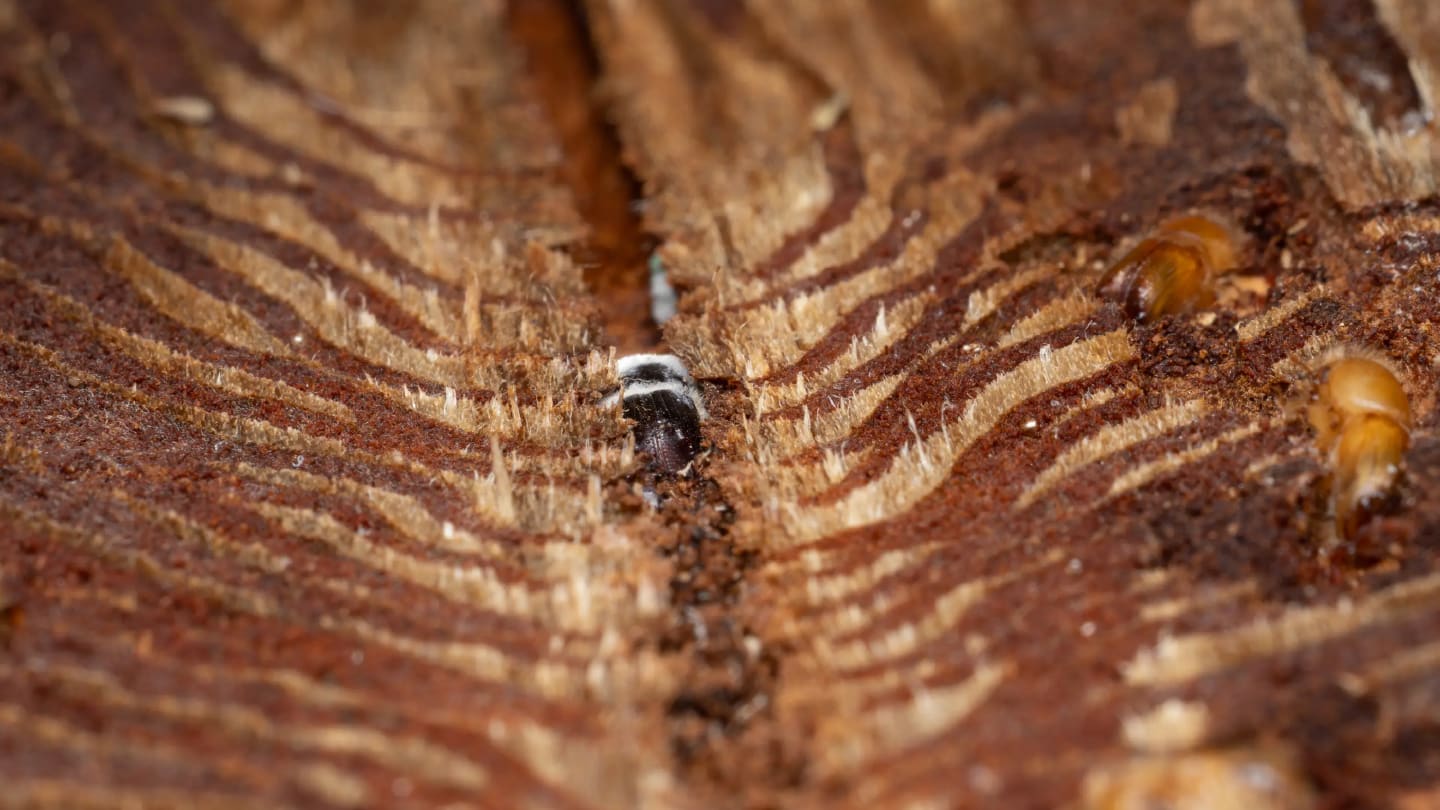
A striking glimpse beneath the bark of a Norway spruce reveals adult spruce bark beetles (Ips typographus) tunneling through their galleries – with one individual (center) overtaken by the insect-pathogenic fungus Beauveria bassiana. The image captures a moment in a hidden chemical battle that plays out inside forest ecosystems, where trees, insects, and microbes are locked in an ongoing evolutionary arms race.
Bark beetles are known to co-opt chemical defenses produced by spruce trees, converting plant-derived phenolic compounds into potent antifungal agents that help protect them from infection. In the accompanying study, researchers at the Max Planck Institute for Chemical Ecology traced these transformations using mass spectrometry-based metabolomics – combining targeted LC-MS/MS and untargeted UHPLC-qTOF-MS – with compound identities confirmed by high-field NMR spectroscopy.
The analyses show that Beauveria bassiana can neutralize the beetles’ chemical defenses through a two-step detoxification pathway, allowing the fungus to successfully infect and kill its host. This ability helps explain why certain fungal strains are effective natural enemies of bark beetles, and highlights their potential as biological control agents in forest protection.
Newsletters
Receive the latest analytical science news, personalities, education, and career development – weekly to your inbox.
References
- R Sun et al., Proc Natl Acad Sci USA, 123, e2525513122 (2025). DOI: 10.1073/pnas.2525513122.