In the first of three installments from our roundtable on the future of sample preparation, three leading voices explore how innovation and sustainability are reshaping the field. From greener workflows and miniaturized systems to 3D printing and AI-assisted design, they examine what it will take to move from “art” to science.
Join Marcela Segundo, Marcello Locatelli, and Stig Pedersen-Bjergaard as they discuss the trends and tools transforming analytical workflows.Read the highlights below – or register to watch the full on-demand discussion.
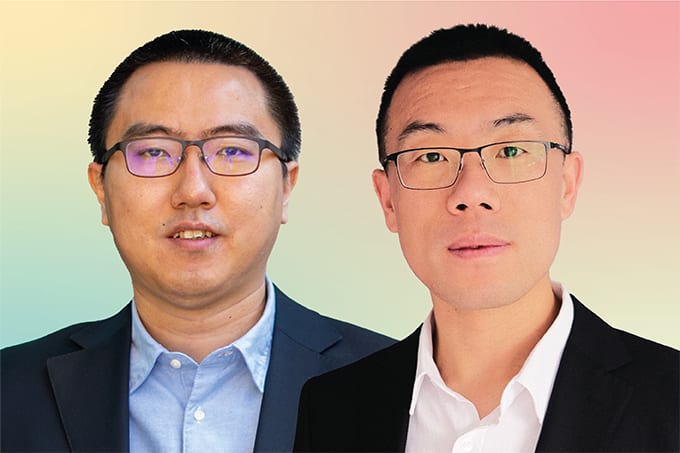
Meet the Experts
Marcela Segundo is Professor of Analytical Chemistry at the University of Porto. She led the Analytical Development Group at the Portuguese Government’s Associate Laboratory for Green Chemistry, Clean Technologies, and Processes from 2018 to 2024, and currently heads a group pioneering greener, automated approaches to sample preparation. In 2016, she received the FIA Award for Science for her contributions to sustainable analytical methods.
Marcello Locatelli is Associate Professor of Analytical Chemistry at the University of Chieti-Pescara in Italy. His work focuses on innovative extraction techniques and sustainable bioanalytical methods, with applications spanning clinical, pharmaceutical, food, and environmental analysis.
Stig Pedersen-Bjergaard is Professor of Analytical Chemistry at the University of Oslo and holds a part-time post at the University of Copenhagen. He is internationally recognized for developing liquid-phase and electromembrane extraction techniques – green sample preparation methods now used worldwide.

Let’s reflect on the current state of the sample preparation field. As we stand in 2025, is sample prep still too often seen as an art?
Marcela Segundo: At the moment, we’re seeing clear trends toward automation – particularly over the last five to 10 years – and also toward miniaturization. People are taking conventional techniques and trying to downscale them. Fortunately, we now have technical and instrumental advances that make this possible, even for those who aren’t directly researching in this area but wish to implement these methods in their labs.
Another trend is the development of methods suitable for omics studies. This requires a different level of specificity compared with conventional approaches, because while we need to clean the samples, we also can’t remove too much material if we want a comprehensive analysis later.
As for whether sample prep is still seen as an art, in some places, I think it is – mainly because, as a scientific community, we don’t invest enough in the theoretical side of research. There’s a lot of applied work, but not as much focus on the underlying theory, especially when dealing with non-exhaustive or non-equilibrium techniques. This may account for why sample prep is still sometimes viewed as more of an art.
Marcello Locatelli: In my view, sample preparation is a very specialized field – and it’s often overlooked or relegated to a marginal role within the analytical process. Too often, even in the literature, sample preparation is treated as just a short section rather than a central component.
I would say it’s still an art – a restricted field where many researchers now focus on green approaches and on reducing sample volumes. But I think progress in this area must also take into account vendor and laboratory requirements. Often, sample preparation methods are developed purely for research, but we also need to design procedures that work in public and private labs, where automation is essential, simplicity is important, and reproducibility is critical. Meeting those real-world needs will help the field grow and prevent sample preparation from remaining an isolated step in the analytical process.
Stig Pedersen-Bjergaard: I think sample prep is slowly moving from art to science, but such a transition takes time. But we now have our own journal, Advances in Sample Preparation, published by Elsevier, which is an important step – it recognizes sample preparation as a scientific discipline in its own right. We’re also seeing more dedicated sessions on sample preparation at major conferences.
These are indicators of a transition taking place, but real change will likely come as the next generation of scientists enters the field. It’s crucial that they learn about sample preparation during their education. Right now, university students recognize the importance of HPLC, for instance, but many textbooks and lectures still don’t give sample preparation the same emphasis. That’s something we really shouldn’t underestimate.

Looking back over the past decade or so, which developments have really stood out in sample preparation?
Segundo: As I mentioned earlier, one major development that really stands out – particularly thanks to strong contributions from instrument manufacturers – is the integration of sample preparation with analytical instruments. In my view, these technologies are now mature enough that even laboratories not directly involved in research or development can implement them, particularly in sectors like pharmaceuticals and food analysis.
Another key trend has been the push for high-throughput solutions. Many manufacturers now offer systems in 96- or 384-well formats, for example, to remove proteins or phospholipids before mass spectrometric analysis. These ideas began developing perhaps 20 years ago, but it’s only now that they’ve fully entered the market and become accessible – at least to those who can afford them.
A more recent and increasingly important driver is sustainability. I think this is closely tied to broader societal change; younger researchers entering the field are deeply concerned about sustainability, and that concern has become a major motivator for all of us. It’s shaping how we think about sample treatment and preparation.
Locatelli: As Marcela mentioned, we’ve seen the practical impact of many technologies that were developed in previous years finally reaching the market. Interestingly, the 2025 Nobel Prize in Chemistry was awarded to researchers in the field of metal-organic frameworks (MOFs). These materials are already being used – though still in limited ways – for sample preparation. I believe that in the next decade, MOF-based devices and materials will become much more widespread.
In the past decade, there’s also been strong research interest in membrane-based and solvent-free procedures, along with increasing miniaturization and microstructured techniques – all aligned with the principles of green sample preparation, as formally defined in 2022. Technologies such as VAMS (volumetric absorptive microsampling), solid-phase microextraction, nanoparticles, and magnetic nanoparticles are all now available and widely studied. But we still need to rigorously evaluate their performance and application fields.
Another exciting development is the use of 3D printing to create in-house prototypes for sample preparation. This innovation allows us to move more quickly from concept to market-ready products. From an instrumental standpoint, we already have the technology needed for nearly any type of sample preparation. The challenge now is to develop more rugged, reproducible procedures that can be implemented in both public and private laboratories – ultimately leading to reliable, market-ready products.
Stig Pedersen-Bjergaard: In terms of new techniques or tools, I’d say the fundamental principles used today are largely the same. We haven’t seen many completely new concepts – most developments build on existing foundations like solid-phase microextraction and liquid-phase microextraction. Here, we’ve seen new phases and new liquids that are more environmentally friendly and sustainable.
With regard to electromembrane extraction, our first experiments in that area were conducted about 20 years ago, but the technology was only commercialized last year – which was, of course, a major milestone for us. Since then, we’ve seen a growing number of applications based on microextraction technologies, and I’m confident these approaches will continue to expand and find new uses in the future.

What are the most exciting new tools and emerging trends in sample preparation today?
Locatelli: As I mentioned, the wider availability of 3D printing systems has really accelerated the transition from prototype to market-ready products. This technology not only helps in designing and validating new devices and materials, but also makes it easier for vendors to handle and adopt them. For example, 3D-printed systems can be tailored for use in clinical or environmental laboratories, where automation is essential and highly trained personnel may not always be available. We need to develop technologies that can be easily used by non-specialists while maintaining reliability and reproducibility.
Regarding nanoparticles – especially magnetic nanoparticles – these have already been applied in real-time, automated quantification in clinical laboratories, often in combination with immunoassays. In these systems, all steps – from sample preparation to reaction and final quantification – are fully automated. So, as we develop new materials, devices, and applications, we always need to consider transferability.
Segundo: I completely agree with Marcello about the importance of 3D printing – it’s influencing analytical chemistry across the board, not just sample preparation. In fact, within the Division of Analytical Chemistry of the European Chemical Society, we’ve recently created a dedicated task group to explore this area. We held a session on it at Euroanalysis, and two clear trends emerged: one focused on electrochemical analysis using 3D printing, and the other on sample preparation. I think we’ll see explosive growth in both areas over the next couple of years.
Another interesting development is a kind of re-emergence of efforts to simplify sample preparation – reducing the number of steps and directly coupling sorbents or solid phases with mass spectrometry. I’ve seen several publications this year exploring this approach. It still faces challenges, particularly around matrix effects, but researchers are increasingly compensating for these using artificial intelligence and advanced signal processing techniques.
Newsletters
Receive the latest analytical science news, personalities, education, and career development – weekly to your inbox.