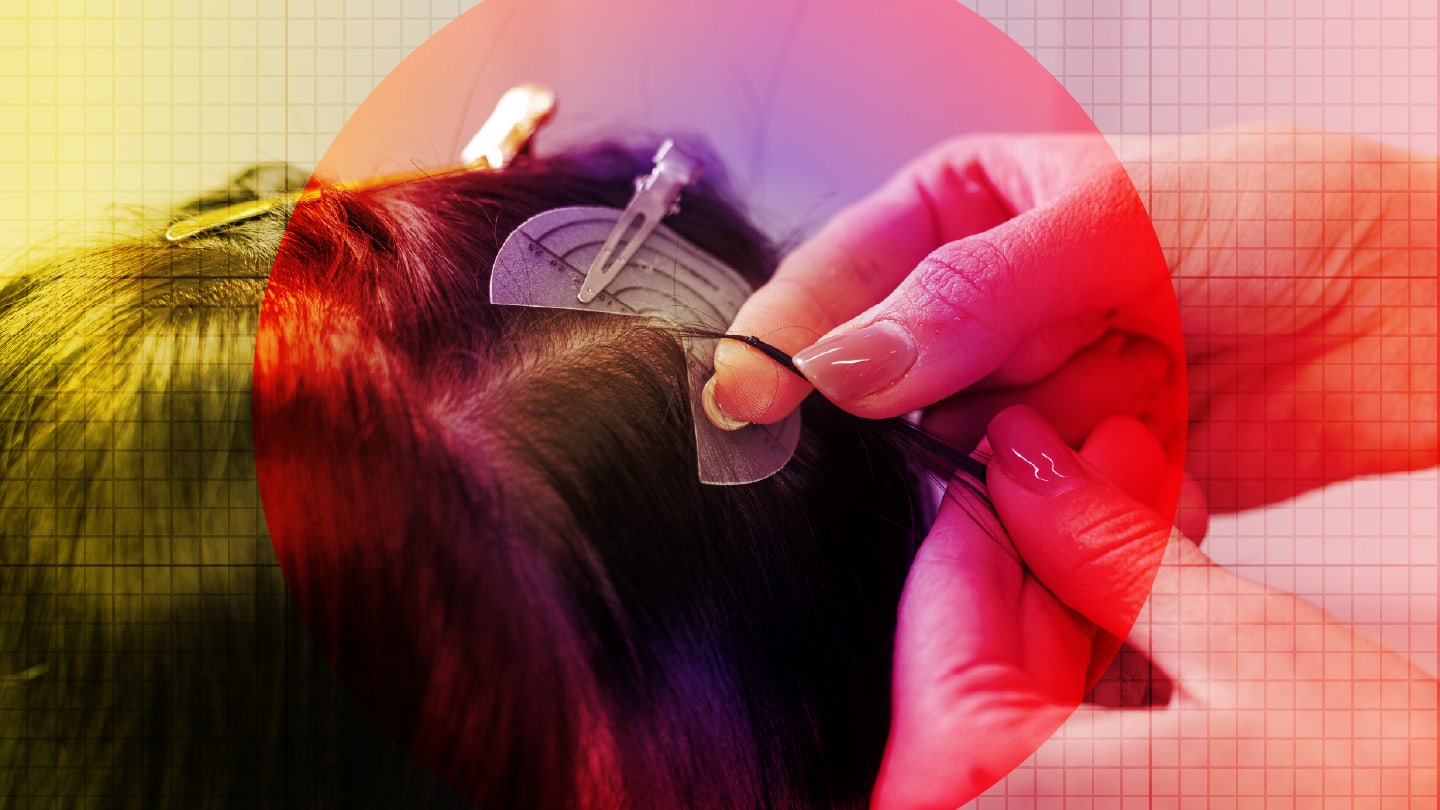
A new chemical survey of popular hair extensions has identified a wide range of substances linked to cancer, hormone disruption, and other health concerns. Using non-targeted mass spectrometry, researchers found that nearly all products tested contained at least one chemical of concern, including extensions marketed as human hair.
The study, led by scientists at the Silent Spring Institute, analyzed 43 commercially available hair extension products sourced from online retailers and beauty supply stores. Products were grouped by fiber type – synthetic polymers and bio-based materials such as human hair – and examined to characterize their chemical composition without relying on predefined target lists.
“While prior reports have found some chemicals of concern in hair extensions, there’s still much we don’t know about their overall chemical makeup,” said Elissia Franklin, lead author of the study, in a press release. “We wanted to get a better picture of the extent of the problem.”
The team applied comprehensive two-dimensional gas chromatography coupled to high-resolution mass spectrometry (GC×GC-HRMS) to profile volatile and semi-volatile compounds. Suspect screening, supported by machine-learning–assisted spectral matching, compared detected features against chemical databases.
Across all samples, the workflow detected more than 900 chemical signals, leading to the identification or tentative identification of 169 compounds spanning nine structural classes. Forty-eight identified chemicals appear on major hazard lists, including California’s Proposition 65. Detected substances included flame retardants, phthalates, pesticides, styrene, tetrachloroethane, and organotin compounds – chemicals associated with carcinogenicity, endocrine disruption, reproductive toxicity, or immune effects.
Organotins were detected in roughly 10 percent of products, sometimes at levels exceeding European Union health-based limits. “We were especially surprised to find organotins,” Franklin said. “These are commonly used as heat stabilizers in PVC and have been linked with skin irritation, which is a common complaint among hair extension users.”
Hazardous chemicals were found in both synthetic and bio-based products, indicating that fiber origin alone does not predict chemical content. Because extensions are worn close to the scalp and are often heated during styling, the authors note that potential dermal and inhalation exposures warrant closer scrutiny.
“This is an industry that has long overlooked the health of Black women,” Franklin said. “They should not have to choose between cultural expression, convenience, and their health.”
Newsletters
Receive the latest analytical science news, personalities, education, and career development – weekly to your inbox.