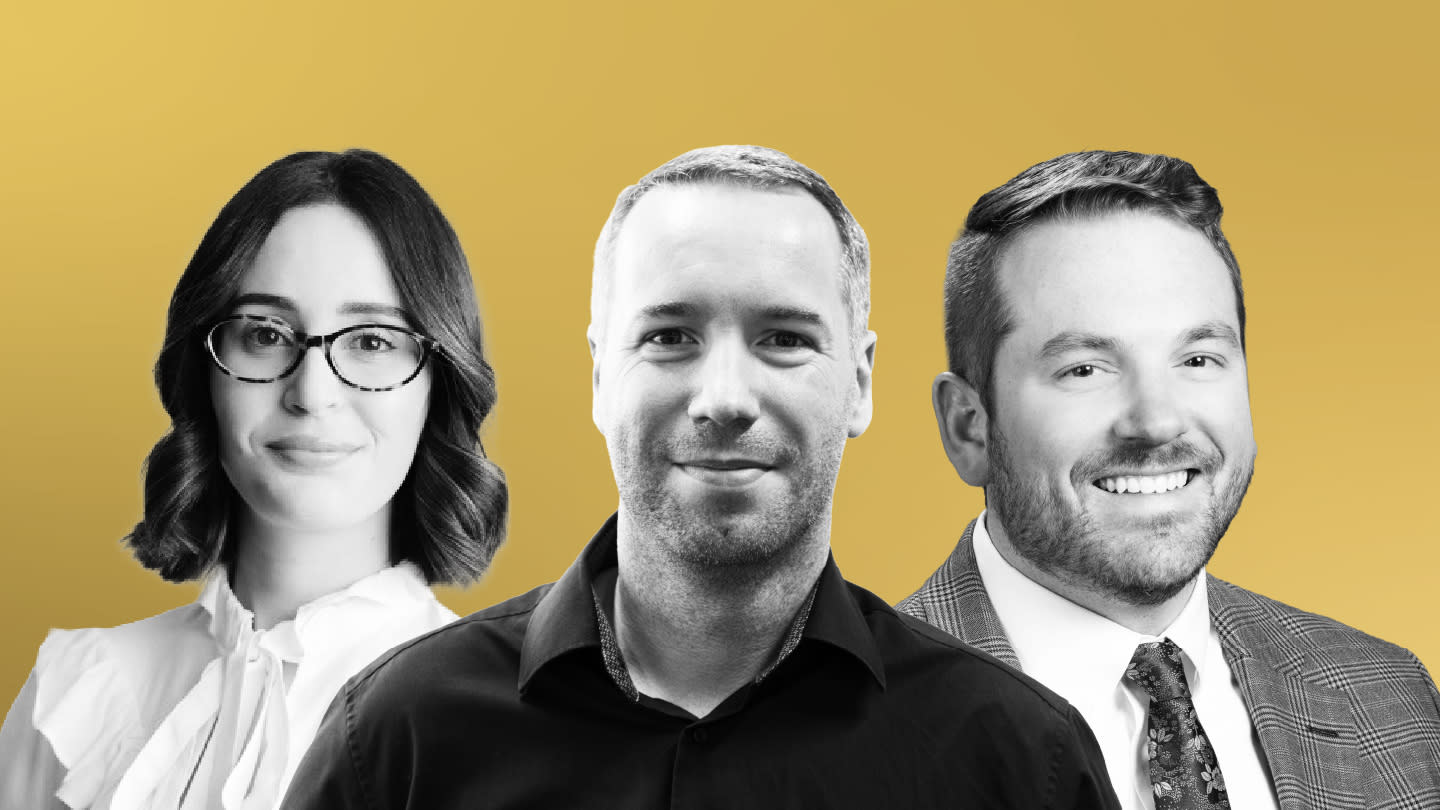
Guinevere Lageveen-Kammeijer, Assistant Professor, Analytical Biochemistry, University of Groningen, the Netherlands
Perhaps knowing what to trust, and what is actually meaningful. We are becoming exceptionally good at generating data: more sensitivity, higher throughput and increasingly complex datasets. AI adds tremendous opportunities to find patterns and interpret this information, but a convincing answer or beautiful pattern is not necessarily a correct or biologically relevant one.
As analytical scientists, we therefore need to remain critical: Where did the signal come from? How robust and reproducible is it? Does it make chemical and biological sense? I use AI myself and am excited about its possibilities, but transparency, validation and understanding the limitations of both our measurements and computational tools will be essential. The challenge is no longer simply to measure more, but to know what to trust, what matters, and what we can learn from it.
Nicholas M. Riley, Assistant Professor, University of Washington, USA
Knowing what the data is telling you, and not telling you, is critical for improving our ability to separate the signal from the noise. I do not want the human-in-the-loop of our ever-more-automated processing pipelines to be an afterthought. Datasets are becoming larger and more complex, and we are generating more data than we have the capacity to evaluate. I am less interested in tools that perform evaluation for me. Instead, I want tools that help me expand my ability to evaluate our current and future data with rigor myself. Building tools that enable, rather than replace, our critical thinking skills will be a necessary challenge for us to address in the coming years.
Flavio Antonio Franchina, Associate Professor, University of Ferrara, Italy
Producing data has been democratized; validating it has not. Anyone can now run an instrument and get hundreds or thousands of features out of it. However, numbering features is not enough until someone has demonstrated how reliable they are, whether someone else can reproduce them, how the compounds are identified, and what the result can and cannot support. Asking those questions is our job, and it is getting harder.
Aleksandra Binek, Lead Scientist Mass Spectrometry Imaging and Single Cell Proteomics, Project Scientist, Cedars-Sinai Proteomics and Metabolomics Core, Cedars-Sinai Medical Center, USA
With the current state of proteomics, we are able to generate exceptional protein level data, but our ability to store that data, transfer it between places, and most importantly turn that data into biological understanding via computationally heavy processing has not followed the same pace. A big challenge today is how to address these complex multi-layered datasets with the same scientific and statistical rigor as in conventional analytical sciences. There are no guidelines set, best-practices in place on how to integrate heterogenous datasets with diverse data properties nor is it even clear how these will impact your downstream analysis and determine if your results are meaningful.
Martina Catani, Associate Professor, Department of Chemical, Pharmaceutical and Agricultural Sciences, University of Ferrara, Italy
In my opinion, the biggest challenge facing analytical science today is the ability to generate meaningful knowledge from an ever-growing amount of complex data. Modern instruments produce datasets of unprecedented size, resolution and dimensionality, but turning this information into reliable, interpretable and actionable insight remains difficult. This requires not only advanced analytical methods and robust validation strategies, but also closer integration between chemistry, data science and bioinformatics. Ensuring data quality, reproducibility and transparency across laboratories and technologies is becoming equally critical, especially as analytical workflows grow more interconnected and multidisciplinary.
Gerrit Renner, Research Group Leader, Analytical Data Science, Instrumental Analytical Chemistry, Faculty of Chemistry, University of Duisburg-Essen, Germany
We have become extremely good at producing data, but we are still not equally good at preserving its meaning. A modern analytical workflow can contain dozens of transformations between the original detector signal and the final result. Decisions made during preprocessing, peak detection, integration, or data filtering can substantially affect the outcome, yet these decisions and their uncertainties are often difficult to reconstruct afterward. This becomes especially problematic as datasets grow and analysis becomes more automated. Analytical science therefore needs to treat data processing, metadata, provenance, and uncertainty with the same rigor we traditionally apply to calibration, validation, and instrumental performance.
Christopher P. Rüger, Research Group Leader, High-Resolution Mass Spectrometry, University of Rostock, Germany
I think one of the biggest challenges in analytical science today is that our ability to generate data is increasingly exceeding our ability to fully understand it. Modern instruments provide extraordinary sensitivity, resolution, and multidimensional information, particularly for highly complex samples. A single PhD student can easily fill multiple hard drives with terabytes of data within a couple of weeks, and months can be spent applying all kinds of mass spectrometric techniques to a single sample. However, detecting tens of thousands of signals does not automatically mean that we understand the chemistry behind them.
This becomes even more challenging as analytical workflows increasingly combine different separation techniques, ionization methods, mass spectrometry, and advanced data-processing approaches. We need to ensure that this additional complexity really produces additional chemical knowledge and not simply larger datasets. At the same time, I very much enjoy introducing new methodologies and demonstrating what is possible in proof-of-concept studies. For me, and probably for many colleagues, the challenge is therefore not only to push analytical technology further, but also to understand and clearly communicate, where a new methodology fits among the solutions that are already available.
Especially with AI becoming more involved in data interpretation, we need to remain critical about what an algorithm tells us. A very convincing interpretation is still useless if the analytical evidence behind it is not sound.
Petr Vozka, Associate Professor, California State University, Los Angeles, USA
For me, the biggest challenge is the growing gap between our ability to generate data and our ability to turn those data into defensible chemical knowledge. With modern high-resolution and multidimensional techniques, finding thousands of features is increasingly straightforward. Confidently identifying them, quantifying them, understanding uncertainty, comparing results between laboratories, and determining which signals are actually important remain much harder. That distinction becomes critical in non-targeted analysis. A beautiful chromatogram with thousands of resolved peaks is scientifically impressive, but the number of peaks itself does not answer an environmental, forensic, or engineering question. I therefore think analytical science needs continued emphasis on fundamentals: standards, quantitative validation, uncertainty, reproducibility, reference materials, transparent data processing, and interlaboratory comparability. New technology should increase the quality of the answer, not simply the quantity of the data.
Bob Pirok, Associate Professor, University of Amsterdam, the Netherlands
I do not think the biggest challenge is simply that samples or data are complicated. They have always been complicated. What has changed is that our instruments now reveal more of that complexity, which creates more questions and makes it harder to decide what actually matters.
To me, the central challenge is defining what we want. How do we mathematically capture analytical objectives across the diverse questions we encounter in health, environment, food, forensics, energy, materials, and industry? What does “good enough” mean when the goal may be quantification, classification, discovery, comparison, compliance, diagnosis, or understanding?
This is also why AI has become scientifically interesting to me. Extremely powerful algorithms already exist, but in chromatography they are often difficult to use well because we cannot always define the objective precisely enough. The limitation is not only computational; it is analytical and conceptual.
A second challenge is how we combine data reliably. We increasingly want to fuse information from different instruments, experiments, laboratories, and historical datasets. That is powerful, but it can also import hidden assumptions.
Bias is a notoriously quiet enemy in analytical science, and therefore all analytical scientists get taught about it at a very early stage: bias does not only distort our answers; it can teach our future systems the wrong questions.
For that reason, I do not think the field urgently needs more sophisticated instrumentation above all else. In many areas, we already have more instrumental sophistication than we can fully use. The bottleneck is increasingly in defining objectives, structuring knowledge, combining data, validating decisions, and making powerful analytical capabilities robust enough to be trusted beyond the laboratory that developed them.
Josias de Oliveira Merib, Associate Professor, Federal University of Health Sciences of Porto Alegre, Brazil
I believe that one of the biggest challenges facing analytical science today is generating reliable and meaningful information from complex samples and large volumes of data. Addressing this challenge also requires motivating students to engage deeply with the field and develop the critical thinking required to interpret analytical data properly.
Meriem Gaida, Product Safety Science Manager, Luzi AG, Dietlikon, Switzerland
I would say it’s not just one challenge, but several interconnected ones. One of the biggest is that analytical science is no longer simply about generating data, it is about extracting meaningful information from increasingly complex datasets.
At the same time, technology is advancing rapidly. Analytical instruments are becoming more sophisticated and generating more data, which requires increasingly powerful data-processing strategies. However, methods, workflows, regulations, and people’s expertise do not always evolve at the same pace. This can create a gap between what a technology can achieve and what laboratories can realistically implement on a routine basis.
I see this particularly with techniques such as GC×GC. They can provide tremendous analytical value but are sometimes perceived as complex or difficult to use routinely. I think an important challenge to simplify workflows, improve data processing, and train people effectively so that advanced analytical technologies become accessible, practical tools rather than techniques limited to specialists.
Lidia Montero, Tenured Scientist, Foodomics Laboratory, Institute of Food Science Research, Spanish National Research Council (CIAL-CSIC), Spain
This answer is closely related to the previous one. Although AI is opening the door to a new era in analytical science, the main challenge is ensuring that we are prepared to take full advantage of it.
Most analytical scientists are trained in highly specialized areas of chemistry, yet we often have limited experience in data science, programming, machine learning, and other computational disciplines. As a result, there is a significant gap between our traditional expertise and the computational skills required to effectively implement AI-driven approaches.
Moreover, analytical chemists are used to understanding the fundamental principles behind our methods and results. For most of us, many AI models are perceived as “black boxes,” making it difficult to fully understand how predictions or decisions are generated. On the other hand, another important challenge is that robust AI models require large amounts of high-quality, consistent, and well-annotated data. However, often we generate heterogeneous datasets during our experiments, obtained from different instruments, platforms, and experimental conditions, resulting in diverse data formats and structures.
To overcome these challenges, closer collaboration between analytical scientists and computational experts will be essential. In addition, the development of more user-friendly AI tools, together with greater efforts toward data standardization and harmonized acquisition protocols, will facilitate the integration of AI into routine analytical workflows.
Enrique Javier Carrasco Correa, Associate Professor, University of Valencia, Spain
The biggest challenge facing analytical science today is maintaining scientific rigor, human critical thinking, and accessibility amidst an overwhelming pace of technological evolution.
Technology is advancing faster than our ability to establish fundamental analytical foundations. We risk letting technology dictate our methodologies rather than us mastering the tools. This is particularly evident with the rise of Artificial Intelligence: while AI is an extraordinary catalyst, analytical science must not become a purely AI-driven field. The critical thinking, fundamental understanding of chemical interactions, and creative vision required to chart the future of our discipline must remain fundamentally human.
Furthermore, in sample preparation, the key challenge is bridging the gap between high-end innovation and real-world accessibility. True progress requires democratizing analytical workflows, making them greener, lower-cost, and easily deployable via accessible technologies like smartphones and portable 3D-printed devices. Advanced sample preparation cannot remain a luxury for specialized laboratories; it must become a universally accessible, sustainable tool that empowers point-of-need decisions without compromising analytical reliability.
Emanuela Gionfriddo, Associate Professor of Chemistry, University at Buffalo, The State University of New York, USA
I see one overarching challenge in analytical science today: ensuring that the increasing accessibility of sophisticated instrumentation does not come at the expense of analytical expertise. Modern instruments are remarkably user-friendly, which has made powerful analytical technologies accessible to a much broader scientific community. However, operating an instrument and generating data are not the same as understanding the measurement. As instruments become more automated, there is a risk that users rely on established workflows without fully understanding the principles behind them, the potential or limitations of the technique, or the factors that can affect data quality. This makes strong training in analytical science more important than ever, particularly when these measurements are used to support conclusions and decisions in interdisciplinary research.
Nicole Strittmatter, Professor of Analytical Chemistry, Department of Biosciences, TUM School of Natural Sciences, Technical University of Munich, Germany
One of the biggest challenges is preserving deep analytical expertise. Modern instruments are becoming increasingly powerful and user-friendly, but fewer scientists gain hands-on experience with how these systems actually work. This risks limiting our ability to innovate, troubleshoot, and develop the next generation of analytical technologies. This is why the continued loss of analytical chemistry professorships is concerning, as it reduces opportunities to train future experts and sustain methodological innovation.
Jelle De Vos, Senior Scientist, RIC Group, Belgium
The danger lies in the act of, simply speaking, converting the chromatograms into numbers we will create entire generations of students and operators that will no longer be able to judge wether the experimental conditions used to probe the interaction were appropriate in the first place. Or to spot certain anomalies that might be linked to, e.g., column degradation or instrumental issues. In short, I worry that the chromatographer of the future may become more efficient at generating data, while losing their critical judgement and become less experienced.
As such, the biggest challenge for the educators and experts in the field will be to translate knowledge to skilled operators. This will require a transformation of how we approach teaching and – especially for our field – approach hand’s-on training and workshops. Luckily, many efforts have been undertaken already to improve this situation.
Jeffrey E. Dick, Richard B. Wetherill Professor of Chemistry, Department of Chemistry, Purdue University, USA
As a community, I feel we often try to measure the same sorts of physicochemical things. I often encourage my colleagues and students to measure the seemingly immeasurable. That’s not trivial. However, it is our duty to push the science of measurement forward, and that requires the development of new measurement modalities (or perhaps a cute twist on an old measurement).
Newsletters
Receive the latest analytical science news, personalities, education, and career development – weekly to your inbox.