As peptide therapeutics continue to surge – with GLP-1 receptor agonists leading the way – bioanalytical labs are under pressure to deliver lower quantification limits, smaller-volume workflows, and faster method development. Those demands are prompting many teams to revisit the balance between routine triple-quad quantitation and high-resolution accurate-mass approaches. Veloxity Labs is among the early adopters, recently incorporating HRAM capability into its peptide workflows with the addition of the SCIEX ZenoTOF 8600 system.
“It’s exciting to see analytical needs evolve as new therapeutics come into labs,” says Shane Needham, President and CEO of Veloxity Labs. “Our goal is to help scientists get to the answers they need, and a key to that is flexibility.”
In this interview, Needham and Todd Stawicki (from SCIEX) discuss how the field is adapting to unconventional peptide modalities – and why complementary MS platforms may be essential as programs continue to grow in scale and complexity.


What do you see as the biggest analytical challenges posed by peptide therapeutics today?
Shane Needham: Peptides are unique in that they aren’t “small” or “large” molecules. They have the analytical challenges of large molecules (more difficult for MS) and the drug development advantages of small molecules, making them a prime candidate for MS analysis.
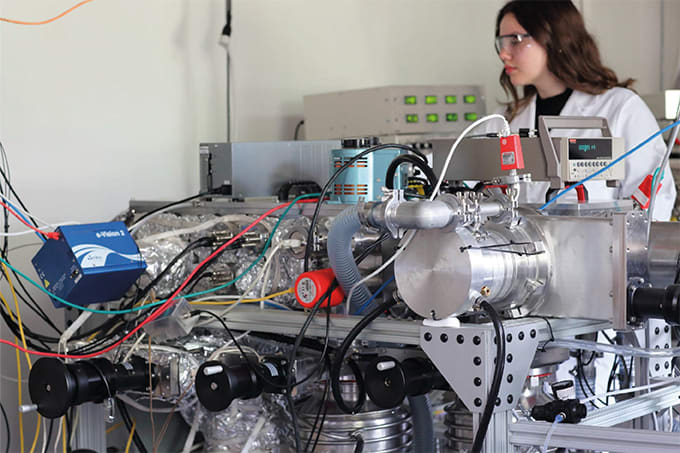
This leads to a quandary – immunoassays may not be the optimal choice for analysis. And, historically, mass spectrometers weren’t sensitive enough to compete with immunoassays for these modalities. That has changed with the introduction of the next-generation high-resolution MS systems, such as the SCIEX ZenoTOF 8600, and they are impacting three notable areas:
Selectivity in complex matrices. Endogenous peptides and metabolites can create interferences. We can now perform selective quantitative analysis without lengthy method development.
Sensitivity at low volumes. Clinical trials are evolving toward smaller draws and patient-centric sampling. With reduced sample volumes, achieving the required LLOQ becomes more difficult. The decreased volume also limits room for error, as obtaining additional sample for reanalysis is often not feasible. We can now reliably achieve low-picomolar (pM) LLOQs with these constraints.
Speed. Sponsors can’t afford method “do-overs.” We need first-pass methods aligned to ICH M10 from day one so early-phase decisions stay on schedule.
How has the surge in GLP-1 development changed expectations for sensitivity, selectivity, and speed in peptide bioanalysis?
Needham: Expectations rose across the board for best in class therapeutics: from the need for lower LLOQs, to reduced cycle times, to fewer manual steps. From my experience, I see both process and tool changes. Process wise, we are seeing phase-appropriate method design, small-volume workflows, and clear hand-offs from bioanalysis to PK. For tools, we see the utilization of high-resolution accurate-mass alongside triple-quads to shorten method development times and confirm intact peptides when needed.
In our lab, we use HRAM and triple-quad. HRAM for when we need additional selectivity or when analyzing non-traditional molecules like peptides or proteins; triple-quads for rugged, routine regulated quantitative analysis for small molecules. Both MS platforms are necessary in a bioanalytical lab.
What are the main limitations of current mass spec approaches for peptides and complex matrices?
Needham: No single tool wins every day. Triple-quads are rugged for regulated quant, but matrix interferences or the need for intact confirmation can slow teams down. Conversely, HRAM adds selectivity, cost effectiveness, and more standard application of triple-quads for routine quantitative analysis. Another tool in our analytical toolbox is always beneficial.
Todd Stawicki: It’s exciting to see analytical needs evolve as new therapeutics come into labs. Our goal is to help scientists get to the answers they need, and a key to that is flexibility. For example, some of the chemical modifications for non-natural amino acids in peptide therapeutics may require alternative fragmentation for confirmation. We also know that extended mass range and alternative fragmentation can reveal ions not seen with CID alone, helping in difficult matrices. This is how EAD is a key differentiator in providing the flexibility scientists need. On the same instrument, we have sensitivity but can also perform in depth characterization with EAD.
In the case of throughput, labs often ramp up on throughput. Having flexibility in front end choices, from traditional single channel LC to extraordinarily high throughput -- again offers that flexibility.
From your perspective, how is high-resolution accurate-mass reshaping the peptide bioanalysis landscape?
Needham: I’m seeing two practical shifts: speed and confidence. For speed, we’re seeing faster MS/MS selection during method setup. HRAM is also helping to resolve ambiguous signals that could occur in nominal mass instruments. This selectivity saves days of method development and minimizes reanalysis during sample processing. For confidence, we see how an expanded mass range opens doors for intact peptide/protein verification when the science calls for it. This raises the confidence on complex or intact targets.
However, it’s not about replacing triple-quad with HRAM – it’s complementary. We keep triple-quads as the workhorse for regulated quant and bring HRAM in to accelerate the analysis of peptides and larger molecules.
What questions or needs did the Veloxity-SCIEX collaboration set out to address?
Needham: We were seeing more peptide programs with tighter timelines and smaller volumes. Our question to SCIEX was simple: How do we keep speed while raising selectivity and perform accurate, reproducible quantitative analysis? We aligned on a model where HRAM helps us develop selective and rugged methods that comply with ICH M10 guidance.
Stawicki: This collaboration and early-stage brainstorming is key to providing solutions that truly help scientists get the answers they need. CROs are a guiding hand for the industry because they keep the pulse of innovation changes and therapeutic modalities that are marketing relevant.
What workflows or problem-solving approaches are emerging as best practice for GLP-1 and related peptide programs?
Stawicki: Novel peptides come with new and challenging formulations that also require analysis. In injectable peptides for example, there are challenges arising with interference and signal suppression. Excipients and additives that are added in oral drugs are very different from peptides.
Needham: We are seeing a rise in peptide optimized sample prep techniques that maximize recovery. In addition, we are seeing a need for small-volume, automated workflows to keep throughput and reproducibility high. This means using HRAM early for screening and method development of peptides. Rugged methods can lead to validation on HRAM so discovery methods can progress to GLP/GCP without starting over.
What excites you most about where analytical science – and collaborations like this – can take the field in the next few years?
Needham: As I’ve watched HRAM develop over the last 30 years, with the challenge always being “limited quantitative” analysis, I’m excited that the ZenoTOF 8600 system has shown HRAM quantitative analysis becoming standard. What encourages me the most is that vendor and CRO collaborations like this should be the norm. It accelerates getting therapies to patients so we can treat disease one sample at a time.
Stawicki: Collaborations such as this are the best vehicle for practical technology advancement. We feed off each other and it accelerates the positive feedback loop to develop solutions for these new types of therapeutics.
Beyond GLP-1s, what peptide areas are next?
Stawicki: The GLP-1 analog peptides were such a game changer because they showed how widespread their use could be. There are many other molecular targets best addressable with peptides. This does seem to mark the beginning of a wide class of therapeutic peptides.
Needham: Oncology, endocrine and imaging peptides are also moving fast. The same principles still apply – we need smarter prep and selective quantitative analysis, all leading to more speed so we can get therapies to patients more quickly.
Teaser credit: Adobe Stock (Edited)
Newsletters
Receive the latest analytical science news, personalities, education, and career development – weekly to your inbox.