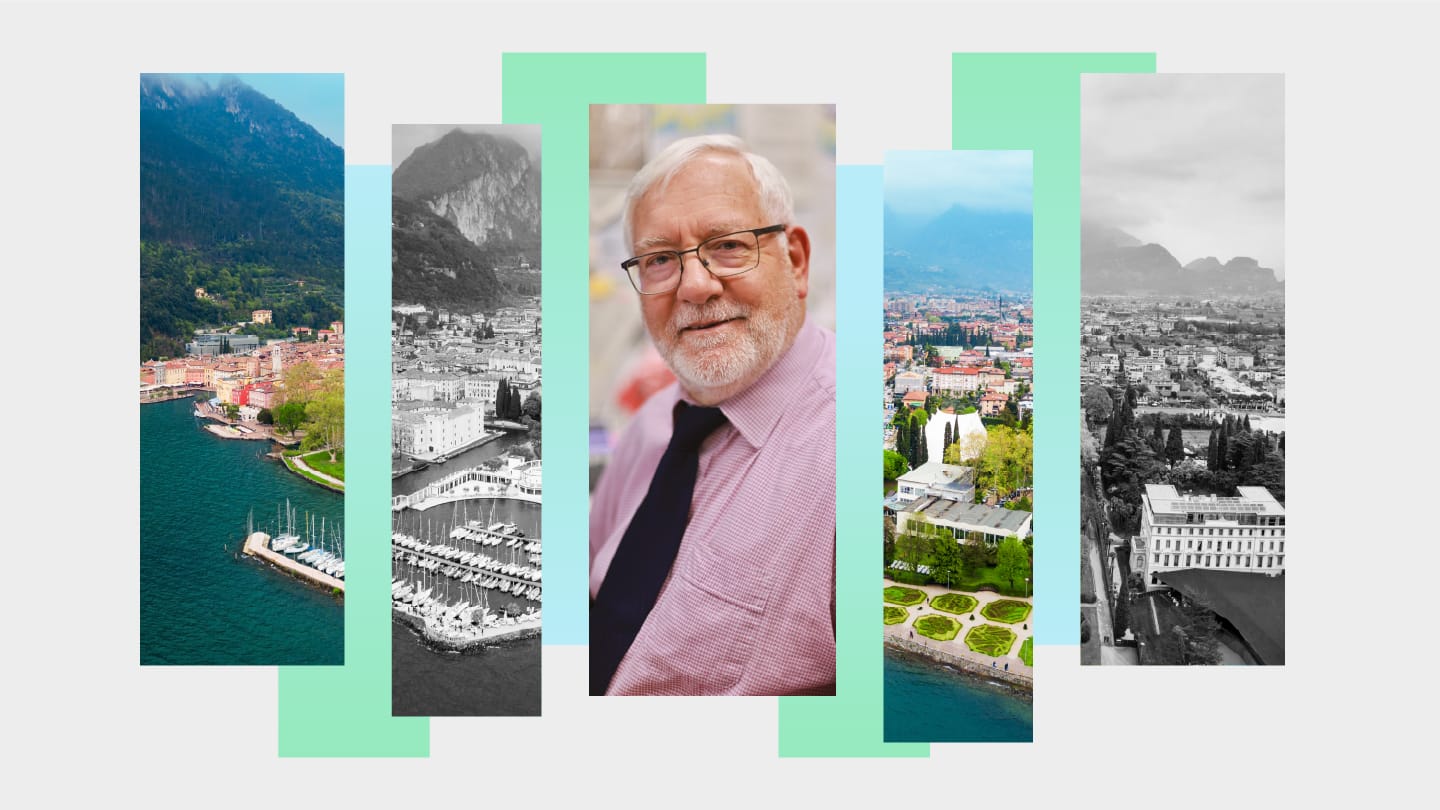
The excitement and anticipation ahead of this year’s “Riva” meeting – the International Symposium on Capillary Chromatography and the GC×GC Symposia – is palpable. The return of Riva represents a focal point for separation science: a place where emerging ideas are tested, techniques mature, and collaboration remains central. Its absence has only reinforced the sense that some scientific exchanges simply work best when they happen face to face.
In this installment of our Riva series, we speak with Philip Marriott, Professor in the School of Chemistry at Monash University, Melbourne, Australia, whose career has evolved alongside the meeting itself. Marriott reflects on how Riva has helped shape scientific thinking, foster dialogue between researchers and instrument developers, and create an environment where curiosity, openness, and shared experience continue to drive innovation.
What is your relationship with Riva? When and how did you first get involved?
My relationship with Riva is inseparable from my own development in separation science. I initially trained as a chromatographer, completing my PhD at La Trobe University in Australia on gas chromatography analysis of volatile metal dithiophosphate complexes, followed by postdoctoral work in organic geochemistry at the University of Bristol, UK, where I developed GC and GC-MS methods for metalloporphyrins.
I first encountered the ISCC community at the 3rd ISCC meeting in Hindelang in 1981 – the final meeting at that venue and the last organized by Rudolf Kaiser. Under the subsequent stewardship of Pat Sandra, the meeting evolved into what would become the Riva conference in Italy. Following a move to Singapore for five years, and then back to RMIT University in Melbourne, it wasn’t until 1994 that I resumed my attendance at ISCC – a full 13 years after Hindelang.
Hans-Gerd Janssen was critical in this decision – in more ways than he could have imagined. I arranged for Hans-Gerd to give a presentation in Melbourne during his lecture tour of Australia. After expressing my desire to re-engage with the international GC community, his response was that the Riva ISCC meeting was the best vehicle to achieve this, and that he would introduce me to all the key people. True to his word, it was – and he did. But it was at that very same meeting, during Hans-Gerd’s lecture on large-volume injection in GC, that I had my most momentous idea: cryogenic modulation. Excitedly, I sketched a few diagrams, decided it would be my key “one good idea from every conference I attend,” and wrote in my notebook that I must try it once I got back home. That idea ultimately became – in my hands – a key enabling technology for our entry comprehensive two-dimensional gas chromatography (GC×GC).
Since 1994, ISCC has been central to my research and that of my group – a premier venue for presenting cutting-edge chromatography research, learning about emerging international trends through posters and lectures, and absorbing the energy and enthusiasm of students and experts at the forefront of the field.
How has Riva evolved as a forum for emerging separation science, and what have been its defining scientific moments?
Riva has always been about presenting the “new stuff” that is appearing – or about to appear – in the literature. At the same time, historical perspectives are also important, as they help point to the future and highlight gaps in research that still need to be addressed. For instance, Pat Sandra quickly realized that capillary electrophoresis was emerging as a new technology, with many GC and LC researchers experimenting with it, and thus it deserved to be given a voice at Riva. Other similar examples include capillary and ultra-high pressure liquid chromatography, with the key researchers behind these developments well known.
Similarly, Pat recognized GC×GC as having perfect alignment with the high-resolution capillary chromatography history of ISCC. We had already held a few specialist meetings dedicated to GC×GC in Volendam and Atlanta, but, with agreement of some of the key researchers in GC×GC, Pat astutely introduced the GC×GC Symposium to Riva as an identifiable entity prior to the main ISCC program. There was scope for the pre-symposium workshop on Sunday and sole stream on Monday, with GC×GC / ISCC parallel sessions on Tuesday. Specialist sessions in gas chromatography (multidimensional GC in particular) had always featured in the ISCC program – and these persisted, but with GC×GC also featuring within ISCC. From the early days of maybe 100 registrants at the first few GC×GC Symposiums, this had grown to at least 300 participants in the GC×GC section of the joint symposium just prior to the pandemic.
Whilst Pat laid a firm basis for ISCC and its GC×GC partner, Luigi Mondello has firmly grasped the challenge over recent iterations, nurturing its growth over the past few meetings. Although sister meetings have been held in the USA and, more infrequently, in Asia, none have yet matched the scale or momentum of Riva del Garda.
What is the secret to Riva’s success?
Riva is, of course, a fabulous destination – but it’s also so much more than that.
It’s hard to reflect on why this is the case. Going to many international destinations could be just as memorable for sights and ‘photo-opps’ – but where is the separation science? It’s the prospect of presenting to your peers, understanding the thought processes that might lead to your next big idea, and gaining invaluable context and knowledge from fellow researchers. That’s what makes Riva so exciting!
So, what have we missed in the past five years without Riva, and ISCC/GC×GC? Basically – all of the above. Yes, the world may have changed – but how satisfied are we with yet another online presentation? Experiencing meetings in person – asking real questions, getting real answers, or simply chatting in ways that expand your network – can lead to pivotal steps in your research.
Senior researchers come because they know that a lecture at Riva goes above and beyond – no holds barred, at the forefront of innovation. At the same time, meeting PhD students may lead to the next postdoctoral researcher for a group – and this works both ways. Discovering the stories behind research and instrument development serves to direct research in productive directions. What are the challenges in your research? Does an instrument company have, or might be able to provide, a solution? In many cases, simply asking the question can lead to unexpected answers.
I think the secret of Riva is the expectation and anticipation among experts, researchers and companies, all of whom arrive with an open mind and genuine willingness to engage in deep and probing discussions to learn and contribute. This was exactly the case in 2018, when my lecture at Riva prompted a company to mention they had implemented an earlier strategy we’d published as a concept. Their expanded experience and approach to the issue at hand became our next publication, jointly published with the company. This coincidence of presentation, and then sitting with the company, had significant advantages.
What role does mass spectrometry play at Riva – and in shaping modern separation science more broadly?
Hardly a few months go by without the release of a new mass spec approach. This prompts the question: is mass spectrometry a useful detection technique for separations, or is a separation stage a useful (though not always necessary) step before mass spectrometry?
The reality is that both have their own truths. Early popularity of mass spec resided with its use – and demand – for identification in separation methods. This has not changed since, but with newer technologies for liquid separations, the demand has only strengthened. The many MS tools that are now offered as stand-alone techniques, or with non-separation sample introduction, are increasingly important.
Luigi Mondello has welcomed MS developments into the ISCC program in previous iterations of the meeting, with an emphasis on the role of MS with separation technologies. Thus ion mobility separations that offer a further dimension to separations, high-resolution MS, MS/MS often with time-of-flight technology will continue to feature.
Why is Riva still important to the separation science community today, particularly for early-career researchers?
As we enter the latter half of the decade, the abiding importance of ISCC/GC×GC, especially at Riva, is knowledge acquisition and transfer in the separation sciences. This is with the goal to nurture a new upcoming cohort of students and early-career researchers by capturing their skills and enthusiasm, and reflect on this very same excitement we felt when we commenced our own separations journey.
Mark your calendar now with a bold circle and bright asterisk as a must-attend meeting. My first Riva meeting had an immeasurable effect on my own career. It could very well be your defining moment. Be open to opportunities, think laterally during all your discussions and when attending lectures. Vow to leave Riva – any conference, really – with at least one really good idea to charge your research. Senior researchers are all just as keen to talk to you, as you should be to them.
If you could leave readers with one takeaway, what would it be?
Remember, Riva is bigger than just a narrow separation science event. It combines and delivers all that we want from the very best of a conference – all in the most enjoyable and delightful town on the north shore of Lake Garda. Relevance, relationships, research – Riva!
More Articles in the Series
Riva Returns! Luigi Mondello explains why the time is right to reignite Chromatography’s much-missed “scientific retreat.” Read more.
“Riva Isn’t Optional.” Riva’s return represents a reboot of a scientific tradition that has shaped generations of separation scientists, says Chiara Cordero. Read more.
Why Riva Still Matters. Fernando Lancas reflects on the meeting that shaped modern chromatography – and why its return matters now more than ever. Read more.
Newsletters
Receive the latest analytical science news, personalities, education, and career development – weekly to your inbox.