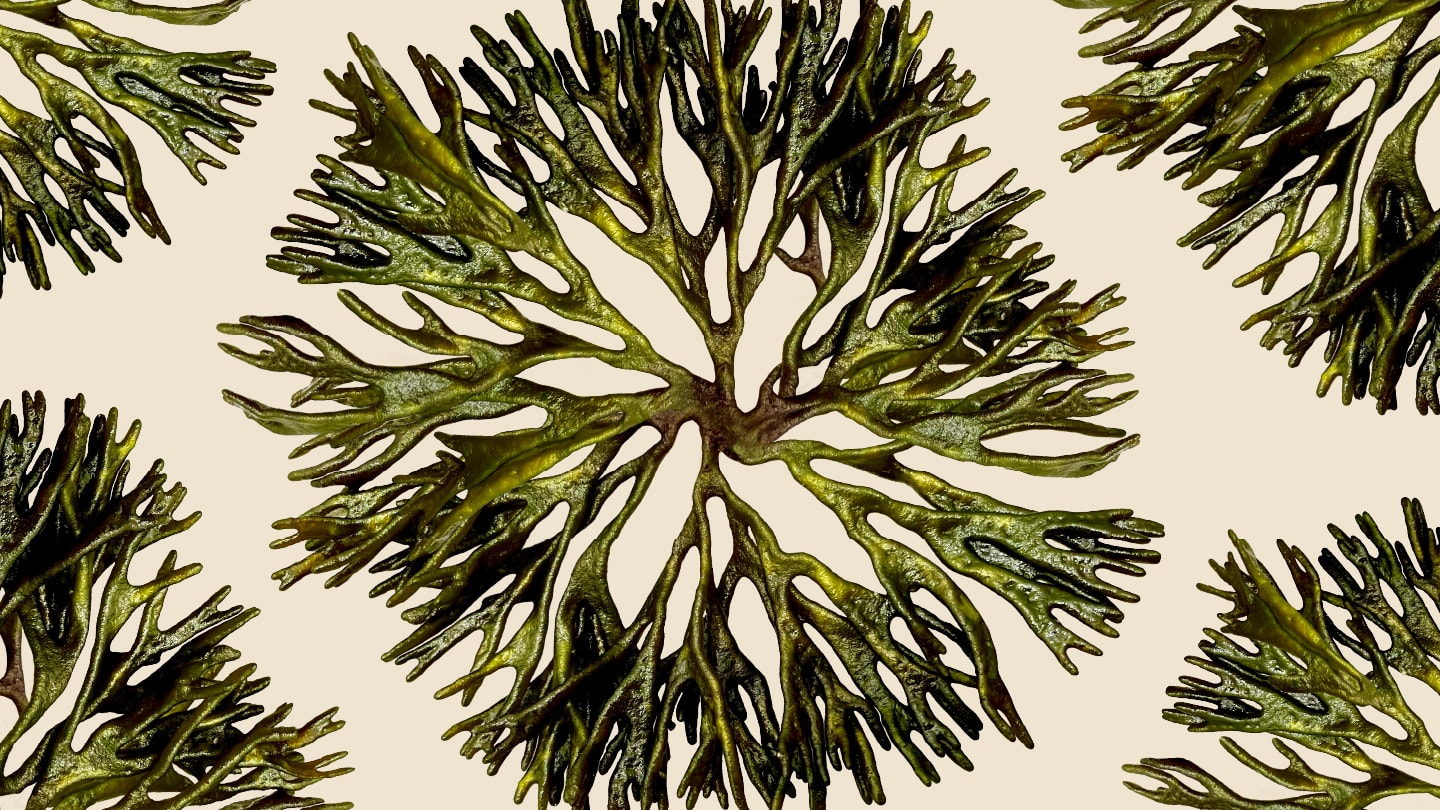
Siphonous algae are unusual organisms. Not only is their entire body – which can measure from a few centimetres to over a metre – a single continuous cell containing many nuclei, but their chlorophylls are also remarkably resistant to photodamage.
In photosynthetic organisms, excessive light can push chlorophyll into a dangerous “triplet” state, a potent source of reactive oxygen species. Plants typically avoid this by using carotenoids to dissipate excess energy or quench triplet states via triplet-triplet energy transfer (TTET). Siphonous algae have adapted to their coastal light environment by modifying the pigmentation of their light-harvesting complexes, broadening the spectrum of absorbed light but also increasing the timescale of excitation energy migration. In principle, this should make them more vulnerable to triplet formation and photodamage — yet they are not.
Intrigued by this paradox, researchers from the universities of Padova and Osaka set out to uncover how these marine green algae protect themselves from light stress.
Using electron paramagnetic resonance (EPR) spectroscopy to detect triplet excited states, the team compared spinach plants with Codium fragile. In spinach, weak chlorophyll triplet signals remained detectable. In C. fragile, these harmful states disappeared entirely — clear evidence that the algal carotenoids quench them with extraordinary efficiency.
The researchers then combined experimental data with theoretical modelling to pinpoint the origin of the triplet-minus-singlet features in the optically detected magnetic resonance (ODMR) spectra. “This allowed us to uncover the underlying mechanisms of the enhanced photoprotection in Cf-LHCII, linking it to the specificities of the triplet wavefunction of the bound keto-carotenoid,” says Alessandro Agostini, researcher at the University of Padova, and study co-author.
The team pinpointed the carotenoid siphonein as the primary driver of the siphonous algae’s remarkable protective effect.
Spectroscopic Deep Dive
“Our study relied heavily on advanced magnetic and opto-magnetic spectroscopies, particularly time-resolved electron paramagnetic resonance (TR-EPR) and optically detected magnetic resonance (ODMR), which are ideal for resolving photoprotective triplet-triplet energy transfer processes in detail. ODMR, in particular, was truly pivotal. It is highly sensitive and allows investigation of the optical properties of the molecules hosting the triplet state and their interactions with surrounding pigments.
“Because ODMR is a double-resonance technique, it excels at detecting species with closely similar spectroscopic signatures — crucial for disentangling overlapping signals in complex pigment-protein environments. Interestingly, microwave-induced triplet-minus-singlet (T–S) absorption spectra of carotenoids in several light-harvesting complexes have revealed bands in the Qy region of chlorophylls. These bands likely reflect changes in Chl-carotenoid interactions when the carotenoid enters its triplet state, and their intensity is thought to correlate with photoprotective efficiency. Characterizing these bands therefore provides a powerful window into carotenoid-chlorophyll interactions.”
The team was particularly struck by the astonishing efficiency of photoprotection in the light-harvesting complex of C. fragile (Cf-LHCII): close to 100 percent, even at temperatures as low as 2 K. “We did not expect to see such a complete absence of unquenched chlorophyll triplet states,” says Agostini. “Light-harvesting complexes from microalgae and plants always show some residual unprotected chlorophylls — even when photoprotective TTET pathways are present. We thought incomplete quenching was an unavoidable trade-off for optimizing light harvesting.”
Instead, the work reveals how subtle chemical variations can fine-tune triplet-quenching mechanisms, enabling photosynthetic organisms to maximize both light harvesting and photoprotection. “Our results demonstrate that siphonous algae have found a way to optimize both simultaneously, challenging our previous assumptions about necessary trade-offs,” Agostini adds.
The findings could inform the design of artificial light-harvesting systems with built-in protective mechanisms. “Taking inspiration from photosynthetic organisms which have been doing this for billions of years seems a pretty reasonable approach,” he says.
Agostini hopes the study will spark further exploration of photoprotective strategies in diverse and extreme-adapted photosynthetic organisms. “We expect to find other marvelous adaptations that we do not yet imagine,” he says.
Newsletters
Receive the latest analytical science news, personalities, education, and career development – weekly to your inbox.



