A Single-Oocyte View of the N-Glycome
The seGRAP workflow enables single-oocyte N-glycome profiling on routine MS platforms while limiting sample loss during preparation.
A streamlined glycan-preparation workflow has enabled single-oocyte N-glycome profiling on routine mass spectrometry platforms, revealing a highly conserved glycan repertoire across donors and stages of oocyte maturation.
The method, called solution-enhanced glycan reduction and permethylation (seGRAP), combines reduction, desalting, permethylation, and purification within a single porous graphitized carbon cartridge. Heated dimethyl sulfoxide transfers the reduced glycans directly into permethylation, while ethyl acetate improves recovery after derivatization. By reducing drying, transfer, and cleanup steps, the workflow limits sample loss and completes preparation in about 90 minutes.
seGRAP is compatible with both MALDI and reversed-phase liquid chromatography mass spectrometry. Against a conventional reduction and permethylation protocol, seGRAP produced approximately 100-fold greater signal intensity from immunoglobulin G samples. It also provided full high-mannose glycan coverage from 25 picograms of ribonuclease B and detected 11 dominant glycans from two picoliters of human plasma.
Applied to individual human oocytes, MALDI analysis identified 46 N-glycan compositions. Most were complex structures carrying both fucose and sialic acid, including the sialyl-Lewis X motif implicated in sperm–oocyte recognition. The single-cell workflow recovered all 25 structures previously reported from pooled material and added 21 further compositions, while broadly agreeing with profiles obtained from ten pooled oocytes.
Across 27 oocytes from 12 donors spanning the germinal vesicle, metaphase I, and metaphase II stages, glycan profiles remained highly similar across individuals and maturation. This suggests that the oocyte N-glycome is tightly conserved despite differences in donor age and developmental stage.
The authors present the single-oocyte analysis as an initial baseline for human oocyte glycosylation. They suggest that larger cohorts spanning reproductive age and infertility diagnoses could test how stable that profile remains, while improved O-glycan release would extend the workflow beyond N-glycans.
Screening the Library Before Synthesis
Dynamic combinatorial libraries and activity-based protein profiling combine to identify active covalent ligands before individual compounds are made.
Rather than requiring every candidate to be synthesized before screening, a library-versus-proteome workflow tests reversible compound mixtures directly against native proteomes, increasing covalent ligand discovery throughput by 10- to 20-fold.
The platform combines dynamic combinatorial libraries with activity-based protein profiling. Reactive warheads and aldehyde fragments continuously assemble and exchange, allowing protein binding to favor productive ligands. Those ligands suppress probe labeling, and quantitative LC–MS/MS identifies the affected proteins or modified residues. Only the active combinations are then synthesized individually.
Initial screens against serine hydrolases yielded selective inhibitors of protein phosphatase methylesterase 1, ABHD11, and PNPLA6. One PNPLA6 inhibitor showed submicromolar activity in cell lysates and remained active in cells. Using the PNPLA6 inhibitor alongside untargeted lipidomics, the team linked the enzyme to a broader range of lysophospholipid substrates than previously recognized, including several lysophosphatidylethanolamines and lysophosphatidylinositols.
The researchers then adapted the workflow for direct cysteine targeting. On-bead tandem mass tag labeling captured dose–response information across five library concentrations, allowing 80 compounds to be screened in eight LC–MS/MS runs. The resulting map contained 2,627 ligandable cysteine sites across 1,474 proteins and produced inhibitors for targets including NIT2, PRDX5, TXNDC17, and VCP.
A follow-up gel-based screen illustrates the scope for rapid optimization. More than 800 theoretical VCP ligands were evaluated within two days, narrowing the library to a compound with nanomolar activity, cellular target engagement, and antitumor activity in vivo.
The study establishes the screening platform in lysates, leaving live-cell library screening as a next step. The authors suggest that larger aldehyde libraries and broader warhead sets could extend proteome coverage, while more complete library formation would sharpen the apparent cysteine EC50 estimates.
A Legacy Ion Trap, Rebooted
The proof-of-principle system brings basic MSn capability back to legacy hardware while creating a hands-on platform for training and ion chemistry.
A software-defined retrofit has restored mass analysis, selective ion manipulation, and multistage fragmentation to an unsupported linear ion trap, offering a lower-cost platform for ion chemistry and training.
Researchers at Washington State University removed the factory electronics and radiofrequency drivers from a legacy LTQ XL, replacing them with accessible power supplies and the Astraea digital waveform platform. Rather than relying on resonant circuitry tuned to one instrument geometry, Astraea generates rectangular trapping waveforms whose frequency and duty cycle are set in software. This makes the driver largely independent of the quadrupole hardware it controls.
Mass scans using duty-cycle control alone produced a resolving power of around 300. Adding a low-voltage auxiliary waveform increased resolving power at m/z 690 to approximately 1,400, sufficient to separate isotope peaks. Doubly charged angiotensin II was resolved at around 2,600, although higher charge states remained below isotopic resolution.
The same auxiliary waveform provided more than sharper spectra. By matching its frequency to the motion of a selected ion, the team prevented abundant contaminants around m/z 405 from accumulating and consuming trap capacity. Adjusting the waveform amplitude and timing also allowed controlled peptide activation rather than complete ion ejection.
For tandem experiments, duty-cycle changes isolated the MRFA peptide before low-amplitude excitation produced its fragments. A product ion at m/z 453 was then isolated and activated again, demonstrating multistage tandem mass spectrometry without changing the main trapping voltage between activation steps.
The retrofit is not intended to reproduce the speed, calibration, or software capabilities of the original commercial system. The authors instead present it as a proof of principle for basic mass analysis and hands-on instrumentation work, with improved calibration and testing on more complex samples as immediate next steps. Because the waveforms are software-defined, the same control strategy may also be adaptable to other unsupported quadrupole analyzers.
Coral Metabolomes Under Pressure
Untargeted metabolomics links human disturbance around Maui to a shared chemical signature in two coral species.
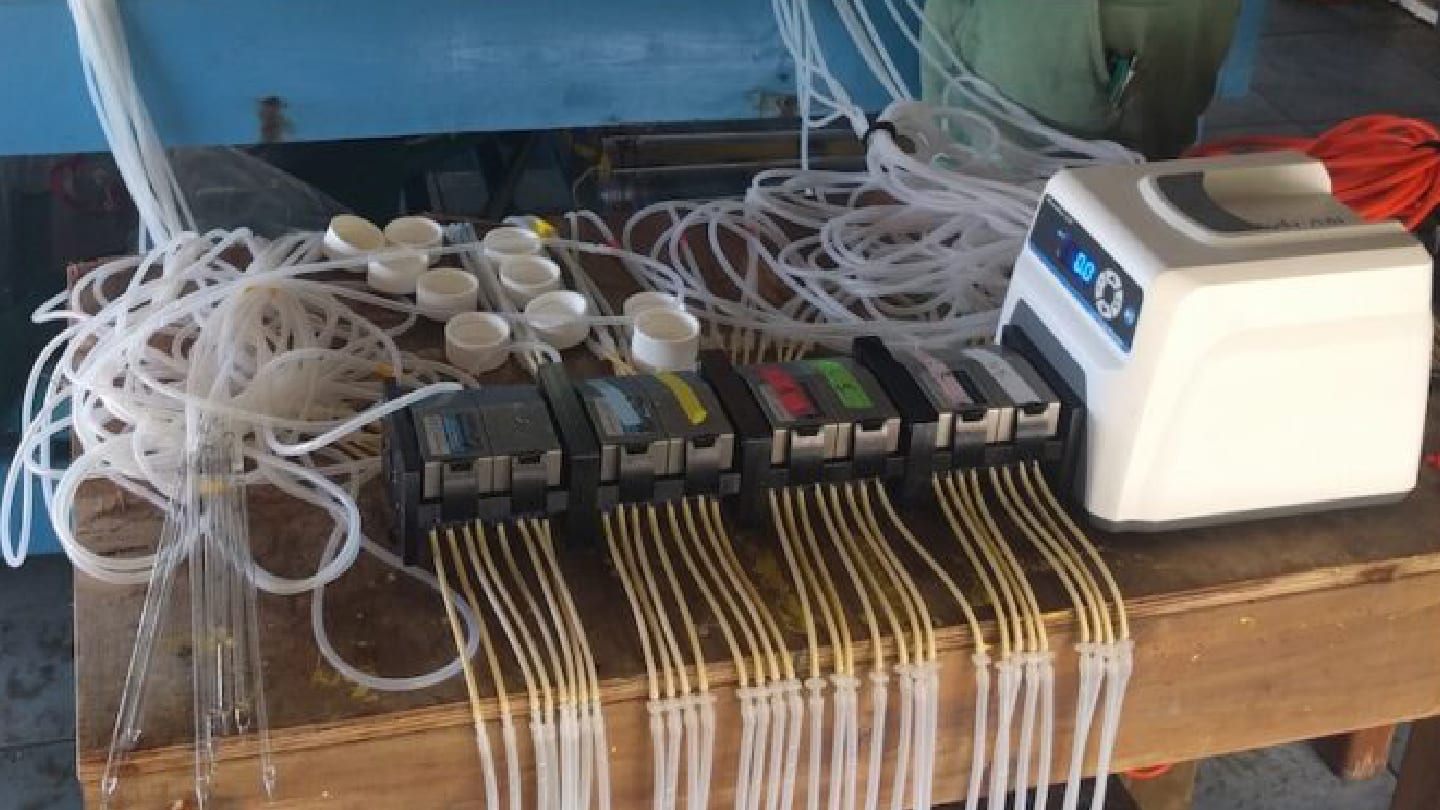
An untargeted metabolomics study has linked human disturbance around Maui to a consistent chemical signature in two coral species: higher contaminant burdens, depleted nitrogen and energy reserves, and steeper declines in coral cover after the 2015–2016 bleaching event.
Researchers analyzed 380 lobe and rice corals from 16 sites spanning 70 kilometers of coastline. Liquid chromatography tandem mass spectrometry detected hundreds of features whose relative abundance varied between sites, while molecular networking and spectral-library matching linked a subset to coral metabolites, stress responses, and anthropogenic sources.
Metabolome profiles separated reefs according to watershed disturbance and water quality, with closely matching patterns across both species. At more affected sites, nitrogen content and energetic availability fell, while stress-associated compounds became more abundant.
“It was extremely surprising that the metabolomes of both coral species had almost identical trends,” said first author Zachary Quinlan in the university’s press release. “These corals have very different life strategies, and we wouldn’t normally expect them to accumulate contaminants the same or even necessarily respond the same to disturbances.”
The team identified 25 agricultural, cosmetic, industrial, and pharmaceutical contaminants in coral tissue. Their relative abundance increased with disturbance in both species. Among five sites with long-term monitoring data, reefs with the most disrupted metabolomes also experienced the steepest declines after bleaching, although the study does not establish that the measured contaminants caused those losses.
The authors suggest that coral metabolomes could complement water and sediment monitoring by recording both chemical exposure and biological uptake. Controlled experiments are now needed to test whether restoring nitrogen and energy reserves improves resilience.
“Beyond the implications for coral health and resilience, this study demonstrates how many anthropogenic contaminants are escaping into marine ecosystems,” said senior author Megan Donahue. “We see increasing evidence that anthropogenic contaminants have broad cumulative impacts, undermining the resilience of coastal ecosystems.”
(Mass) Spectacular and Strange
Rock, Paper, Ceiling

A meteorite recovered from a New Jersey home has offered scientists an unusually pristine glimpse of the briny chemistry within a primitive asteroid.
The Hillsborough meteorite fell on July 16, 2024, after a daytime fireball and sonic boom over the New York metropolitan area. The homeowner heard a loud crash, found a hole in the bedroom ceiling, and noticed a strong sulfur-like smell among the black fragments and dust. Crucially, the fragments were quickly preserved using gloves, aluminum foil, and glass jars, limiting terrestrial contamination.
The meteorite was classified as a CM1/2 carbonaceous chondrite, a rare intermediate type of primitive meteorite. Using optical, near-infrared, and mid-infrared reflectance spectroscopy, along with Raman, FTIR, electron microscopy, isotope measurements, and mass spectrometry, researchers found unusually altered fragments rich in water and sodium. Small, salt-rich clasts suggested that briny fluids once moved through the meteorite’s parent asteroid, concentrating salts near its surface.
“A forensic study of the fragments revealed that they contained preserved bits from near the surface of a primitive asteroid where it experienced concentrated salty fluids,” said lead author Peter Jenniskens in the SETI Institute press release.
Those brines matter because salty fluids can keep phosphate in solution and help drive reactions between organics and minerals. The Hillsborough meteorite contained 1.8 percent carbon by weight, 0.07 percent nitrogen, and a broad range of soluble organic compounds, including amino acids. The team suggests these compounds formed inside the parent body during aqueous alteration, likely assisted by brine chemistry.
“Thanks to the homeowner’s quick reaction, these are the most pristine CM1/2 meteorites we know of,” said Jenniskens. Some fragments will now be curated at the American Museum of Natural History in New York City, where the meteorite will join the rare class of asteroid samples delivered not by spacecraft, but by the asteroid itself.
Newsletters
Receive the latest analytical science news, personalities, education, and career development – weekly to your inbox.