Newsletters
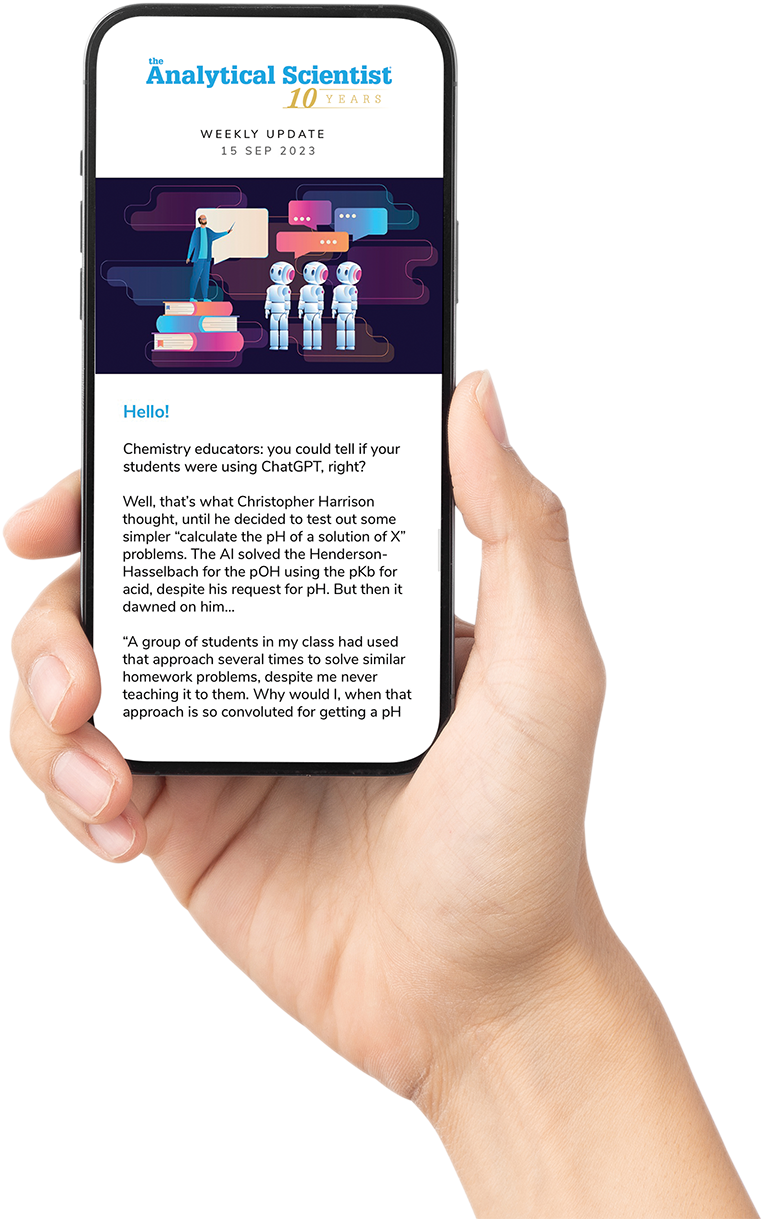
Receive the latest analytical science news, personalities, education, and career development – weekly to your inbox.
False
At the forefront of anti-doping science, Mario Thevis reflects on evolving detection strategies, new classes of performance-enhancing drugs, and the growing complexity of keeping sport clean
Receive the latest analytical science news, personalities, education, and career development – weekly to your inbox.

December 20, 2024
10 min read
Sitting Down With… Damià Barceló Cullerès, Honorary Adjunct Professor, Chemistry and Physics Department, University of Almeria, Spain

October 9, 2024
13 min read
Sitting Down With… Gary Patti, Michael and Tana Powell Professor, Senior Director, Center for Mass Spectrometry and Metabolic Tracing, Washington University in St. Louis; CSO, Panome Bio, St. Louis, Missouri, USA

October 24, 2024
1 min read
We dive into the archive of 2013 for insight and inspiration – this time with Georges Guiochon

November 21, 2024
7 min read
Sitting Down With… Sandra Pankow, Founder & CEO, 3D BioAnalytiX
False