“Science has brought me to exciting new places and connected me with extraordinary minds that would not have been possible without committing to research. Ultimately, it is the long-lasting friendships from this adventure that have the largest impact on my life.”
What does your research focus on, and what problem are you trying to solve?
I’m developing chromatography-based methodologies for analyzing complex new modalities in biopharma, focusing on therapeutic proteins, conjugates, and messenger RNA (mRNA) therapeutics. I leverage novel column technologies, multidimensional workflows, advanced detection methods, and miniaturization to push the boundaries of modern separation science.
What aspect of your current research excites you most – and why is this an important moment for it?
Recently, we have developed novel high-performance affinity chromatography columns and integrated them into multidimensional workflows with mass spectrometry detection to allow for full structure-function elucidation of monoclonal antibodies. It is still early days, but this technology has the potential to fundamentally change the characterization of drug candidates in discovery and early-stage development. At the same time, we have been developing methodologies for the analysis of protein conjugates, such as antibody-drug conjugates (ADCs) and antibody-oligonucleotide conjugates (AOCs). For the latter type of molecule, the best is yet to come in analytics.
Emerging biologics such as RNA- and DNA-based therapeutics require another step-change in analytical methodologies due to their large size and complexity. Furthermore, they often need protective carriers to preserve the integrity of the therapeutic cargo because the drug substances are labile. These carriers may be synthetic or biological, including AAVs, LNPs, VLPs, and cells. New columns and workflows are being released at an unbelievable pace, but what excites me most are: i) novel developments in size-based separations, such as ultra-wide-pore SEC columns and Slalom chromatography hyphenated to multi-angle light scattering (MALS) detection; ii) the use of on-column ribonuclease digestion combined with LC-MS as a tool for RNA mapping, allowing the localization of unknown modifications in mRNA; and iii) the introduction of inert column hardware and proprietary stationary-phase functionalization for these types of applications.
Looking five to 10 years ahead, what emerging trend do you think will have the greatest impact on analytical science?
Chromatography can be considered a mature field, but technological innovations can nevertheless still influence the experimental approach. Functionalized packed-bed columns that can be tailored to users’ requirements by immobilizing the preferred ligand for a particular study are becoming commercially available. This was previously possible only in specialized R&D and academic laboratories. New column fabrication techniques, such as lithography and additive manufacturing, make it possible to explore novel bed geometries and on-chip workflows. As a result, users can highly tune their instrumental setups by designing the perfect hydraulic flow path. This will be an exciting future direction for the field: tailored chromatography-based workflows specific to the problem at hand, especially for solving questions arising in the life sciences.
We cannot look away from the disruptive effects that specialized machine-learning tools already have in all fields of science, but a major drawback is that the quality of the data and the speed at which we can provide it ultimately dictate the reliability of the model. I think that chromatography will become one of the key tools for delivering data about the chemical nature of newly predicted drug candidates, but it will reach its full potential only when analytics are integrated online at every stage of the discovery cycle and beyond.
What is the biggest challenge facing analytical science today?
The danger lies in simply converting chromatograms into numbers. We could create entire generations of students and operators who are no longer able to judge whether the experimental conditions used to probe an interaction were appropriate in the first place, or to spot anomalies that might be linked to, for example, column degradation or instrumental issues. In short, I worry that the chromatographer of the future may become more efficient at generating data while losing their critical judgment and becoming less experienced.
As such, the biggest challenge for educators and experts in the field will be to transfer knowledge to skilled operators. This will require a transformation in how we approach teaching and – especially in our field – hands-on training and workshops. Luckily, many efforts have already been undertaken to improve this situation.
Do you have any strong opinions with which the rest of the field tends to disagree?
It is not my style to advocate disruptive messages. The focus should be on driving change through meaningful collaborations rather than staying in your trusted corner. The most inspiring discussions I have had were those where we worked at the interface of several disciplines – chromatography, engineering, life sciences, and materials science – to deliver a solution. This naturally led to many discussions and compromises, but ultimately produced a solution that would have been unimaginable when looking at the problem from only one perspective.
What decision, opportunity, or unexpected event has had the greatest influence on your career so far?
A decade ago, I obtained my PhD at Vrije Universiteit Brussel in Belgium, and both the process of submitting my thesis and the road that followed have been transformative. Needless to say, science has brought me to exciting new places and connected me with extraordinary minds – experiences that would not have been possible without committing to research. Ultimately, it is the long-lasting friendships from this adventure that have had the greatest impact on my life.
Who has changed the way you think about science – or life more broadly – and how?
It was Pat Sandra who introduced me to the wonders of chromatography applied in the field, and now, almost two decades later, his son Koen shows me new avenues in biopharma analysis. My promoter, Sebastiaan Eeltink, introduced me to the world of nanotechnology and microfabrication while establishing ways to form high-impact collaborations, while my co-promoter, Gert Desmet, left no stone unturned when discussing the fundamentals. During my time in Alois Jungbauer’s group, I saw how a multidisciplinary approach in biotechnology can drive innovation and make a meaningful difference through science, particularly during the COVID-19 pandemic.
It was the collection of great interactions I experienced while learning from and working with the excellent teams surrounding these scientists that genuinely changed my perception of science.
What interest or skill outside science has made you a better researcher?
The Maker community, where out-of-the-box thinking and the combination of different skill sets are required to build unique projects and solve challenging problems. Since becoming a parent myself, I would recommend that all parents look into developing these skills in younger children. I believe an affinity for STEAM can spark a better future.
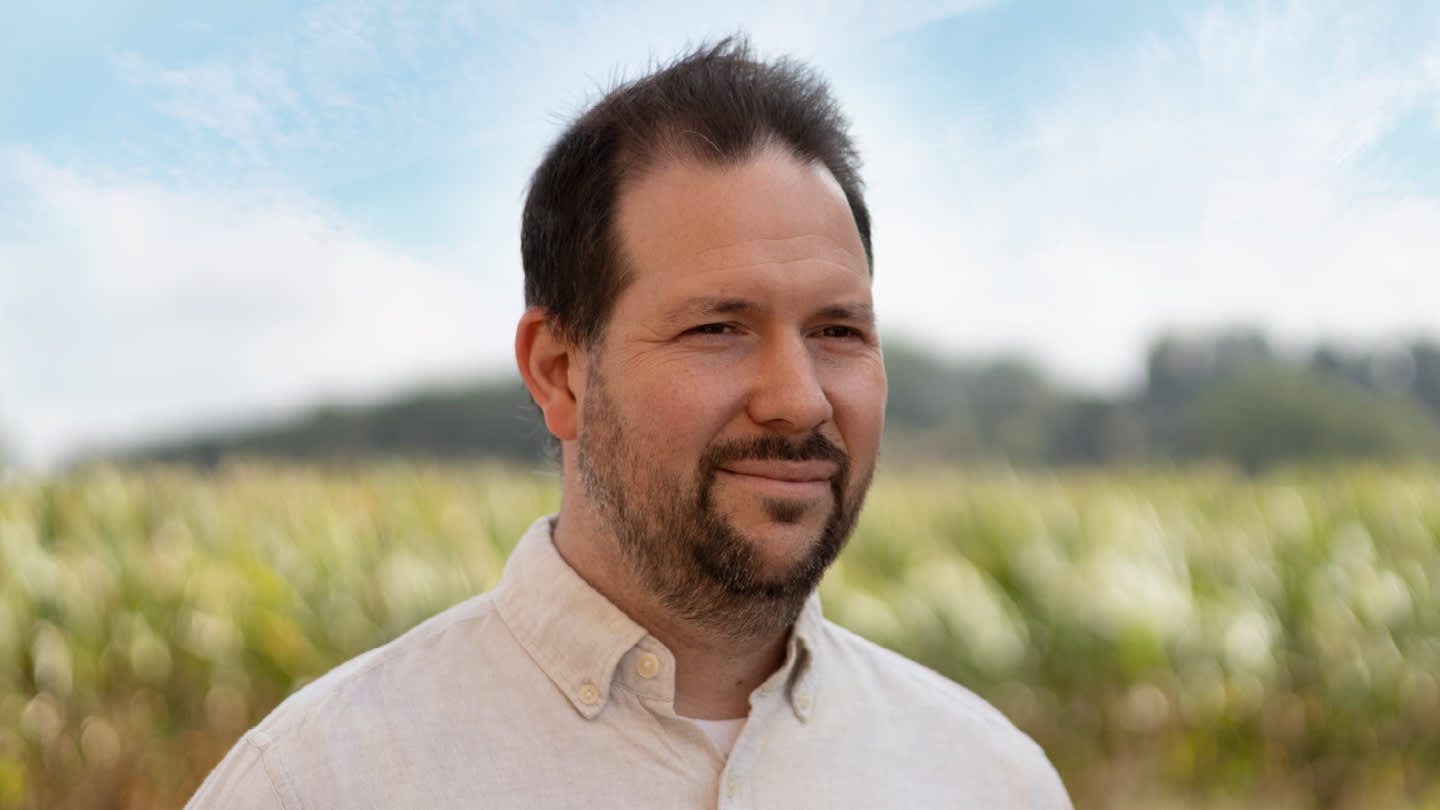
Jelle De Vos is a Senior Scientist at RIC group, Belgium.
Explore The Analytical Scientist 40 Under 40 Power List 2026
Newsletters
Receive the latest analytical science news, personalities, education, and career development – weekly to your inbox.



