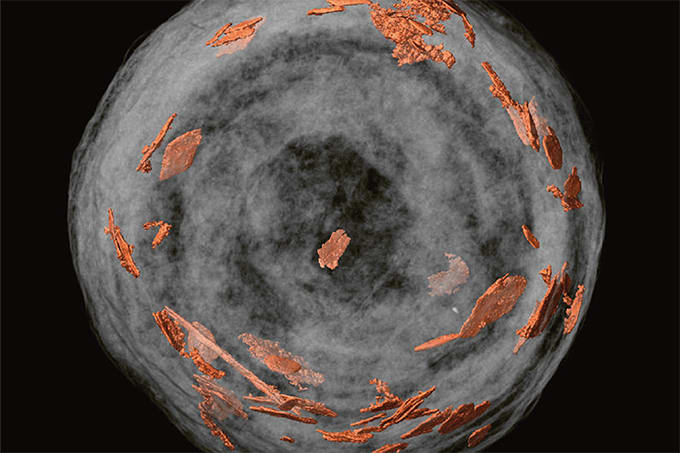
Clinical Report: Where Non-Target Screening Still Falls Short
Overview
This report discusses the limitations of non-target screening (NTS) in detecting highly polar contaminants in water systems. It highlights the necessity of employing multiple chromatographic methods to enhance the detection of persistent and mobile substances (PMs).
Background
Non-target screening is crucial for identifying a wide range of contaminants that standard methods may overlook, particularly in complex environmental samples. The increasing prevalence of persistent and mobile substances in water systems poses significant risks to human health and the environment. Understanding and improving detection methods for these compounds is essential for effective monitoring and risk assessment.
Data Highlights
No numerical data or trial results were provided in the source material.
Key Findings
- No single chromatographic method can adequately cover the diversity of polar and semi-polar contaminants.
- Reversed-phase liquid chromatography (RP-LC) is the dominant method but underrepresents highly polar substances.
- Combining multiple chromatographic platforms (RP-LC, HILIC, SFC, and ion chromatography) enhances detection capabilities.
- Many transformation products (TPs) are more polar than their parent compounds, necessitating polar chromatographic methods for their detection.
- Persistent and mobile substances (PMs) are widespread in the water cycle and often exceed concentrations of other micropollutants.
Clinical Implications
Clinicians and environmental scientists should consider employing a multi-method approach to non-target screening to improve detection of polar contaminants. This is particularly important for assessing risks associated with persistent and mobile substances that may not be captured by traditional methods.
Conclusion
The findings emphasize the need for diverse analytical strategies in non-target screening to effectively identify and manage environmental contaminants. Continued advancements in chromatographic techniques are essential for addressing the challenges posed by polar and semi-polar substances.
Related Resources & Content
- Zweigle J., The Analytical Scientist, 2023 -- Where Non-Target Screening Still Falls Short
- The ASCO Post — Can Alternative Criteria Help Identify Patients Who May Benefit From Lung Cancer Screening?
- The ASCO Post — Low-Value Cancer Screenings May Continue for Years Following Guideline Change to Limit Unnecessary Tests
- The New Gastroenterologist — Innovative Blood Test Shows Potential for Colorectal Cancer Screening in Average-Risk Adults
- New Frontiers in Non-Target Screening: Roundtable Symposium
- Can Alternative Criteria Help Identify Patients Who May Benefit From Lung Cancer Screening?
- Low-Value Cancer Screenings May Continue for Years Following Guideline Change to Limit Unnecessary Tests
- Innovative Blood Test Shows Potential for Colorectal Cancer Screening in Average-Risk Adults
This content is an AI-generated, fully rewritten summary based on a published scholarly article. It does not reproduce the original text and is not a substitute for the original publication. Readers are encouraged to consult the source for full context, data, and methodology.
Newsletters
Receive the latest analytical science news, personalities, education, and career development – weekly to your inbox.
About the Author(s)
James Strachan
Over the course of my Biomedical Sciences degree it dawned on me that my goal of becoming a scientist didn’t quite mesh with my lack of affinity for lab work. Thinking on my decision to pursue biology rather than English at age 15 – despite an aptitude for the latter – I realized that science writing was a way to combine what I loved with what I was good at. From there I set out to gather as much freelancing experience as I could, spending 2 years developing scientific content for International Innovation, before completing an MSc in Science Communication. After gaining invaluable experience in supporting the communications efforts of CERN and IN-PART, I joined Texere – where I am focused on producing consistently engaging, cutting-edge and innovative content for our specialist audiences around the world.