In this second installment of our GCxGC Detective Stories series, PhD student Fulvia Trapani walks us through her research project at Unilever to develop the analytical tools required to understand the complex process of how humans perceive aroma and taste. We also speak with “senior detectives” Chiara Cordero, Fulvia’s PhD supervisor, and Hans-Gerd Janssen, who oversaw the research project.
Meet Fulvia
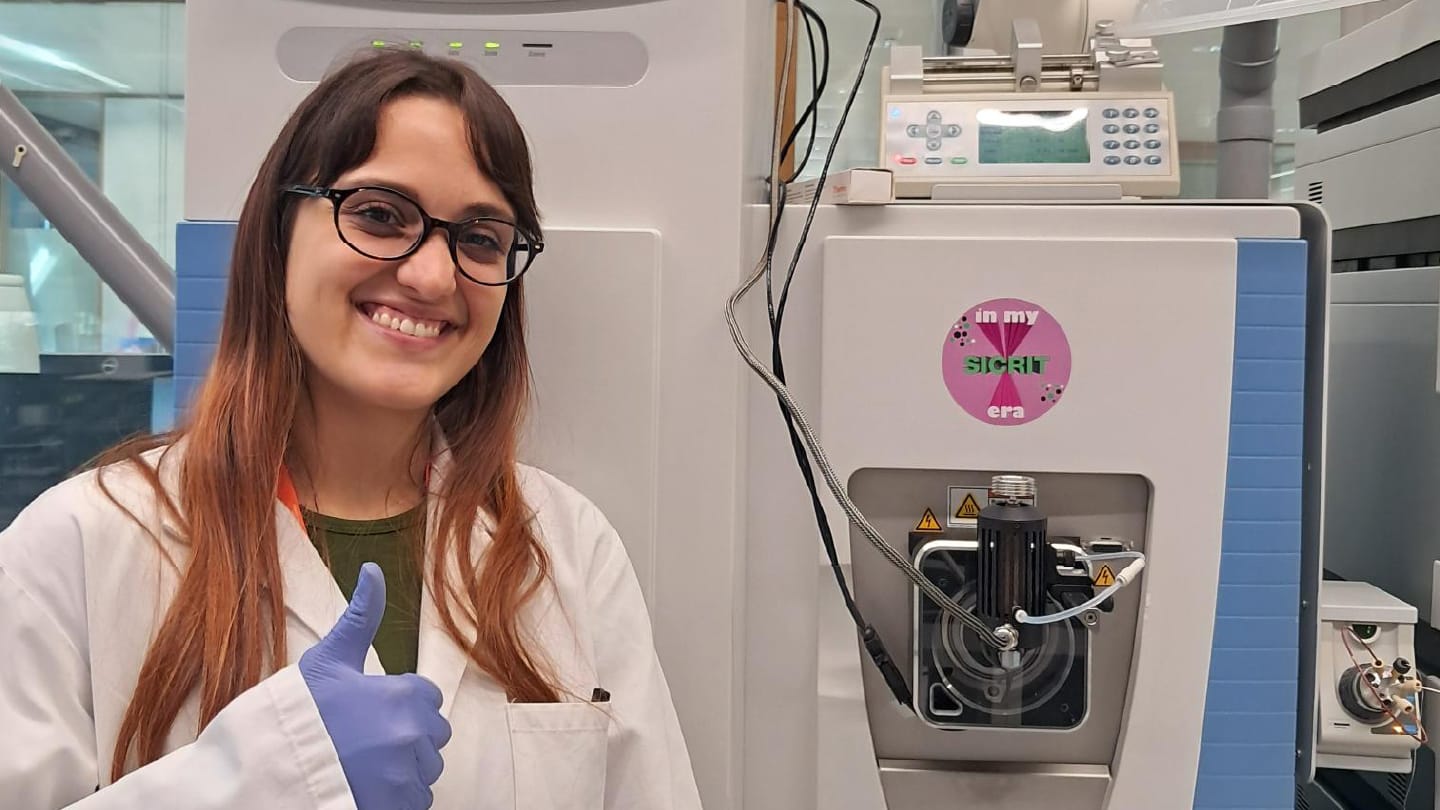
I am a PhD candidate in the National Doctorate in Food Systems at the University of Turin, supervised by Professor Chiara Cordero. My doctoral research aims to advance analytical chemistry beyond conventional food quality indices by employing advanced chromatographic and mass spectrometric platforms, combined with chemometric and machine learning approaches, to develop a deeper and more nuanced understanding of food quality, including its sensory dimension.
Going to Wageningen for my PhD internship, supervised by Prof. Hans-Gerd Janssen, was a remarkable opportunity. Working at Unilever Foods R&D placed me at the interface between academic research and industrial innovation, in an environment where the science conducted has a direct impact on products used by millions of people worldwide.
The case of the disappearing Aroma
The project focused on one of the most challenging aspects of flavor and food science: understanding aroma perception as it occurs during food consumption. Flavor perception is highly dynamic. Volatile compounds are continuously released while food is being processed in the mouth, and the timing of their release can be just as important as their concentration. However, many conventional analytical approaches rely on static or endpoint measurements, which provide only a snapshot of a constantly evolving process.
The goal was therefore to develop an analytical framework capable of investigating aroma release under controlled, consumption-relevant conditions, and to systematically compare different instrumental approaches for capturing these dynamics.
A mystery in the mouth
To achieve this, we developed a simplified simulated mouth system, consisting of an aqueous phase mimicking saliva, controlled stirring, and a constant gas flow, that allowed us to generate reproducible aroma-release profiles while minimizing biological variability. Using this platform, we studied three food matrices with contrasting compositions and structures: mayonnaise, ketchup, and mustard.
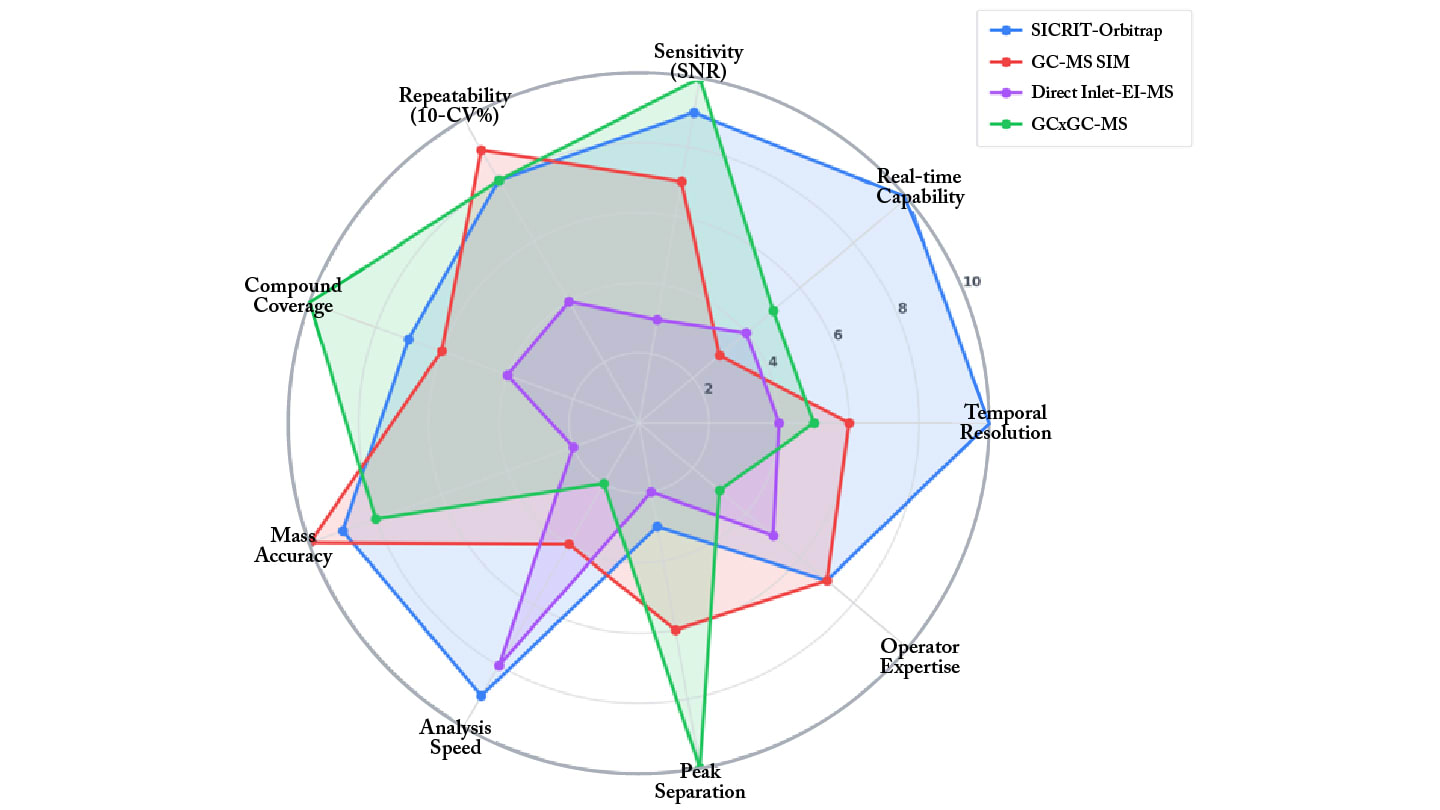
A central aspect of the work was the development and comparison of different analytical platforms. We evaluated four options: SICRIT coupled to Orbitrap high-resolution mass spectrometry for real-time monitoring; GC-MS operated in selected ion monitoring mode; direct-inlet electron ionization mass spectrometry (EI-MS); and thermally modulated direct EI-MS, the latter incorporating principles derived from comprehensive two-dimensional gas chromatography (GC×GC-MS) (Figure1). Each platform offered different strengths in terms of temporal resolution, sensitivity, compound selectivity and analytical depth.
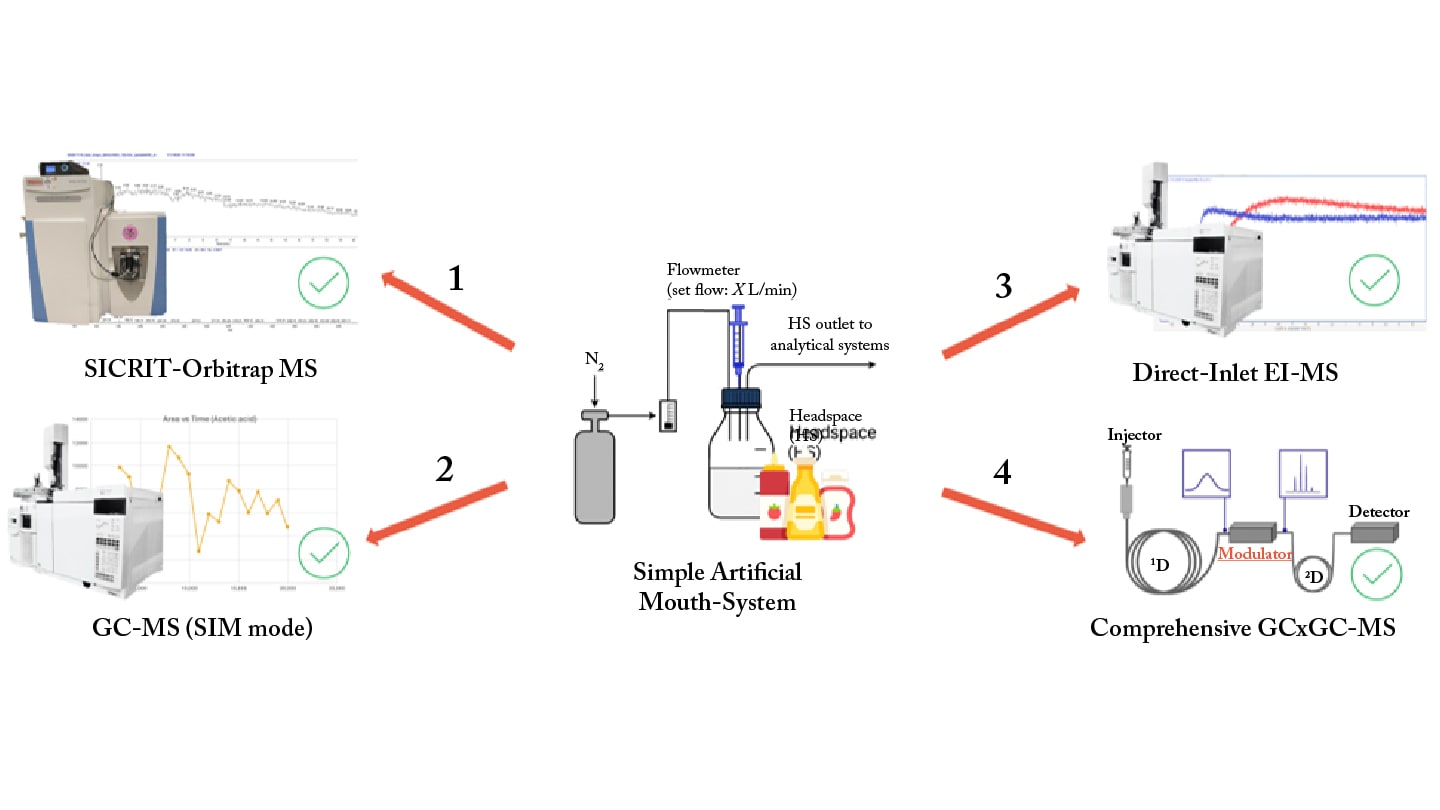
One of the most interesting outcomes was that all platforms revealed consistent underlying release behaviors despite their different analytical characteristics. We identified recurring release patterns across different food matrices and analytical approaches, suggesting the existence of common kinetic signatures governing aroma release.
Beyond the individual experimental findings, the project resulted in a practical decision-framework based on multi-criteria decision analysis (Figure 2). Rather than identifying a single “best” instrument, the work demonstrated that platform selection should depend on the specific analytical question. Real-time monitoring, targeted quantification, comprehensive profiling, and routine screening all require different analytical characteristics. In this sense, the project provides both scientific insights into flavor-release mechanisms and practical guidance for researchers and industry scientists selecting analytical tools for flavor studies.
Lessons from the investigation
I truly enjoyed this project because it allowed me to explore an aspect of food science I had never investigated so deeply before: the dynamic relationship between food composition and human perception. During my PhD, I have worked extensively on the characterization of complex food and biological systems, often focusing on the chemical information hidden within large, multidimensional datasets. This project shifted the perspective from “what is present” to “what is actually perceived, when, and how”.
What fascinated me most was realizing that flavour is not a static property of food. We often consider composition as the main determinant of sensory characteristics, but this work highlighted how the timing of aroma release can be equally important. Two products may contain similar volatile compounds yet generate completely different sensory experiences because those compounds are released differently during consumption. Understanding this temporal dimension gave me a new appreciation for the complexity of flavour perception and for the analytical challenges involved in studying it.
Another aspect I particularly valued was the opportunity to compare different analytical platforms not only in terms of performance, but also in terms of their ability to answer specific scientific questions. The project reinforced an idea that has become increasingly important to me during my PhD: analytical science is not about using the most advanced technology, but about choosing the most suitable strategy to generate meaningful knowledge. In this case, each platform provided a different perspective on the same phenomenon and understanding their specific answers was as important as evaluating their individual strengths.
Working at Unilever also gave me the opportunity to experience a highly multidisciplinary research environment. I enjoyed seeing how analytical chemistry, flavour science, sensory understanding, product development and industrial innovation are strongly interconnected. It was inspiring to observe how scientists with different expertise contribute to a common goal such as improving food products and ultimately enhancing the consumer experience. Beyond the technical skills I gained in mass spectrometry, chromatography and data analysis, this project surely broadened my perspective on the role of analytical science in food research, showing me how important it is for industry. But also, it reminded me that behind every analytical measurement there is always a human dimension, because understanding how people experience food is ultimately what gives meaning to most of our work.
The Senior Detectives’ Verdict
What are the benefits of academia-industry collaborations like this?
Chiara Cordero: As a PhD supervisor, I promote these projects because they allow students to experience how excellent science is transformed into innovation. They create a unique learning environment where academia and industry work together on shared scientific challenges. In Fulvia's case, the collaboration with Hans-Gerd at Unilever provided access to industrial R&D expertise while maintaining the scientific depth expected from a doctoral project. This approach is fully aligned with our National PhD in Food Systems (https://www.dott-fstb.unito.it/do/home.pl) and with EIT Food's vision of connecting research, innovation, and societal impact (https://www.eitfood.eu/projects/global-food-venture-programme).
Hans-Gerd Janssen: Industrial research and academic studies are complementary activities in which scientific questions, conceptual innovations, and practical solutions meet. Young academics provide the “out-of-the-box thinking” needed for industry to stay up-to-date and not stick to the known. Additionally, we see that young recruits often experience a culture shock when entering their first industrial job. This program helps us to solve our problems while at the same time contributing to the development of our next generation of researchers.
What are the requirements for such a project?
Cordero: Successful projects require strong scientific foundations, a clear research objective, and close collaboration between academic and industrial supervisors. Equally important are motivated students who are willing to work across disciplines, cultures, and research environments.
Janssen: First of all, the project should be challenging and require tomorrow’s technology to solve the problem at hand. It must be research at the forefront of technology, not just the rapid and superficial solution of an industrial problem. For the candidate there should be room to experiment and take risks. Moreover, both the candidate and the receiving industrial group must have the right mentality. Industry must accept that new developments take time whereas the researcher should keep the aim in mind and avoid “research for the sake of research.”
How did this project contribute Fulvia's development as a scientist?
Cordero: Fulvia's PhD project focuses on the application of advanced analytical tools to move beyond conventional quality indices and develop a deeper understanding of food quality, including sensory quality. Her research stay at Unilever complemented this vision by combining scientific innovation with the pragmatism of industrial R&D, providing valuable insight into how analytical knowledge can support real-world decision-making.
Janssen: Surely Fulvia is now much better prepared to enter industry. She knows what is relevant in industrial research and understands how academic and industrial research are complementary yet different. She is now experienced with the industrial way-of-working with a very strong focus on the aim and clearer definitions of how to get there. The stay will also have deepened her understanding of how science can contribute to the development of better products. At the detail level she now understands much better how flavour is perceived by humans.
Will you continue to work on projects like this?
Cordero: Yes, for sure. For many years, our group has collaborated with companies and European consortia to translate knowledge generated through advanced analytical and omics approaches into practical measurement systems for real-world applications. Building these ecosystems requires trust, expertise, passion, and a shared vision, but the benefits are substantial for all partners involved. It is a genuine win-win strategy, and one we will continue to pursue.
Janssen: Our door is always open. Good students with the desire to learn are always welcome. As industry, we feel we have a responsibility to contribute to the education of the on-coming generation. We can offer challenging, realistic problems. We can offer excellent technical facilities, and we have motivated and experienced people who are willing to share their expertise. When such people work with motivated and talented students, great things can happen. Honestly, without students to help, our laboratory would not have the high quality and status it now has.
Chiara Cordero is a Full Professor of Food Chemistry at the University of Turin, working at the interface between analytical science, food quality research, and industrial innovation.
Hans-Gerd Janssen is a senior scientist at Unilever Foods R&D and part-time professor Analytical Chemistry at Wageningen University. His research focuses on developing tasteful and healthy consumer-preferred products based on a molecular understanding of the food.
[/sidebar]
Newsletters
Receive the latest analytical science news, personalities, education, and career development – weekly to your inbox.