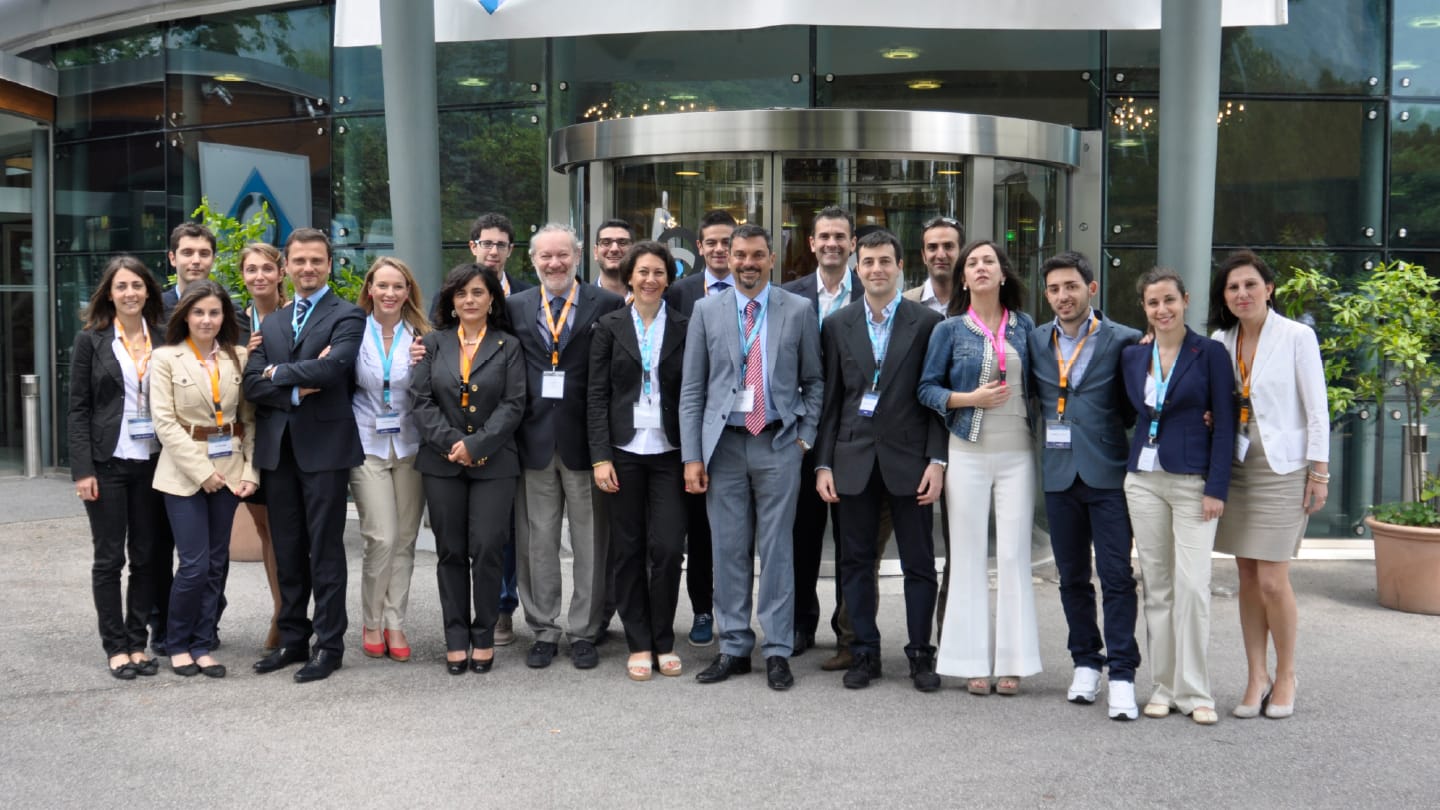
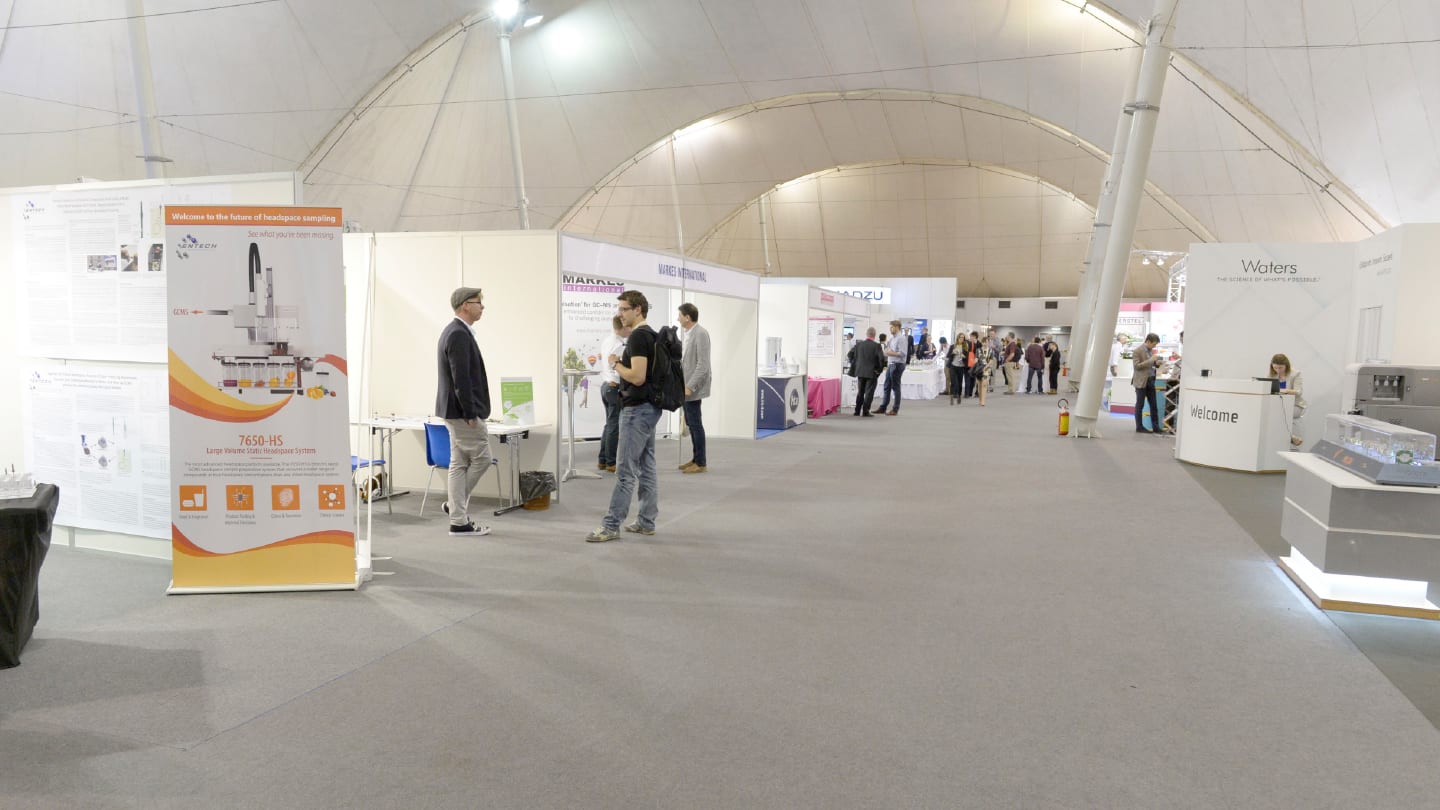
Earlier this year, the chromatography community descended on Riva del Garda for the return of the 44th International Symposium on Capillary Chromatography (ISCC) together with the 21st GC×GC Symposium – where a clear theme emerged.
“The main take-away message from Riva 2026 is that GC×GC has matured into a central, application-driven platform that is no longer limited to specialists but is increasingly used for real analytical decisions across diverse fields,” says Mariosimone Zoccali, Associate Professor of Analytical Chemistry at the University of Messina (Italy), and chair of the Riva 2026 organizing committee. “The conference demonstrated that comprehensive two-dimensional GC is now valued not only for its extraordinary peak capacity, but also for its power in identification, fingerprinting, classification, and both target and non-target workflows.”
Given the buzz around GCxGC at Riva 2026, we thought we’d reach out to leaders in the field as part of a new series, GCxGC Detective Stories, to understand how the technique is being used to unravel analytical mysteries in a range of application areas.
Here, Zoccali walks us through the evolution of GCxGC, which he describes as “one of the most exciting stories in separation science,” and casts an eye on the technique's future potential.

Meet Mariosimone
I am Mariosimone Zoccali, Associate Professor of Analytical Chemistry at the University of Messina (Italy), where I work in the MeIT laboratory. As a scientist, my core expertise lies in multidimensional chromatography, particularly comprehensive two-dimensional gas chromatography (GC×GC) and in sample preparation techniques. I focus on resolving highly complex mixtures and extracting chemically meaningful information, with applications in food analysis and authentication, environmental screening, and the development and validation of chromatographic methods. As chair of the organizing committee, I was involved in the organization of the 44th International Symposium on Capillary Chromatography (44th ISCC) and the 21st GC×GC Symposium, held in Riva del Garda from May 17–22, 2026.
How has GCxGC evolved in recent years?
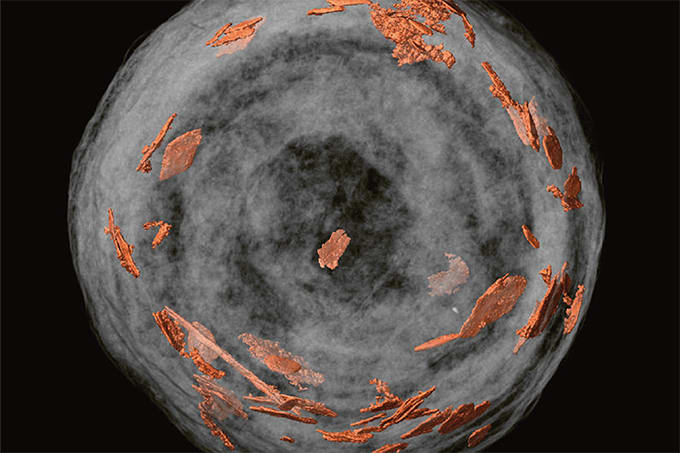
From my perspective, the evolution of GC×GC has been one of the most exciting stories in separation science. In its early years, the technique stood out mainly because of the chromatograms it produced: dense, visually impressive, and almost landscape-like in their appearance. Those images had a real impact, because they showed that a complex sample could contain far more information than conventional GC was able to reveal.
What has changed over time, however, is not just the way we look at GC×GC, but the way we use it. A major part of this progress has come from the instrument itself. Modulators have become more robust, more reliable, and more affordable, which has made the technique much easier to adopt and maintain. At the same time, method-development software and data-processing tools have become much more intuitive, which has lowered the entry barrier for new users and made the whole workflow more practical for routine laboratories.
This instrumental evolution has been crucial. GC×GC is no longer seen only as a technically sophisticated option for specialists, but as a mature analytical approach that can be integrated into real workflows. That is particularly evident in petrochemistry, food analysis, fragrance and flavour research, and biomedical studies, where GC×GC helps extract meaningful chemical information from highly complex matrices.
What makes the technique so compelling today is that it combines separation power with interpretative value. It does not simply generate beautiful chromatograms; it turns complexity into information that can be trusted, compared, and used.
Where does GC×GC now stand in relation to other analytical techniques?
In chemical analysis today, GC×GC stands as a central tool in comprehensive separation science, especially for complex mixtures where one-dimensional GC is insufficient. Its strength lies not only in resolving peaks, but in generating structured chemical information that can be interpreted in a robust and meaningful way. GC×GC is particularly powerful when combined with mass spectrometry, because the additional separation dimension reduces spectral overlaps, gives cleaner MS spectra, and improves identification confidence. It also supports advanced data analysis, including fingerprinting, classification, and non-target screening, which are increasingly important in fields like food safety, environmental monitoring, and biomedical research.
Another important advantage is the improvement in signal-to-noise ratio, which often leads to higher method sensitivity. By reducing co-elution and separating analytes from matrix interferences, GC×GC can make trace compounds easier to detect and quantify, especially in very complex samples. In practice, this means that GC×GC is not only a higher-resolution technique, but also a more sensitive and more reliable one in many challenging analytical contexts.
In practice, GC×GC is used when: the mixture is too complex for 1D-GC, identification confidence must be maximized, fingerprinting or classification is required, and trace components must be detected in the presence of major interferents.
This makes GC×GC a key technique for modern analytical challenges where complexity, sensitivity, and reliability are critical.
Please give some example applications
In petrochemistry, GC×GC is essential for resolving highly complex hydrocarbon mixtures. It enables detailed characterization of fingerprints that would be very difficult to interpret with one-dimensional GC, supporting applications such as source identification, quality control, and process monitoring.
In food science, GC×GC supports authenticity studies, aroma profiling, and the detection of trace contaminants or markers of fraud. It can separate complex volatile and semi-volatile profiles, revealing minor components that are decisive for product quality, geographical origin, or processing history.
For flavors and fragrances, GC×GC helps disentangle very dense volatile profiles. It reveals minor components that can be critical for product identity, stability, or consumer perception, and it supports robust classification and quality control.
In healthcare, GC×GC is increasingly attractive for complex sample profiling, such as metabolomics or lipidomics, especially when linked to high-quality MS and advanced data processing. The technique can resolve overlapping compounds and improve identification confidence in highly complex biological matrices.

Who is driving progress in GCxGC?
I would like to highlight the contribution of younger scientists, who were one of the most energetic and promising voices at Riva 2026. The program gave them real visibility, not only through poster contributions but also through dedicated oral lectures, and several of those talks pointed clearly to where GC×GC is heading next. What stood out was the range of topics: PFAS screening, bioanalytical applications, food authenticity, sustainable fuels, waste characterization, and even AI-driven data interpretation. That breadth is important because it shows that the next generation is not entering GC×GC as passive users, but as active contributors who are already expanding its scope and relevance.
What was especially interesting is that many of these contributions were genuinely forward-looking applications. Some young scientists were working on PFAS discovery and prioritization, others on breast skin volatilomics, olive oil profiling, plant-based proteins, or the characterization of recycled and pyrolyzed materials. In practical terms, this means they are helping turn GC×GC into a technique that speaks to some of the most current analytical challenges of our time: environmental contamination, food authenticity, sustainability, and complex biological systems.
The message from Riva was clear: GC×GC is being carried forward by a new generation that combines chemistry, instrumentation, and data science with remarkable confidence. Their work is pushing the field into new territory, and that is exactly what gives the technique renewed momentum.
Which awards were given in GC×GC at Riva 2026?
The award structure at the 21st GC×GC Symposium told a very clear story about the field. On one side, it honored long-term scientific leadership and the researchers who have helped define GC×GC over the years; on the other, it gave strong visibility to the next generation, whose work is already pushing the technique into new application areas. In this sense, the awards were not just ceremonial recognition, but a snapshot of where GC×GC stands today and where it is heading.
At the higher end of the spectrum, the GC×GC Lifetime Achievement Award recognized sustained and influential contributions to the field, reinforcing the idea that GC×GC has now become a mature scientific discipline with its own history and intellectual continuity. The John Phillips Award continued this tradition from another angle, honoring researchers who have already made a strong impact early in their careers and are showing the kind of leadership that will shape the future of the field. This balance between senior recognition and emerging excellence is important because it shows that GC×GC is no longer a niche technique, but a community with a solid foundation and a clear trajectory.
The young-scientist awards made that trajectory even more visible. The Genzo Shimadzu Best Oral Awards highlighted contributions on metabolomic profiling of wood, analysis of plant-based protein powders, the toxicologically relevant fraction of mineral oil, and non-target screening of house dust from several European countries. These are highly relevant topics, ranging from materials and food to environmental exposure, and they show that young researchers are already applying GC×GC to real-world analytical problems with strong scientific and societal relevance.
The poster prizes reinforced the same message. The Richard Sacks GC×GC Poster Awards recognized work on crude oil and tar characterization, VOC profiling in recycled plastics, and the rapid screening of light hydrocarbons in crude oils using advanced data analysis.
The ABC Springer Best Poster Presentation Award highlighted a study on recycled plastic as a food contact material, while the MDPI Best Oral Presentation Award was given for AI-driven volatilomics with GC×GC-HRMS. Together, these awards show that GC×GC is being advanced not only through method development, but also through applications in petrochemistry, recycled materials, food contact safety, and machine-learning-assisted data interpretation.
Seen as a whole, the award structure maps the evolution of GC×GC very effectively. It highlights excellence at the top level, but it also makes visible the contribution of young scientists who are bringing fresh ideas, new applications, and a more data-driven mindset to the field. That is perhaps the most important message: GC×GC is progressing because it now combines strong methodological foundations with a vibrant and continuously renewing scientific community.
Where is GC×GC heading in the near future?
In the near future, GC×GC is likely to move further away from being seen as a specialist technique reserved for a few experts, and more toward a routine analytical platform for solving complex problems in a practical way. Today, the real challenge is to make the technique easier to use, easier to interpret, and easier to integrate into everyday laboratory workflows. That shift is already visible in the way the community is developing more robust instruments, more intuitive software, and more accessible method-development strategies.
A major direction will certainly be the tighter coupling with mass spectrometry, especially for flow-modulation. This would make GC×GC more powerful in real applications, because the additional separation dimension helps deliver cleaner spectra, better identification confidence, and stronger performance in non-target and suspect-screening workflows. In complex matrices, where co-elutions and matrix interferences can easily obscure important signals, this combination will remain one of the main strengths of the technique.
Another important trend is the growing role of data analysis. GC×GC generates a huge amount of information, and the future of the field will depend increasingly on how well that information can be processed, visualized, and interpreted. Chemometrics, machine learning, and smarter visualization tools are becoming essential because they help turn dense chromatographic data into useful chemical knowledge. This is especially important when the goal is not simply compound identification, but pattern recognition, classification, or the comparison of large sample sets.
Sustainability will also shape the next phase of GC×GC development. There is a clear push toward greener workflows, including miniaturized systems, lower solvent consumption, reduced carrier gas use, and more efficient sample preparation. This is particularly relevant because modern analytical chemistry is increasingly expected to combine performance with environmental responsibility. GC×GC will need to keep delivering high information content while becoming lighter, cleaner, and more efficient in its overall analytical footprint.

At the application level, the technique is likely to gain even more ground in areas with clear societal impact. Environmental screening, PFAS analysis, food authenticity, food safety, biomarker discovery, and forensic or exposure-related studies are all areas where the strengths of GC×GC are especially valuable. These are fields where complexity is the rule rather than the exception, and where a technique that can separate, classify, and reveal hidden information has a clear future.
What makes this progression so promising is that GC×GC is becoming not just more powerful, but more usable. Better automation, smarter software, and more robust hardware are reducing the barrier to entry, which means the technique can spread beyond a narrow community of specialists. That combination of analytical strength, practical usability, and growing application relevance is what will define the next stage of GC×GC. In that sense, the future of the technique is greater intelligence, more accessibility leading to its continued development into a trusted tool for modern chemical analysis.
Acknowledgements
I would like to thank Luigi Mondello, Chair of the Symposia, for his vision in bringing the Riva conference back and for entrusting me with chairing the Organizing Committee. I am equally grateful to Pat Sandra, Honorary Chair of the Symposia, whose experience, encouragement, and support were invaluable to the meeting’s successful return. My sincere thanks also go to every member of the Scientific and Organizing Committees – particularly Antonio and Micaela – for their dedication and tireless support, as well as to the sponsors and participants whose contributions and enthusiasm made Riva 2026 possible.
Newsletters
Receive the latest analytical science news, personalities, education, and career development – weekly to your inbox.