Clinical Report: Can Regulated Labs Trust AI?
Overview
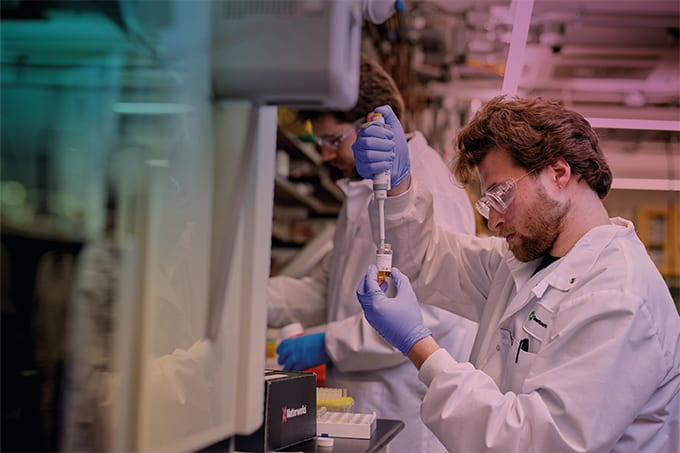
The integration of AI into laboratory workflows is reshaping regulatory expectations, emphasizing data integrity and automation. As laboratories transition to digital tools, regulators are adapting standards to ensure patient safety and product quality.
Background
The rapid adoption of artificial intelligence (AI) in laboratory settings is transforming how data is managed and analyzed. This shift is critical as it aims to enhance efficiency, reduce human error, and ultimately expedite the delivery of safe pharmaceuticals to market. Understanding the evolving regulatory landscape is essential for laboratory leaders to maintain compliance and trust in AI systems.
Data Highlights
No specific numerical data provided in the source material.
Key Findings
- Regulatory expectations are evolving to accommodate digital tools in laboratories.
- AI and machine learning are being integrated into laboratory workflows, necessitating updated guidance from regulators.
- Data integrity challenges are increasing, with regulators requiring proof of integrity at each step of the data lifecycle.
- Automation in laboratories reduces manual tasks, allowing scientists to focus on quality experimentation.
- Regulators are emphasizing the importance of compliance controls embedded in digital workflows.
Clinical Implications
Laboratory leaders must prioritize the integration of AI while ensuring compliance with evolving regulatory standards. Continuous monitoring and validation of AI systems are crucial to maintain data integrity and protect patient safety.
Conclusion
As AI becomes more prevalent in laboratory settings, understanding and adapting to regulatory expectations is vital for maintaining trust and ensuring quality outcomes.
Related Resources & Content
- Kimberly Remillard, Thermo Fisher Scientific, 2023 -- Can Regulated Labs Trust AI?
- the medicine maker, 2026 -- AI and the Future of Bioprocess Labs
- aace endocrine ai, 2026 -- Medical AI: What shapes patient trust?
- Journal of Medical Internet Research (JMIR), 2026 -- Clinical AI is Not (Yet) Trustworthy-But It Could Be
- FDA, 2023 -- FDA Issues Comprehensive Draft Guidance for Developers of Artificial Intelligence-Enabled Medical Devices
- the asco post — Most People Trust AI Less Than Physicians, Survey Finds
- AI-based triage and decision support in mammography and digital tomosynthesis for breast cancer screening
- Developing, Purchasing, Implementing and Monitoring AI Tools in Radiology
- FDA Issues Comprehensive Draft Guidance for Developers of Artificial Intelligence-Enabled Medical Devices | FDA
This content is an AI-generated, fully rewritten summary based on a published scholarly article. It does not reproduce the original text and is not a substitute for the original publication. Readers are encouraged to consult the source for full context, data, and methodology.
Newsletters
Receive the latest analytical science news, personalities, education, and career development – weekly to your inbox.
About the Author(s)
James Strachan
Over the course of my Biomedical Sciences degree it dawned on me that my goal of becoming a scientist didn’t quite mesh with my lack of affinity for lab work. Thinking on my decision to pursue biology rather than English at age 15 – despite an aptitude for the latter – I realized that science writing was a way to combine what I loved with what I was good at. From there I set out to gather as much freelancing experience as I could, spending 2 years developing scientific content for International Innovation, before completing an MSc in Science Communication. After gaining invaluable experience in supporting the communications efforts of CERN and IN-PART, I joined Texere – where I am focused on producing consistently engaging, cutting-edge and innovative content for our specialist audiences around the world.