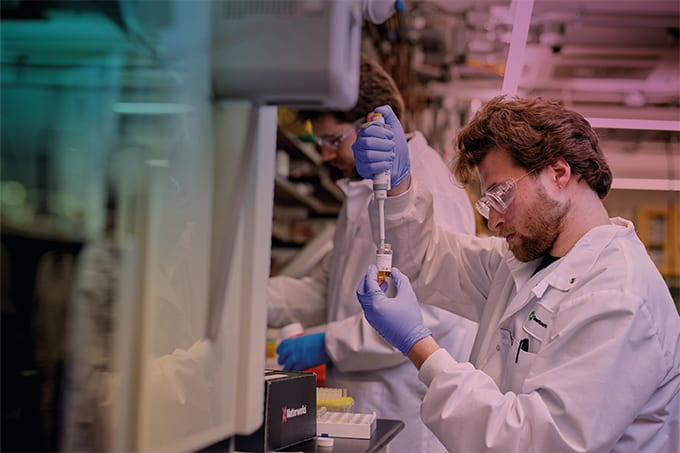
Clinical Scorecard: Can Regulated Labs Trust AI?
At a Glance
| Category | Detail |
|---|---|
| Condition | Regulatory compliance in laboratory settings |
| Key Mechanisms | Integration of AI and digital tools to enhance data integrity and operational efficiency |
| Target Population | Laboratories utilizing AI and digital technologies |
| Care Setting | Analytical and quality control laboratories |
Key Highlights
- Regulatory expectations are evolving to accommodate digital tools in laboratories.
- AI and machine learning are becoming integral to laboratory workflows.
- Data integrity standards have increased, requiring compliance with ALCOA++ principles.
- Automated systems reduce human error and improve operational efficiency.
- Human oversight remains critical in AI-driven processes.
Guideline-Based Recommendations
Diagnosis
- Regularly assess the accuracy and reliability of AI models.
Management
- Implement compliance by design using modern digital tools.
Monitoring & Follow-up
- Continuously monitor AI inputs and outputs for integrity.
Risks
- Ensure human-in-the-loop workflows for AI outputs.
Patient & Prescribing Data
Patients affected by pharmaceuticals developed in AI-enabled labs
AI tools can expedite the development of safe and effective pharmaceuticals.
Clinical Best Practices
- Embed compliance controls within digital workflows.
- Utilize electronic signatures and access rights for data integrity.
- Regularly validate and maintain digital tools to ensure compliance.
References
This content is an AI-generated, fully rewritten summary based on a published scholarly article. It does not reproduce the original text and is not a substitute for the original publication. Readers are encouraged to consult the source for full context, data, and methodology.
Newsletters
Receive the latest analytical science news, personalities, education, and career development – weekly to your inbox.
About the Author(s)
James Strachan
Over the course of my Biomedical Sciences degree it dawned on me that my goal of becoming a scientist didn’t quite mesh with my lack of affinity for lab work. Thinking on my decision to pursue biology rather than English at age 15 – despite an aptitude for the latter – I realized that science writing was a way to combine what I loved with what I was good at. From there I set out to gather as much freelancing experience as I could, spending 2 years developing scientific content for International Innovation, before completing an MSc in Science Communication. After gaining invaluable experience in supporting the communications efforts of CERN and IN-PART, I joined Texere – where I am focused on producing consistently engaging, cutting-edge and innovative content for our specialist audiences around the world.