Conexiant
Login
  • The Analytical Scientist
  • The Cannabis Scientist
  • The Medicine Maker
  • The Ophthalmologist
  • The Pathologist
  • The Traditional Scientist
The Analytical Scientist
  • Explore

    Explore

    • Latest
    • News & Research
    • Trends & Challenges
    • Keynote Interviews
    • Opinion & Personal Narratives
    • Product Profiles
    • App Notes
    • The Product Book

    Featured Topics

    • Mass Spectrometry
    • Chromatography
    • Spectroscopy

    Issues

    • Latest Issue
    • Archive
  • Topics

    Techniques & Tools

    • Mass Spectrometry
    • Chromatography
    • Spectroscopy
    • Microscopy
    • Sensors
    • Data and AI

    • View All Topics

    Applications & Fields

    • Clinical
    • Environmental
    • Food, Beverage & Agriculture
    • Pharma and Biopharma
    • Omics
    • Forensics
  • People & Profiles

    People & Profiles

    • Power List
    • Voices in the Community
    • Sitting Down With
    • Authors & Contributors
  • Business & Education

    Business & Education

    • Innovation
    • Business & Entrepreneurship
    • Career Pathways
  • Events
    • Live Events
    • Webinars
  • Multimedia
    • Video
    • Content Hubs
Subscribe
Subscribe

False

The Analytical Scientist / Issues / 2026 / January / InfluenzaScreening Could a TasteBased Sensor Play a Role
Sensors Clinical Translational Science

Influenza Screening: Could a Taste-Based Sensor Play a Role?

Selective methylation of N-acetylneuraminic acid enabled a taste-releasing sensor to distinguish influenza neuraminidase from bacterial enzymes 

By Kathryn Wighton 01/13/2026 2 min read
  • Full Article
  • Summary
  • Takeaways
  • Listen
  • Report
  • Scorecard
  • Quiz
  • Poll
  • Top Institutions
  • Top Thought Leaders

Share

Clinical Scorecard: Influenza Screening: Could a Taste-Based Sensor Play a Role?

At a Glance

CategoryDetail
ConditionInfluenza
Key MechanismsTaste-based sensor utilizing viral neuraminidase activity to cleave a chemically engineered sensor.
Target PopulationPatients with influenza, particularly those hospitalized and influenza-positive.
Care SettingPoint of care testing.

Key Highlights

  • Development of a taste-based sensor that selectively responds to viral neuraminidase.
  • Methylated α-linked sensor demonstrated selectivity for viral neuraminidase over bacterial neuraminidase.
  • Neuraminidase activity in saliva from influenza-positive patients was sufficient to activate the sensor.
  • Cytotoxicity testing showed no reduction in cell viability at concentrations up to 1.0 mM.
  • Sensor stability maintained at least 95% integrity for four weeks under typical storage conditions.

Guideline-Based Recommendations

Diagnosis

  • Utilize the taste-based sensor for early detection of influenza through neuraminidase activity.

Management

  • Consider the sensor as a low-cost, rapid testing option at the point of care.

Monitoring & Follow-up

  • Assess neuraminidase levels in saliva to evaluate sensor activation potential.

Risks

  • Further assessment needed against patient-reported outcomes to validate clinical utility.

Patient & Prescribing Data

Hospitalized patients with confirmed influenza.

Milligram-level quantities of sensor estimated for effective oral use.

Clinical Best Practices

  • Monitor neuraminidase activity in patients to guide sensor use.
  • Ensure sensor selectivity is maintained for accurate influenza detection.

References

  • ACS Central Science Study

This content is an AI-generated, fully rewritten summary based on a published scholarly article. It does not reproduce the original text and is not a substitute for the original publication. Readers are encouraged to consult the source for full context, data, and methodology.

Newsletters

Receive the latest analytical science news, personalities, education, and career development – weekly to your inbox.

Newsletter Signup Image

About the Author(s)

Kathryn Wighton

Editor, Conexiant

More Articles by Kathryn Wighton

False

Advertisement

Recommended

False

Related Content

Meeting Mpox Where It’s At
Sensors
Meeting Mpox Where It’s At

December 17, 2024

1 min read

New optical biosensor offers mpox virus detection in 20 minutes

Dropletronics
Sensors
Dropletronics

December 31, 2024

1 min read

Biocompatible electronic devices open up new possibilities for in situ disease detection

Molecularly Imprinted Polymers: The Future of Smart and Sustainable Sensing
Sensors
Molecularly Imprinted Polymers: The Future of Smart and Sustainable Sensing

October 14, 2024

4 min read

Unlocking the potential of synthetic receptors for precise, eco-friendly diagnostics and environmental monitoring – paving the way for next-gen sensor technology
Hydrogen Boon
Sensors
Hydrogen Boon

November 12, 2024

1 min read

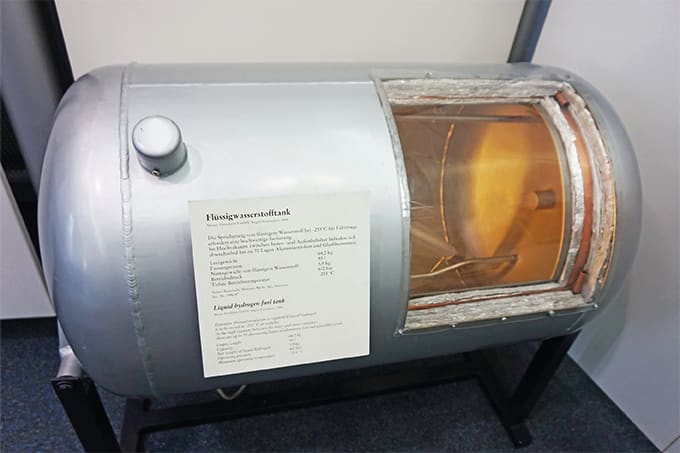
Tunable diode laser absorption spectroscopy (TDLAS) technique offers high-sensitivity, calibration-free hydrogen gas detection

Affiliations:

Specialties:

Areas of Expertise:

Contributions:

False

The Analytical Scientist
Subscribe

About

  • About Us
  • Work at Conexiant Europe
  • Terms and Conditions
  • Privacy Policy
  • Advertise With Us
  • Contact Us

Copyright © 2026 Texere Publishing Limited (trading as Conexiant), with registered number 08113419 whose registered office is at Booths No. 1, Booths Park, Chelford Road, Knutsford, England, WA16 8GS.