Conexiant
Login
  • The Analytical Scientist
  • The Cannabis Scientist
  • The Medicine Maker
  • The Ophthalmologist
  • The Pathologist
  • The Traditional Scientist
The Analytical Scientist
  • Explore

    Explore

    • Latest
    • News & Research
    • Trends & Challenges
    • Keynote Interviews
    • Opinion & Personal Narratives
    • Product Profiles
    • App Notes
    • The Product Book

    Featured Topics

    • Mass Spectrometry
    • Chromatography
    • Spectroscopy

    Issues

    • Latest Issue
    • Archive
  • Topics

    Techniques & Tools

    • Mass Spectrometry
    • Chromatography
    • Spectroscopy
    • Microscopy
    • Sensors
    • Data and AI

    • View All Topics

    Applications & Fields

    • Clinical
    • Environmental
    • Food, Beverage & Agriculture
    • Pharma and Biopharma
    • Omics
    • Forensics
  • People & Profiles

    People & Profiles

    • Power List
    • Voices in the Community
    • Sitting Down With
    • Authors & Contributors
  • Business & Education

    Business & Education

    • Innovation
    • Business & Entrepreneurship
    • Career Pathways
  • Events
    • Live Events
    • Webinars
  • Multimedia
    • Video
    • Content Hubs
Subscribe
Subscribe

False

The Analytical Scientist / Issues / 2026 / January / Living Sensor Illuminates Epigenetic Changes Inside Cells
Sensors Genomics & DNA Analysis Pharma and Biopharma

Living Sensor Illuminates Epigenetic Changes Inside Cells

A genetically encoded sensor platform allows researchers to watch PTM dynamics inside cells and tumors – opening new paths in drug discovery

By James Strachan 01/12/2026 3 min read
  • Full Article
  • Summary
  • Takeaways
  • Listen
  • Quiz
  • Poll
  • Top Institutions

Share

5 Key Takeaways
  • 1

    Researchers at Rice University developed a 'living sensor' system to track post-translational modifications in real time within living cells.

  • 2

    The system uses a 21st amino acid, acetyllysine, incorporated into proteins, allowing visualization of enzymatic activity through bioluminescence.

  • 3

    This innovative approach provides high temporal resolution and single-cell insight, surpassing traditional methods that rely on cell lysis.

  • 4

    Monitoring SIRT1 activity revealed that inhibiting the enzyme did not slow tumor growth, challenging existing assumptions about its role in cancer.

  • 5

    The adaptable platform could be used for real-time monitoring of various enzymatic activities, aiding drug discovery and personalized medicine.

This content is an AI-generated, fully rewritten summary based on a published scholarly article. It does not reproduce the original text and is not a substitute for the original publication. Readers are encouraged to consult the source for full context, data, and methodology.

Newsletters

Receive the latest analytical science news, personalities, education, and career development – weekly to your inbox.

Newsletter Signup Image

About the Author(s)

James Strachan

Over the course of my Biomedical Sciences degree it dawned on me that my goal of becoming a scientist didn’t quite mesh with my lack of affinity for lab work. Thinking on my decision to pursue biology rather than English at age 15 – despite an aptitude for the latter – I realized that science writing was a way to combine what I loved with what I was good at. From there I set out to gather as much freelancing experience as I could, spending 2 years developing scientific content for International Innovation, before completing an MSc in Science Communication. After gaining invaluable experience in supporting the communications efforts of CERN and IN-PART, I joined Texere – where I am focused on producing consistently engaging, cutting-edge and innovative content for our specialist audiences around the world.

More Articles by James Strachan

False

Advertisement

Recommended

False

Related Content

Meeting Mpox Where It’s At
Sensors
Meeting Mpox Where It’s At

December 17, 2024

1 min read

New optical biosensor offers mpox virus detection in 20 minutes

Dropletronics
Sensors
Dropletronics

December 31, 2024

1 min read

Biocompatible electronic devices open up new possibilities for in situ disease detection

Molecularly Imprinted Polymers: The Future of Smart and Sustainable Sensing
Sensors
Molecularly Imprinted Polymers: The Future of Smart and Sustainable Sensing

October 14, 2024

4 min read

Unlocking the potential of synthetic receptors for precise, eco-friendly diagnostics and environmental monitoring – paving the way for next-gen sensor technology
Hydrogen Boon
Sensors
Hydrogen Boon

November 12, 2024

1 min read

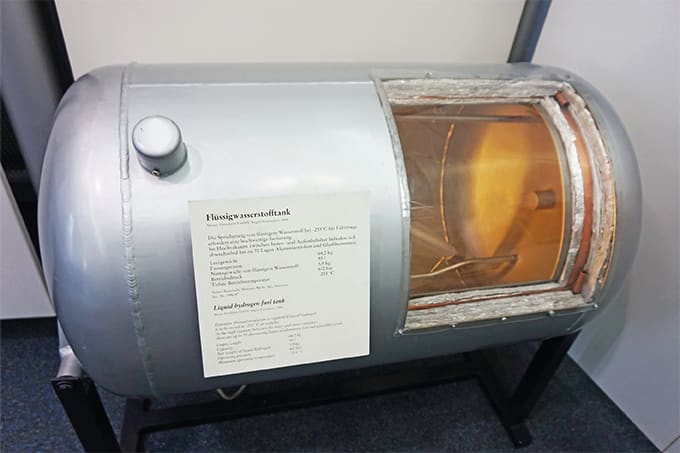
Tunable diode laser absorption spectroscopy (TDLAS) technique offers high-sensitivity, calibration-free hydrogen gas detection

Affiliations:

Specialties:

Areas of Expertise:

Contributions:

False

The Analytical Scientist
Subscribe

About

  • About Us
  • Work at Conexiant Europe
  • Terms and Conditions
  • Privacy Policy
  • Advertise With Us
  • Contact Us

Copyright © 2026 Texere Publishing Limited (trading as Conexiant), with registered number 08113419 whose registered office is at Booths No. 1, Booths Park, Chelford Road, Knutsford, England, WA16 8GS.