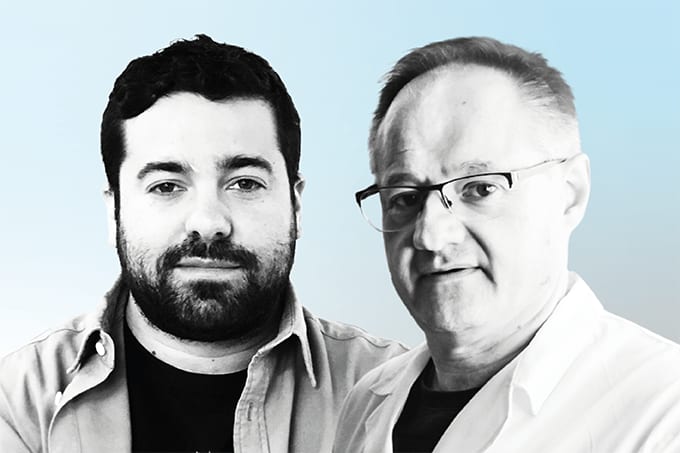
In the second of three installments from our roundtable on the future of sample preparation (check out Part One here), Marcela Segundo, Marcello Locatelli, and Stig Pedersen-Bjergaard explore what “green” really means in practice – from micro- and nano-scale extraction systems to solvent-free workflows and circular analytical chemistry. They discuss how automation, new materials, and a new generation of scientists are driving a shift toward truly sustainable analysis – and how academia, industry, and regulators can work together to make it happen.
Read the highlights below – or register to watch the full on-demand discussion.
Meet the Experts

Marcela Segundo is Professor of Analytical Chemistry at the University of Porto. She led the Analytical Development Group at the Portuguese Government’s Associate Laboratory for Green Chemistry, Clean Technologies, and Processes from 2018 to 2024, and currently heads a group pioneering greener, automated approaches to sample preparation. In 2016, she received the FIA Award for Science for her contributions to sustainable analytical methods.

Marcello Locatelli is Associate Professor of Analytical Chemistry at the University of Chieti-Pescara in Italy. His work focuses on innovative extraction techniques and sustainable bioanalytical methods, with applications spanning clinical, pharmaceutical, food, and environmental analysis.

Stig Pedersen-Bjergaard is Professor of Analytical Chemistry at the University of Oslo and holds a part-time post at the University of Copenhagen. He’s internationally recognized for developing liquid-phase and electromembrane extraction techniques – green sample preparation methods now used worldwide.
What does greener, more sustainable sample preparation look like in practice?
Pedersen-Bjergaard: I think it’s really about downscaling sample preparation – reducing extraction systems to the micro- or even nano-scale. That means using greener solvents, chemicals, and materials wherever possible; reusing devices; and minimizing energy consumption. Those are the key parameters.
If you look through the scientific literature, you’ll find many examples of genuinely green sample preparation approaches, and there are now established greenness assessment methods that allow us to quantify just how sustainable a given method is.
That said, what I personally find missing are similar efforts in chromatography and mass spectrometry. Chromatography still relies heavily on organic solvents in the mobile phase, and mass spectrometers themselves are large, material-intensive instruments that consume a lot of energy. Sample preparation is only one part of the full analytical workflow, and I would say the “green wind” is currently blowing more strongly over sample preparation than chromatography or mass spectrometry. I would say: they need to speed up their green thinking!
Locatelli: Today, we have several tools that allow us to evaluate whether our methods and development processes are genuinely green – such as AGREEprep and other frameworks widely accepted by the scientific community. A common theme across all these tools, as Stig noted, is downscaling: reducing both sample volume and solvent use, or even moving toward solvent-free procedures such as solid-phase microextraction.
From a sample preparation standpoint, we already have the technologies and knowledge to design procedures with strong sustainability profiles. Hyphenated configurations also help – even if the instrumentation itself isn’t entirely “green,” these integrations improve efficiency and reproducibility.
Other promising directions include smartphone-based quantification using paper-based analytical devices. If you look at greenness assessment tools like AGREEprep, these approaches often score among the highest because they’re low-cost, low-waste, and easily automated.
Another interesting area is the development of non-toxic solvents. For instance, I once read about switchable solvents – a class of green solvents that can change their properties (for example, from hydrophilic to hydrophobic) under certain conditions. These could make microextraction or non-exhaustive extraction processes more sustainable while maintaining analytical performance. And when combined with techniques like LC-MS, we can now perform direct “dilute-and-shoot” analyses with minimal sample preparation.
Segundo: There are now many different metrics available, though sometimes it’s difficult to know which one to choose – some are more focused on microextraction, for instance, while others are broader.
I completely agree with Stig that we need to think beyond sample preparation. There are early examples of miniaturized liquid chromatography systems – I’ve seen them presented at conferences, though I’m not sure how widely they’ve been adopted in laboratories yet. But that’s the direction we should be looking toward.
Two aspects I’d like to emphasize: energy use and plastic waste. Energy consumption is one of the largest environmental impacts in the lab – especially in sample preparation. Techniques like ultrasound-assisted or microwave-assisted extraction can improve efficiency, but we also need to study them more deeply from a theoretical perspective to truly optimize their energy profiles.
Then there’s plastic waste. In our labs, nearly everything – pipette tips, tubes – is disposable. Even when miniaturized, we rarely reuse items, and the plastic waste adds up quickly. When I started applying sustainability metrics to our workflows, it was striking to see how much waste we were generating.
So, designing processes with fewer steps or developing ways to perform multiple operations within a single microplate could make a real difference. It’s about simplifying and reducing – the fewer consumables, the greener the workflow.
How can the field facilitate wider adoption of innovative and sustainable sample preparation technologies? Should we be focusing more on training to democratize these techniques?
Locatelli: Yes, I think so. In sample preparation we’re constantly developing new materials, procedures, and devices. As researchers, we understand these systems deeply – we know how to handle them and how to obtain robust, quantitative data. But in many public or private laboratories, untrained staff are often responsible for sample preparation or quantitative analysis. From a research perspective, we need to rethink how we design our methods – to make them simpler and easier to transfer from the research lab to real-world laboratory practice.
This is especially relevant in clinical laboratories, where medical professionals might handle analytical work but may not be trained in the nuances of sample preparation or instrumentation. We need to create “building block” solutions – ready-to-use procedures that deliver reliable results and can be applied by personnel who aren’t experts in sample preparation.
Stig, we talked about the long journey from your first electromembrane extraction experiments to its recent commercialization. Are there any lessons there about moving from early development to innovation and then widespread adoption – particularly when it comes to sustainable technologies?
Pedersen-Bjergaard: Yes, it takes a long time – we have to accept that. But I also think change will accelerate with the next generation. People of my generation grew up ordering large bottles of organic solvents without thinking twice. The next generation of scientists, however, are much more conscious of sustainability in the lab.
Right now, lab managers tend to make decisions based on data quality and cost – and of course, those are important. But I believe that the next generation of scientists and decision-makers will add a third major factor: greenness.
So yes, the “green wind” is blowing through analytical chemistry and sample preparation, but it will take time to fully take hold. The research we’re doing now will form the foundation for the green revolution in analytical chemistry – perhaps 10 or 15 years from now.
Segundo: What Stig said ties in with my own experience through an International Union of Pure and Applied Chemistry (IUPAC) project I’m involved in. I serve as vice chair, and the project is led by Elia Psillakis. Together, we evaluated the greenness of more than 200 sample preparation methods that are currently part of standard analytical protocols used by different countries. The results were striking – the overall level of sustainability was very low.
Our next step is to engage with regulators, which is proving very difficult – they do not open the door easily. But we’re pushing to show that the scientific community already has reliable, greener alternatives to traditional techniques. The goal is to see these adopted into official standards.
We’re also working closely with industry. For example, one of our project collaborators, Frank Michel, is championing this mindset within his company. That synergy between academia, industry, and regulation is essential if we want faster implementation. We can’t wait another 15 or 20 years.
Locatelli: Just to add to Marcela’s point – our colleague Elia also recently published the concept of Circular Analytical Chemistry (see: The 12 Goals of Circular Analytical Chemistry). Traditionally, the analytical process has been a linear sequence – from sampling to quantitative reporting. Thanks to many colleagues’ efforts, we’re now reimagining this as an open, circular process, where steps can involve sustainable, reusable materials and greener methods.
I believe this concept, first proposed around 2024, represents our next major goal – not just from a research standpoint, but in influencing regulators and policymakers. The scientific community is ready to meet both analytical and sustainability standards, but we now need positive engagement from governments and regulatory bodies to make it happen.
Pedersen-Bjergaard: I agree that official methods are very important. It’s not easy, but change is coming. As younger scientists join regulatory agencies, they’ll bring that sustainability mindset with them.
The same applies in universities. At the moment, many professors don’t emphasize green analytical chemistry, but as new educators come in, they’ll reshape how it’s taught. And once laboratories start demanding greener products, companies will respond quickly to that demand.
So ultimately, this transition depends on a generational shift as younger scientists come in. I expect a big shift in the next 10 to 15 years.
Newsletters
Receive the latest analytical science news, personalities, education, and career development – weekly to your inbox.