How did you initially become involved in this field?
In high school, I was good at chemistry and physics, and so I followed that route. And then, in Greece in the 80s, the logical thing for young people was to study rather than go straight into business or work. And so I followed this academic path. It wasn’t something I had to question or struggle with – it just seemed like a very logical path at the time.
When did you realize that analytical science specifically was the career you were interested in pursuing?
During the 80s, Greece had a poor economy and we were still socialistic. Families had a dream that their children would enter university, get a degree, and thus secure their future.
The governmental sector was a very big part of the economy at that time – and it still is in Greece – while private businesses were steadily decreasing. It was in this environment, during my third year of schooling, when I heard about a newly created high-performance liquid chromatography (HPLC) course. So I went to the professor that was teaching the subject, and I was privileged to be chosen to help in the installation of the very first HPLC lab in the department.
I liked working on the installation a lot – I liked playing with the screwdrivers and wrenches and all the other tools. So I was taking in theoretical knowledge during my studies, and then I was applying it to something practical. It was an excellent combination. Gradually, others started asking me to sort things out, and so that’s how I first got involved in the field.
Nearly forty years on, how have your thoughts changed regarding HPLC?
I believe it is still a very valid technique – it’s everywhere, even in the big clinical labs, and becoming more and more popular.
High-performance liquid chromatography-mass spectrometry (HPLC-MS) analysis – or gas chromatography-mass spectrometry (GC-MS) – can be appealing to the younger generation due to their potential impact across many fields. But I make sure to tell my students: you have to be able to understand the physical chemistry of these techniques so that you can understand the signals, understand the real phenomena, and then you can master it.
I think that this is a very important point, because I still see lots of practitioners making basic mistakes, all because they lack this fundamental knowledge. The software is very user-friendly and means that it can be easy to jump to conclusions and make mistakes when users lack very basic understanding, such as knowledge about the polarity of the analyte or the interactions that happen in mass spec or liquid chromatography.
You recently collaborated on a paper concerning the issue of annotation in untargeted metabolomics. Do you think that that could be connected to this issue of understanding at a fundamental level how chromatography works?
If we imagine analytical chemistry is at the center of a circle of different disciplines that all feed into one another, and there is a direct, reciprocal interaction between all of these different disciplines – for example, toxicology, food safety, environmental chemistry, health, nutrition, food, food authenticity, and all of the biomarker-based omics – then, if that fundamental knowledge is lacking, all of these interactions are going to be significantly affected by that fact.
What is your overall view of the current state of metabolomics?
The English footballer Gary Lineker once joked that football is a simple game with 11 players on each team, chasing a ball for 90 minutes, and then at the end the Germans always win. For now, the other omics fields are the winners – in terms of expenditure and revenue. But I expect that in the end metabolomics will be bigger.
We will eventually build more and more knowledge and then, because of the availability of the instrumentation and the number of practitioners involved, I think we will unlock the true potential of metabolomics. It will become a big part of standard clinical practice, and we will become a significant player in that market.
What projects are you currently working on?
In my lab, we are now focusing on type 2 diabetes. There is so much complexity with the disease, and it really is a pandemic. There are approximately half a billion people around the world with diabetes, with this figure predicted to be somewhere around 800 million by 2045-2050. The current diagnostic armament does not cover the complexity of the condition. There are many subtypes, and only metabolomics can reveal this complexity and accurately monitor both the disease and therapeutic intervention.
In terms of this current work, what would you say is your main driver?
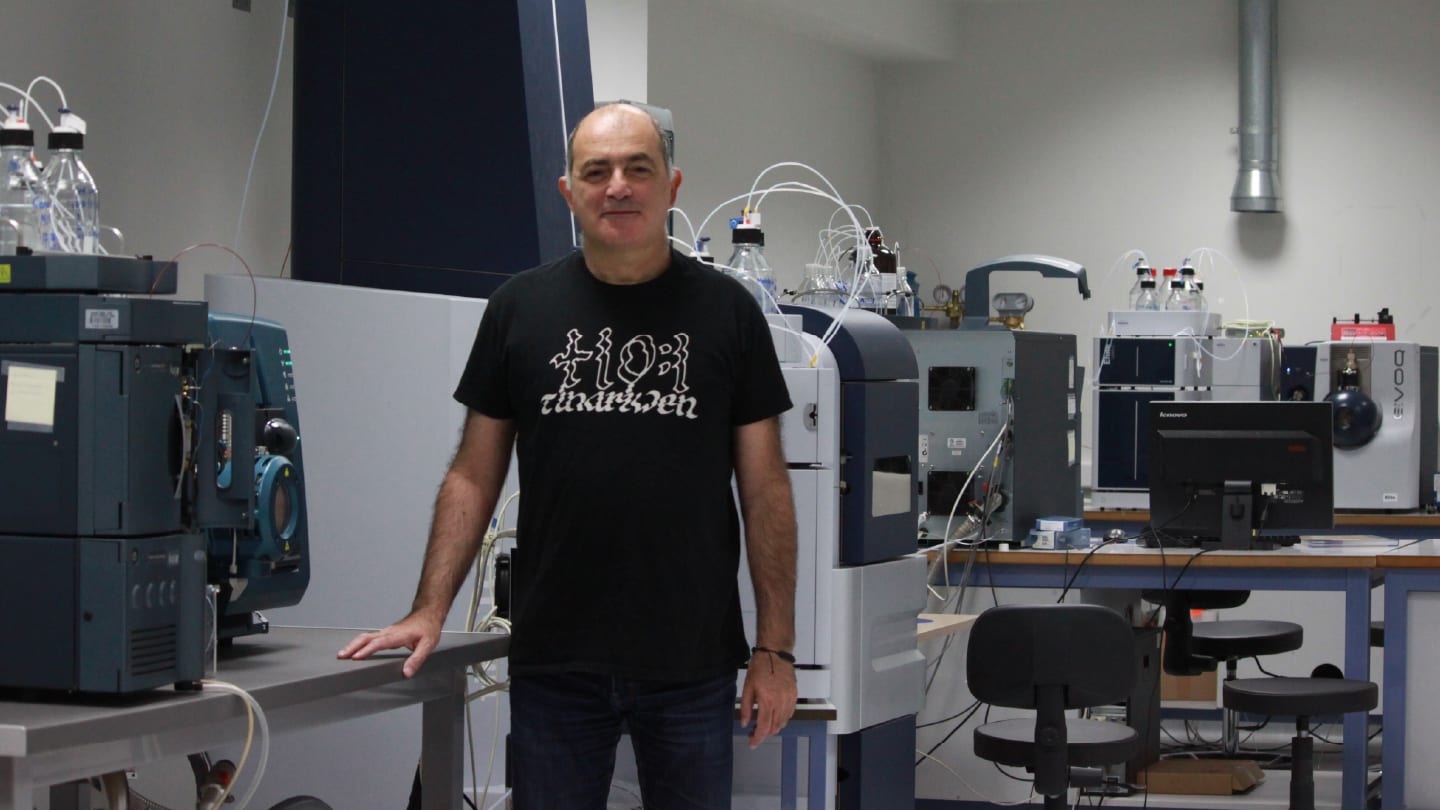
Until six or seven years ago, we had no facility, no lab, and little instrumentation. We even had to have students travel to Athens or other places to perform needed analysis. We only had a small triple quad, which we were squeezing to more than 100 percent. But we managed to develop methods that we are still very happy and proud of.
Up until only a few years ago, my drive was simply to establish analytical methods with the small set of tools available. Now, we have a very well-equipped lab, and we’ve trained almost 20 PhD and more than 150 masters and undergraduate students. So I hope that I will now have a decade or more focused on high-quality research. I really want to see the translational impact of our work, so I focus on metabolic syndrome and diabetes – and I interact with as many clinicians as I can.
So far we have developed around seven or eight technology-ready methods that are fit-for-purpose. My current role is focused on liaising with stakeholders and visiting hospitals. Rather than just developing a method on paper, I want to see the method mature, analyze thousands of samples, and finally reach the clinic.
What are your ambitions for ThetaBiomarkers?
As a spinoff company, we are focused on getting more and more samples, maturing tests, and trying to move to market with biomarker panel with reference ranges, application, and clinical endpoints that support decision making.
The other drive for the company is to offer an alternative career path to those available in the universities, which, at least in Greece, are generally quite inaccessible for these sorts of long-term careers. This aim is pragmatic for us – it is about trying to keep talent within the field.
We have some strict rules in the university, regarding how much money you can give to people, and the bureaucracy involved. But with a private company, everything is much more straightforward. You have more freedom and you have other assignments, which can potentially make it more appealing for graduates. The company also has the ability to acquire analytical instrumentation, which is generally limited in university.
You are someone who advocates for – and sometimes even defends – the field. Do you think we need more analytical scientists to champion analytical science in this way?
The field is very strong, and I believe it will continue to grow and dominate in chemistry and other fields. Our work is essential for the economy, and for society at large, so I'm very positive about the field. I don’t feel like analytical science is in a particularly vulnerable position. Of course, I'd like to see more prestigious grants aimed in our direction, but we can live without those.
That said, I have always believed that one of the most important things for this field – as with many others – is that errors are recognized and understood, and that action is taken against such mistakes so that they don't propagate.
The regulatory process is strong in analytical science and the environmental sciences – there is good validation and quality control, quality assurance initiatives – and so I don’t think the industry necessarily needs defending. But I do believe strongly that we need to improve and try to implement continuous training on evolving analytical technologies.
What are some of your interests outside of science?
I listen to music constantly. I love different types of music, from arias and bel canto, to blues and underground music. I’m also an amateur photographer. I have a DSLR camera and I take photos with different lenses. I would say that I'm below average as a photographer, but then with the technology we have now, you can still take fantastic photos if your subject is good enough.
I also read every day from paper books. This is a real gift. I was brought up in a small town, but nevertheless we had a library where you borrow books, and so I was a very frequent visitor there when I was at school. I also read in English – if it is authors I like, I try to read them in their original language.
Do you find that these hobbies inform your work in any way? Or is it more that you just want to switch off and relax from a long day in the lab?
The music generally plays non-stop. I will work listening to music, and I also enjoy learning about the musicians – their life, their career, their decisions.
I also read both fiction and non-fiction – especially history. And so I learn a lot from reading, and I believe this really influences the person I am, the personality I have, my life, and, secondary to that, also influences my life and my work.
What are your main ambitions over the next few years? Do you have any big priorities or goals that you are focused on right now?
My focus is on trying to help the younger generation – to act like a kind of lighthouse for this group. Being older, I've collected information from many different places, and believe it is my job to pass this information on, so that the next generation is much better than me when they are in my position in the future.
In terms of my own personal dreams, I would still like to mature two or three of the tests that we have developed to analyze samples at large scale, and see them applied in the market. Not for the financial reward – if I was concerned with money, this wouldn’t have been my first choice of career! It's the joy of being able to help patients with better treatment options – for me that is the actual goal.
And do you think that it's a dream that is likely to happen?
I am a positive person, so yes, I do believe that my team will eventually make this a reality.
Newsletters
Receive the latest analytical science news, personalities, education, and career development – weekly to your inbox.