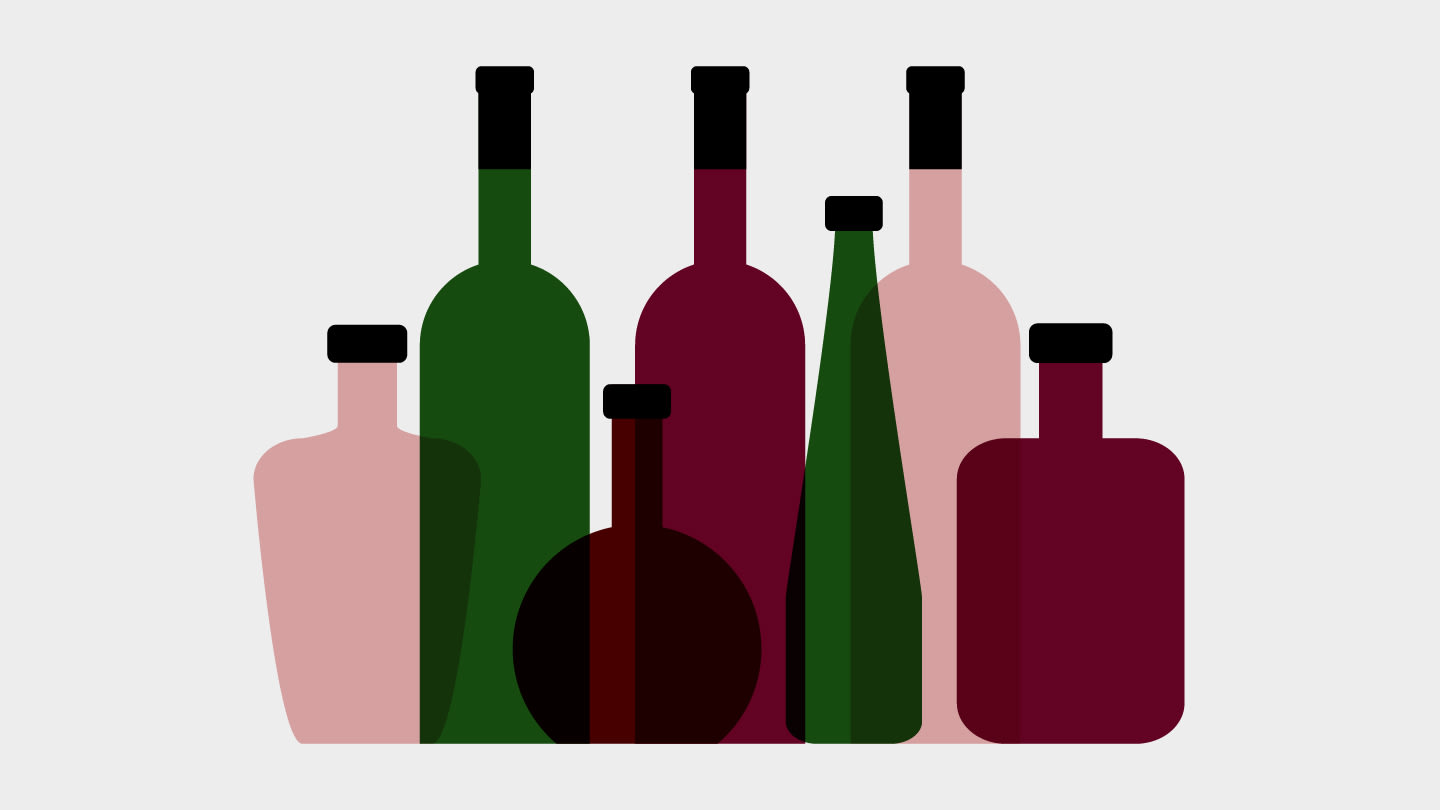
A Raman spectroscopy approach that combines wavefront shaping with wavelength modulation can quantify methanol in unopened spirit bottles, offering a route to non-invasive screening of counterfeit or contaminated alcohol.
Methanol detection in spirits is usually performed by laboratory-based chromatography, which remains highly sensitive but requires sample access, trained personnel, and specialist instrumentation. Developed by researchers at the University of St Andrews and Adelaide University, the Raman-based method instead reads the liquid’s chemical signature through the bottle.
To limit interference from the glass, the team shaped the excitation light into a conical beam that focused inside the liquid rather than on the bottle wall. A second step tackled fluorescence from the glass and spirit matrix, which can overwhelm weaker Raman features. In wavelength-modulated Raman spectroscopy, the excitation wavelength is shifted slightly during measurement, causing Raman peaks to move while the fluorescence background remains largely unchanged. Principal component analysis was then used to extract the Raman features from the modulated spectra.
“This work shows that we can look inside a sealed bottle and determine its methanol content, without needing to open it,” said lead author Ané Kritzinger in a recent press release. “By carefully shaping the laser light into a ring, and slightly tuning its colour during the measurement, we can isolate the signature of methanol and suppress the signals from both the bottle and the main spirit.”
The combined workflow improved the signal-to-noise ratio of through-bottle Raman measurements by up to 12-fold. Across commercial spirits in different glass bottles, wavelength modulation consistently improved performance, while the conical excitation geometry was especially useful for highly fluorescent containers.
To turn the through-bottle spectra into a methanol measurement, the team used ethanol as an internal reference and compared the methanol Raman band against the main ethanol signal. The method was sensitive enough to detect methanol well below the reported maximum tolerable concentration and was validated in whisky samples spiked with known methanol levels.
The study also tested the workflow against realistic packaging rather than idealized vials alone. The authors note that highly scattering containers, such as frosted glass, remain challenging because they distort the excitation beam. But for many coloured glass bottles, the combined wavefront-shaping and modulation strategy may support faster, non-destructive screening of sealed spirits.
“This technology opens the door to rapid, non-invasive screening for food and chemical safety, or for fighting the illegal trade in counterfeit spirits, pharmaceuticals or perfumes,” said co-lead author Graham Bruce.
Newsletters
Receive the latest analytical science news, personalities, education, and career development – weekly to your inbox.