This interview is part of The Analytical Scientist’s feature exploring how analytical technologies are changing the science of sport – from metabolomics, microsampling, and wearables to anti-doping, recovery, muscle growth, and precision medicine.
Could athletes one day carry a “metabolic passport” – a longitudinal biochemical profile that tracks how they respond to training, competition, travel, illness, fatigue, and recovery?
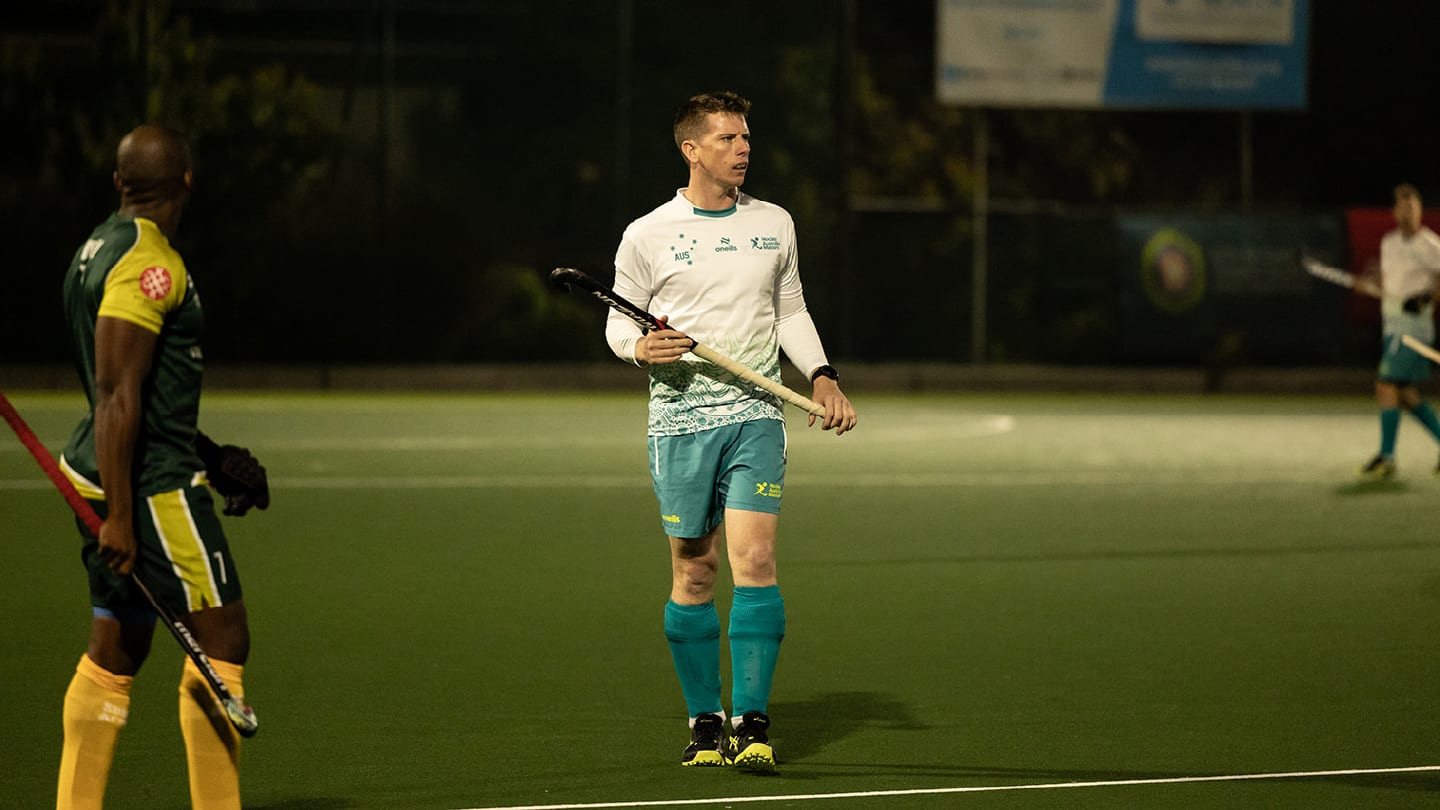
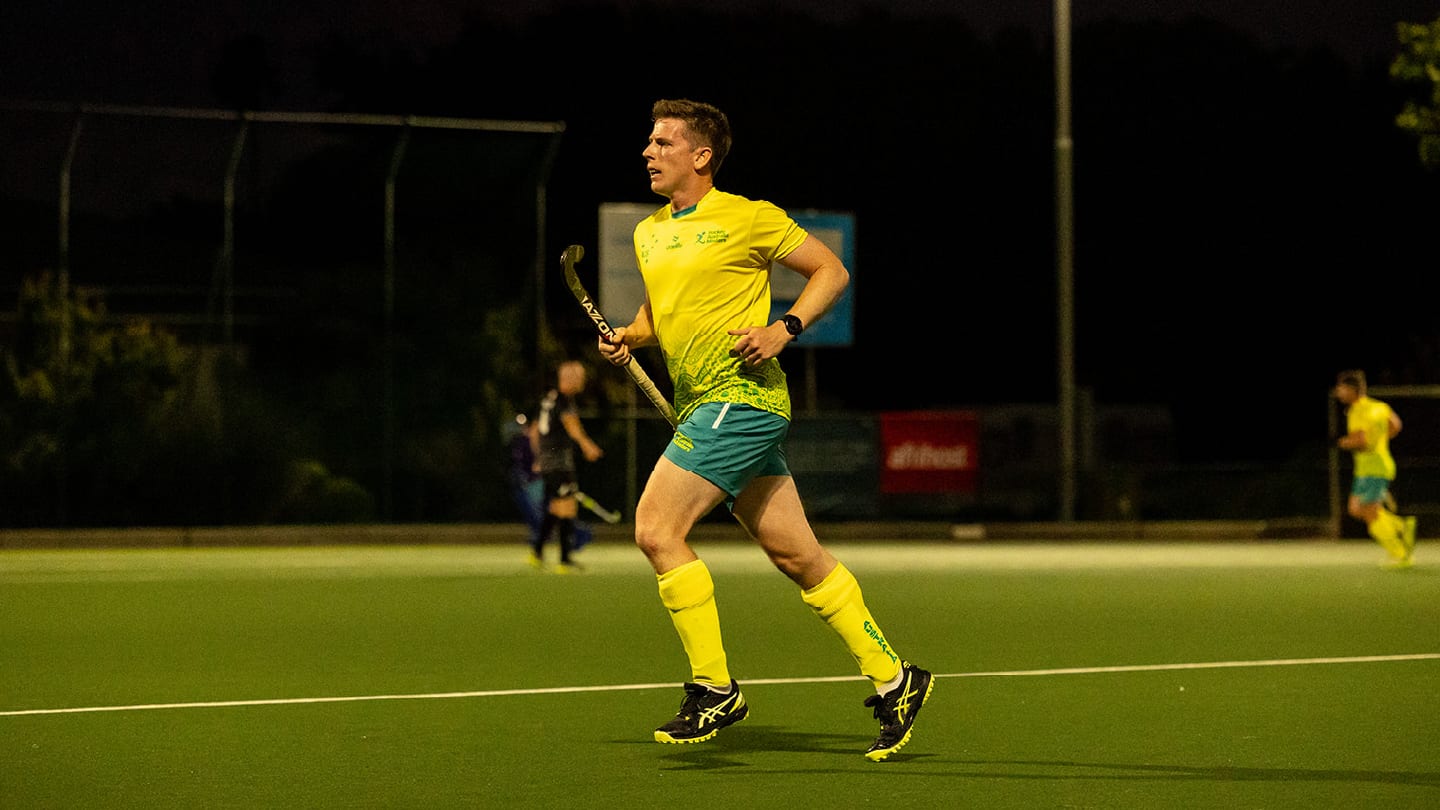
Nathan Lawler, physiologist and metabolomics researcher at Murdoch University’s National Phenome Centre, and sports scientist with the West Coast Eagles Australian Football League Women’s team, brings both scientific and athletic experience to the question. He began in human movement, exercise physiology, and sports science, later moving into LC-MS, NMR, dried blood spot sampling, and metabolomics. He has also represented Tasmania in hockey and been selected for the Australian Masters over-35s World Cup squad in 2024 and 2026.
In this interview, Lawler discusses how analytical chemistry could take athlete monitoring beyond single-marker tests such as glucose or lactate, toward panels that capture health, fatigue, inflammation, and readiness to train – provided the data can be made practical, interpretable, and useful for coaches.

How is analytical science currently being used in athletics – if at all?
Sport is already an incredibly data-driven field. Athletes and coaches are constantly working with information from wearable watches, GPS systems, heart-rate monitors, glucose sensors, and all sorts of performance-tracking technologies. So analytical science absolutely has a place in that environment.
The challenge is that, at the moment, it still isn’t fully embedded into day-to-day sporting practice in the way it potentially could be. And I think there are a couple of reasons for that.
Sports scientists are perfectly comfortable collecting biological samples. Finger-prick testing for lactate, glucose monitoring, carbohydrate measurements – those things are already routine in many environments. The issue with metabolomics is that it’s still largely exploratory. Coaches don’t really want exploratory data; they want clear answers.
They want to know: “If we measure this marker, what does it actually tell us, and what action should we take because of it?” At the moment, metabolomics often can’t provide that level of direct interpretation yet.
That’s very similar to clinical medicine. A doctor generally won’t change how they work unless there’s a strong body of evidence showing exactly what a measurement means, what thresholds matter, and what intervention should follow. Coaches operate in much the same way. They’re not anti-science at all – they just need confidence that the information is actionable and reliable.
Turnaround time is another major limitation. In elite sport, timing matters enormously. Coaches often want information immediately or at least within a very short window. Right now, even with technologies like dried blood spots, you still have to collect the sample, send it to a lab, run the analysis, process the data, and return the results. By that point, the moment where that information might have influenced training or recovery decisions may already have passed.
So I think analytical science definitely has a future in sport, particularly in areas like metabolomics, but at the moment the field is still trying to bridge that gap between exploratory research and truly actionable, real-time performance insights.

Could technologies like dried blood spots and more portable instruments help analytical science become more practical in sport?
Yes, absolutely. I think that could change things, and we’re advancing quite quickly now. Even where I am, at the National Phenome Centre, the instrumentation itself is evolving.
Part of my focus has shifted toward out-of-lab, field-based testing – approaches like dried blood spots, where you can collect a sample much more easily and get it back to the laboratory without all the cold-chain logistics that come with traditional blood sampling.
At the same time, instruments are becoming smaller and more mobile. A typical NMR system, for example, is a huge magnet sitting in a lab – you’re not putting that in the back of a car and driving it to a training ground. It needs infrastructure, plant rooms, nitrogen, and everything else. The same is true of Orbitraps and other high-resolution mass spectrometry units, they’re still too large and infrastructure-heavy for field use.
But now you’re seeing companies developing benchtop instruments. Bruker, for example, has benchtop NMR systems that are getting close to something you could put on a desk. The main market for those systems will probably be clinical, but there’s no reason sports teams couldn’t eventually adopt them too – especially if they had in-house expertise to run consistent assays and generate the information they need.
I still think the missing piece is the information itself: knowing exactly what to measure and what it means. But that will come with more research. Over the past few years, I’ve seen a real increase in studies using exercise models, sports teams, metabolomics, microsampling, and dried blood spots. Ten years ago, there wasn’t much of that. Now the literature is definitely growing, and people are starting to trust the technology as more data emerges around stability and reproducibility.
I get contacted quite a bit by people asking whether certain ideas are possible. Some are still dreaming a bit too big – we’re not there yet – but from a research perspective, the technology is working well.
In terms of practical use in sports science, I don’t think metabolomics is likely to be an “in the moment” tool yet. Where I think it could be useful is in the space between competitions, particularly in team sports. Take football: if a team plays once a week, you’ve got a seven-day window between matches. Metabolomics won’t do much on game day, but it could be valuable during that recovery and preparation period.
It might help monitor fatigue, identify metabolites or amino acids that are depleted, and give dietitians information they can use to adjust nutrition. It could also support broader health and wellness monitoring, providing biochemical data alongside more subjective athlete management systems – things like “How are you feeling today?” or “How did you sleep last night?”
That’s where I see real potential: not replacing existing tools, but adding a biochemical layer that helps make athlete monitoring less subjective. The pieces of the puzzle are there; now we need longitudinal stability data so people can trust the results and know how to use them properly.
Could you eventually imagine teams using regular dried blood spot testing between matches to monitor athlete status?
Cost is a big factor, but if these benchtop instruments get to where we think they can get to, while still maintaining the sensitivity, resolution, and reasonably fast reporting times, then I think there’s definitely potential.
At the same time, as we learn more biologically, we’ll narrow down what’s actually important to measure. At the moment, we’re still very broad in terms of the biological information we collect; eventually we need to refine that into a smaller set of truly meaningful markers.
But yes, I could definitely see this becoming involved in sport – particularly around turnaround between matches, fatigue monitoring, and broader health and wellness monitoring. Health and wellness is a big one. Clubs want to keep athletes available. If you’ve got million-dollar players, you want them on the pitch, so you’ll use anything that can help inform a “go/no-go” decision.
At the moment, a lot of that is still subjective. If I’m a player, I’m probably going to tell you I feel fine because I want to play – whether I actually feel fine or not. But if you could start looking at objective biochemical changes, that gives you a very different lens.
You could almost imagine something similar to the athlete biological passport used in anti-doping – but for broader athlete monitoring. You’d have a kind of biological passport built around metabolites that we trust and know have meaning.
And in a way, sport is already doing versions of this. Continuous glucose monitors are essentially asking: are you in range or not? Should we feed you or shouldn’t we? Lactate testing does something similar: are we stressing the athlete too much or not enough?
The advantage of analytical chemistry is that it isn’t limited to a single marker. A glucose sensor measures one metabolite. A lactate monitor measures one metabolite. But analytical chemistry can potentially measure 20, 30, 40, even 50 metabolites simultaneously if the methods are set up correctly.
That’s where the real power could be. Within one panel, you might be monitoring health and wellness, fatigue, inflammation, recovery status, and other physiological markers all at the same time.
Do we actually have good chemical markers for things like fatigue at the moment?
Yes and no. A lot of the knowledge we currently draw on actually comes from the clinical space. So we often start with a clinical condition and then try to translate that back into a sporting context.
I don’t fully know whether that’s because sports science itself hasn’t yet developed enough research in this area, or whether it’s because the biological signals are simply much stronger in clinical disease states than in otherwise healthy athletes. It’s probably a bit of both.
At the National Phenome Centre, where I work, we’re involved in a lot of large population clinical studies. For example, some of our PhD students are working on ME/CFS, chronic fatigue syndrome, and long COVID. So we already have a fairly good idea of what fatigue-associated metabolic panels can look like in those patient populations – during flare-ups, day-to-day fatigue, and different disease states.
The question is then: how does that translate into sport?
There actually appears to be quite a lot of crossover. We haven’t fully proven it yet, but we’re essentially cherry-picking information from the clinical setting and testing whether it also applies in athletes. Now that I’m working more with accessible sampling approaches like dried blood spots, the next question becomes whether those metabolites are measurable and stable in that format. If they are, then there’s no reason not to take that into the sporting environment and start testing those ideas.
So you can see the logic chain: we identify potential markers in clinical fatigue, adapt the sampling method, then explore whether the same biology exists in sport-related fatigue or recovery.
I think one of the biggest hurdles is that sports scientists are interested in this area, but many of them are probably where I was ten years ago – asking, “What exactly is analytical chemistry, and what do I do with it?”
One advantage I’ve had in my career is being able to speak both languages. I can talk to sports scientists and explain that, from the analytical chemistry side, all we really need is the sample. Once we have the blood, we can screen it for a huge range of things and start translating that information into something meaningful.
Do you think these approaches are more likely to trickle down from elite sport into healthcare, or move the other way – from clinical research into sport?
I’m not sure, to be honest. In Australia, getting funding for sport research is really hard. There just isn’t much of it. The 2032 Olympics coming to Brisbane may help and open up some funding channels, but historically it has been difficult.
That said, we’ve had some success working with the Australian Institute of Sport, which is our main national body for Olympic and high-performance sport. They’re definitely interested in this kind of work. For example, we’ve had funding to look at biochemical fingerprints in swimmers and ask whether those profiles can be translated into something meaningful for training or performance.
But it comes back to the same issue: we’re still in discovery mode. There is no golden bullet where you can say, “Measure this in a swimmer and there’s your gold medal.” That just doesn’t exist.
From a funding perspective, I think a lot of the progress may come from the clinical side first and then work its way up into sport. Sports teams can be their own economy – some do have money – but the question is whether they believe in the value enough to invest. And unless you get buy-in from everyone – coaches, athletes, support staff – it’s hard to push forward.
From my own experience, it’s difficult to go to a team and say, “I can take your blood and make your training better,” because you can’t guarantee that. Nothing in this space is guaranteed yet.
So I think it’s partly just a matter of time. As more people work in the area and the knowledge base grows, it probably will get there. You could compare it with continuous glucose monitoring: we’ve known glucose is important for decades, but only now have we decided that we want to monitor it continuously in real time.
I think the same will eventually happen with analytical chemistry, metabolomics, and athlete monitoring. It will get there – but we still need to know which metabolites matter, when to measure them, how to interpret them, and what decisions they should inform.
Do you think sport and precision medicine are ultimately heading toward a similar model of long-term monitoring and personalization?
Absolutely. It comes back to longitudinal trajectories and understanding how people change over time. The more historical data you have on an individual, the better chance you have of spotting when something has changed and, importantly, why it has changed.
If I put that into a sports science context, sports scientists are already very good at collecting data. That’s essentially what they do. They want to know: when did you go to sleep, what did you eat, how do you feel today, what tests have you done, how far did you run? All of that information is already being logged every day into databases.
Now imagine adding metabolomics into that framework. You probably don’t need a measurement every day, but even one measurement a week gives you 52 data points a year. Over time, you can start building metabolic trajectories for an athlete.
Then you can begin to overlay that against the athlete’s training cycles: intense training blocks, lighter recovery weeks, travel periods, competition phases, off-season phases, rest periods. The key question becomes: what do the metabolites do during those different states?
That’s really where we want to get to. Once you start seeing consistent patterns, you can begin using that information in a meaningful way. You might identify metabolites that react strongly during competition stress, others that seem linked to sleep disruption during travel, others associated with inflammation or recovery.
That’s why single time-point measurements are difficult to interpret. If I measure you today and then again six months later and your metabolites have shifted dramatically, what does that actually mean? Sometimes it’s obvious – maybe you had COVID or were acutely ill at the time of sampling. But if you feel completely normal and your profile has shifted, without longitudinal context it’s very hard to explain.
That’s why I think the future athlete profile involves consistent measurements over time, integrated with all the other data streams that already exist – wearables, diet logs, sleep tracking, training loads, phone-based monitoring. Once you combine those together, you can start building a genuinely holistic picture of an athlete or even a sedentary person.
That also ties back to the idea of responders and non-responders, which was part of my PhD work. Some people respond extremely well to a certain training stimulus, while others show very little adaptation. The question is: why? If you could identify those biological differences earlier, you could potentially personalize training much more effectively rather than applying the same program to an entire group.
And ultimately, if you want real-time sensing and continuous monitoring, you probably need the bioengineers involved as well – people developing wearable sensors and chips capable of measuring those metabolites live. But before you build those devices, you first need to know which metabolites are truly meaningful.
You’ve also got quite a strong sporting background yourself, right?
Sport has always been a huge part of my life. I’ve played hockey since I was a kid and I’m still playing now – still trying to hang on at 39.
I played for Tasmania quite a bit at national level here in Australia, competing against the other states, and more recently I was lucky enough to be selected for the Australian Masters representative team for the over-35s World Cup. We went to South Africa for that tournament, and I’ve actually been selected again this year to go to Rotterdam for the World Cup in July, which should be pretty exciting.
At the same time, you definitely start feeling age catching up with you. You begin weighing up whether it’s worth balancing everything – work, kids, life, travel – but then again, you don’t get selected for your country every day either. Those opportunities become fewer and fewer, so you want to take them while you can.
I’ve never been some record-breaking athlete or anything like that. I’ve just always loved sport and tried to be the best version of myself as I went along.
But I think my passion has gradually shifted more toward giving back to sport using the skills I’ve developed through sports science and analytical science. I still love the research side, but academia is a tough field. You’re constantly chasing funding, trying to secure salaries, dealing with publishing pressures and criticism. It can be difficult to stay motivated sometimes.
So I’ve sort of come full circle and moved more into high-performance sport itself, balancing research and teaching with practical sports science work. Recently I took up a sports science position with the West Coast Eagles, one of the AFL teams here in Australia.
That role is heavily data-driven, but it also gets me back onto the training field and back into a team environment. I still enjoy the atmosphere of high-performance sport – the competition, the success, the energy around a team. I know my own playing career won’t last forever, so I think this is my way of staying connected to that world and still contributing.
As both an athlete and a scientist, what would be on your ideal “wish list” of things you’d want to measure about training and performance?
The thing I’d most love to know is: do I actually need to train today or not?
If there was some biochemical footprint that could tell me, “You know what, training today isn’t really going to add anything,” I’d take that. Equally, if there was a biochemical profile that said, “Actually, you can do less than what’s prescribed today and still get the same benefit,” I’d take that too.
Sport has always had this mentality of pushing harder, adding more sessions, doing more work. But there has to be a balance point somewhere where the body is effectively saying: it doesn’t matter today – you can back off and still get the adaptation you need.
I also think about it in another way. Imagine if there was some kind of “exercise pill” equivalent – a bit like the way people talk about GLP-1 drugs for weight loss. Obviously we’re nowhere near that, and you can’t replace exercise with a pill, but imagine if biology got to the point where you could say: “If you just do ten minutes of hard walking today, your biochemical profile shifts massively in a positive direction.”
That kind of information could genuinely change how people think about exercise.
Because for me, exercise is medicine. It’s probably the best medicine we have. It’s free, accessible, and almost everyone should be doing it in some form. And that’s really part of what drives my research – not just in sport, but also in the clinical space.
What I’d really like to see is healthcare move from a reactive model to a proactive one. If people had easier access to these kinds of measurements – done cheaply and reasonably accurately – and could see trajectories showing things are improving or deteriorating, would they make lifestyle changes earlier?
Would they exercise more, sleep better, change diet, before they end up needing medication, surgery, or other interventions?
That’s where I’d love to see this field go. And you can apply exactly the same thinking back into sport as well. It’s all about identifying the tipping point before things go wrong.
Do you think this kind of athlete monitoring could realistically become commonplace in the next five to ten years – or is that still further away?
I’d like to say yes – partly because I’m optimistic, and partly because I hope we can contribute to making it happen.
Honestly, maybe what’s needed is more of a coordinated effort. Because when you look at it, the pieces of the puzzle are already there. We just don’t fully know how to put the puzzle together yet. The biosensor technology exists. If you went to an engineer and said, “We want to measure this metabolite on a chip,” I suspect the answer would usually be, “Yes, that’s doable – we just need to know exactly what you want to measure.”
So technically, I think it’s probably achievable. The bigger question is whether high-performance sport will actually push it forward. Who is going to adopt it first? Which team or organization decides to say, “We’re going to invest in this cutting-edge technology”?
And even if they do, there’s no guarantee we’d hear about it publicly. Sport can be very secretive. Teams don’t necessarily want competitors knowing what they’re doing, so a lot of innovation can stay behind closed doors.
So yes, I think it could happen within the next five to ten years. Whether it actually does depends less on the technology and more on who decides to drive it forward.
Newsletters
Receive the latest analytical science news, personalities, education, and career development – weekly to your inbox.