“It is incredibly exciting to explore a new realm of cellular populations that has been largely inaccessible to proteomics before.”
What does your research focus on, and what problem are you trying to solve?
Implementing ultrasensitive, integrative mass spectrometry approaches – particularly spatial mass spectrometry imaging and single-cell proteomics – is essential to understanding the intricate biological diversity of cardiovascular disease. My goal is to move beyond routine quantitative measurements and uncover the molecular differences between individual cells and spatial regions, leveraging crosstalk between omics layers to ultimately explain disease progression and treatment response.
What aspect of your current research excites you most – and why is this an important moment for it?
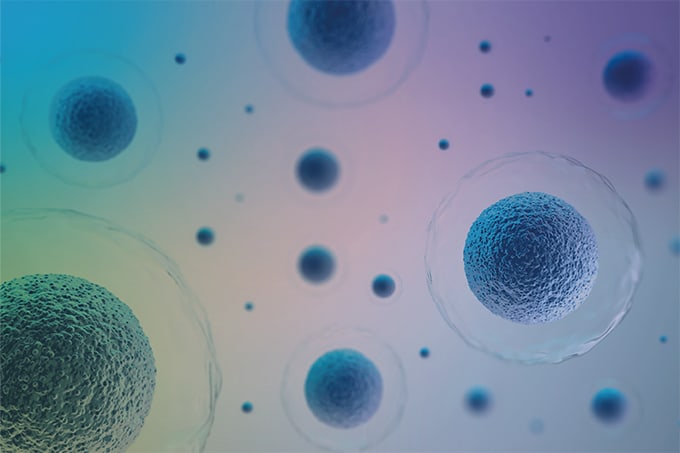
It never ceases to amaze me that we can now analyze individual cells that were previously essentially unattainable. Pacemaker cardiomyocytes are a great example. These rare, elongated, spindle-shaped cells form specialized clusters in the right atrium of the heart that control normal sinus rhythm – your heartbeat. They are extremely difficult to isolate and study, but recent technological advances allow us to capture these unique cells, quantify their proteomes, and determine the molecular organization of their adjacent microenvironments.
I am currently studying the proteomes and organization of pacemaker myocytes in healthy and failing hearts. It is incredibly exciting to explore a new realm of cellular populations that has been largely inaccessible to proteomics before.
Looking five to 10 years ahead, what emerging trend do you think will have the greatest impact on analytical science?
The greatest impact will come from computational advances that allow the integration of multimodal spatial and single-cell measurements. The field has reached a stage where we can combine powerful analytical approaches with increasingly sensitive and specific instrumentation to construct approximations of biological systems.
This unprecedented technical resolution produces complex multiomics readouts that will require adaptive computational models capable of answering where analytes are located, which cells they come from, and which environments and other cells they interact with.
What is the biggest challenge facing analytical science today?
With the current state of proteomics, we can generate exceptional protein-level data, but our ability to store that data, transfer it between locations, and, most importantly, turn it into biological understanding through computationally intensive processing has not advanced at the same pace.
A major challenge is determining how to approach these complex, multilayered datasets with the same scientific and statistical rigor applied in conventional analytical science. There are no established guidelines or best practices for integrating heterogeneous datasets with diverse properties, nor is it always clear how these differences will affect downstream analysis and determine whether the results are meaningful.
Do you have any strong opinions with which the rest of the field tends to disagree?
Proteomics unfortunately remains obsessed with protein numbers and maximizing detection yield. I’ve learned that, although we need to keep up with the field’s progress, we should focus on obtaining the most informative and robust data from the biological system we are studying. In other words, better precision and reproducibility – even if fewer analytes are measured – will help answer the important biological question and support more robust validation studies and better hypotheses going forward.
What decision, opportunity, or unexpected event has had the greatest influence on your career so far?
I have been fortunate to experience two such moments. The first came about six years ago, when my mentor announced during a group meeting that we were going to study the proteome of a single cell. Something that seems almost routine today sounded nearly impossible to us back then. That moment set my career on a completely new course.
The second unexpected turning point was stepping into the world of molecular imaging. I found myself entering another new field that forced me to learn a different way of thinking about analytical science and biology, while connecting my existing skills and knowledge with the new. Each of these moments required me to rebuild myself scientifically and professionally in a new role, but they also exposed me to very different ideas about what is attainable in research. They taught me not to become too attached to one technique, field, subject matter, or definition of what my career should look like.
Who has changed the way you think about science – or life more broadly – and how?
Rather than one person, I have been shaped by many scientists, each with a very different way of approaching problems. Moving between countries and cultural and scientific environments has influenced my career and life more broadly than any single person or event.
I trained in Poland, completed my dissertation in Spain, and have developed most of my research career in the United States. Exposure to such interdisciplinary diversity and depth of expertise has taught me how to ask better questions and not to be afraid to tackle them. Developing an adaptive and flexible mindset has allowed me to work in several fields – cardiovascular research, proteomics, metabolomics, and imaging – and reach the point where I now walk my own path.
What interest or skill outside science has made you a better researcher?
I have always been visually oriented and interested in art. I grew up in a household of artists and was exposed to that creative environment as a child. In a paradoxical and unexpected way, I think it has influenced how I approach science, which is a very disciplined field. I tend to look for patterns, connections, spatial relationships, and unusual details before synthesizing everything into numbers and graphs.
This fits naturally with mass spectrometry imaging, where sophisticated molecular data become something you can literally see. Art has also taught me that how we communicate data matters almost as much as how we design, quality-control, analyze, validate, and generate results.
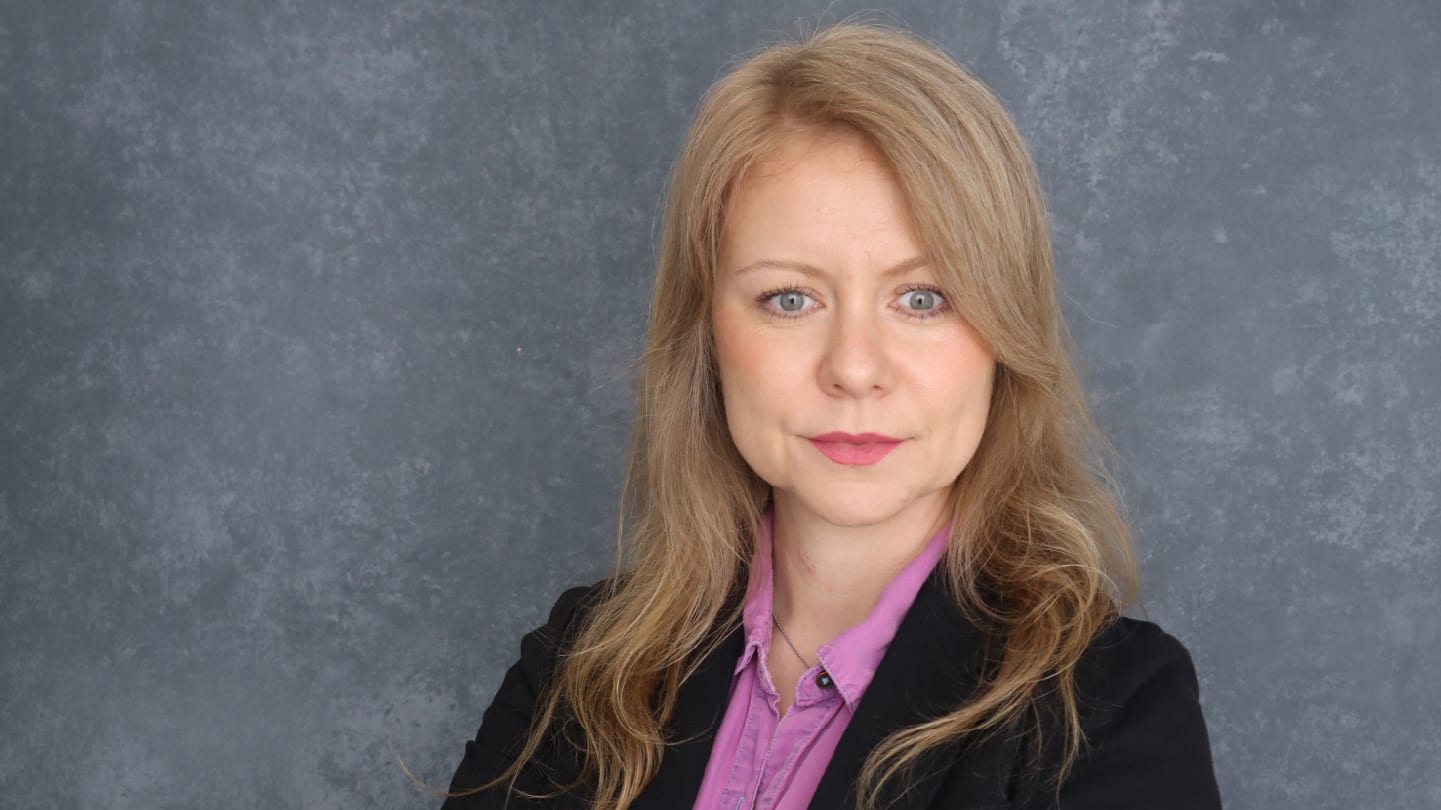
Aleksandra Binek is Lead Scientist, Mass Spectrometry Imaging and Single Cell Proteomics, and Project Scientist at the Cedars-Sinai Proteomics and Metabolomics Core, Cedars-Sinai Medical Center, Los Angeles, USA.
Explore The Analytical Scientist 40 Under 40 Power List 2026
Newsletters
Receive the latest analytical science news, personalities, education, and career development – weekly to your inbox.