“We are working on projects now that I dismissed a few years ago as being too hard. Advances in molecular biology, separations, and mass spectrometry have all helped make possible what previously seemed like a pipe dream. It’s an exciting time to be an analytical chemist.”
What does your research focus on, and what problem are you trying to solve?
Our goal is to understand how lipids interact with membrane proteins. We are interested in both profiling the local lipidome surrounding membrane proteins and determining how these lipids affect membrane protein structure and function. We are also broadly interested in developing mass spectrometry methods to study protein structure and interactions.
What aspect of your current research excites you most – and why is this an important moment for it?
I am excited by how fast technology has developed and, more importantly, what that lets us do. We are working on projects now that I dismissed a few years ago as being too hard. Advances in molecular biology, separations, and mass spectrometry have all helped make possible what previously seemed like a pipe dream. It’s an exciting time to be an analytical chemist.
Looking five to 10 years ahead, what emerging trend do you think will have the greatest impact on analytical science?
One thing that has transformed our lab is cheap gene synthesis. In the past, we would waste months on molecular biology. Now, it is cheaper, faster, and much more reliable to simply order your gene already in the plasmid you want. You can design essentially anything, and it shows up a few days later ready to go. On the most basic level, it can now be cheaper to produce a protein in-house than to buy it commercially. But it also enables more advanced protein design to become a regular part of the workflow. We have found it very helpful to be able to custom-design proteins to fit a particular analytical need. As AI-guided protein design continues to improve, I think we will see more analytical applications driven by bespoke proteins and custom gene synthesis.
What is the biggest challenge facing analytical science today?
The biggest challenge facing analytical science is training the next generation. Driven by rising costs and shrinking funding, a lot of graduate programs have shrunk over the last few years. At the same time, students are coping with a range of challenges stemming from the lingering effects of the COVID-19 pandemic, the rise of generative AI, and their own rising costs. It is harder than ever to attract talented international students to the US.
Much of graduate education depends on a critical mass of students – from teaching classes and maintaining core facilities to scheduling seminars – and my fear is that programs will start to drop below this threshold of viability. Fewer and smaller programs mean that some who want to pursue a PhD will find it inaccessible, fewer new PIs will have the opportunity to start their own labs, existing PIs will struggle to maintain research programs, and employers will find it hard to hire people with the right skills. It also means that new startups, innovation, and entrepreneurship will slow. Everyone loses. We all need to work together to make sure we have a robust ecosystem for training and promoting the next generation.
What decision, opportunity, or unexpected event has had the greatest influence on your career so far?
There were lots of moments in my career that were transformative: joining Steve Sligar’s lab in graduate school, meeting one of Mike Gross’s postdocs at a conference and dreaming up a collaboration, and having the opportunity to do a postdoc with Carol Robinson. However, one of the most unexpected occurred in the middle of my postdoc.
We had a prototype high-mass Orbitrap in the lab from the time I arrived, but it never worked very well. Alexander Makarov came to visit the lab and took a close look at the instrument. He immediately spotted the problem and fixed it himself on the spot. After that, the instrument worked beautifully. With some help and training from Joe Gault, I was stunned by how good the data on nanodiscs looked. Suddenly, instead of fighting the limits of the existing technology, I was thinking about all the exciting things we could do. That one event directly led to me pursuing a tenure-track position, and it would not have been possible without Alexander Makarov unexpectedly acting as our field service engineer.
What interest or skill outside science has made you a better researcher?
I was a camp counselor for a few summers in college, and I feel like it was excellent preparation for scientific research. It taught me how to build connections with people, how to be creative with the resources at hand, and how to take responsibility for keeping things clean and maintained.
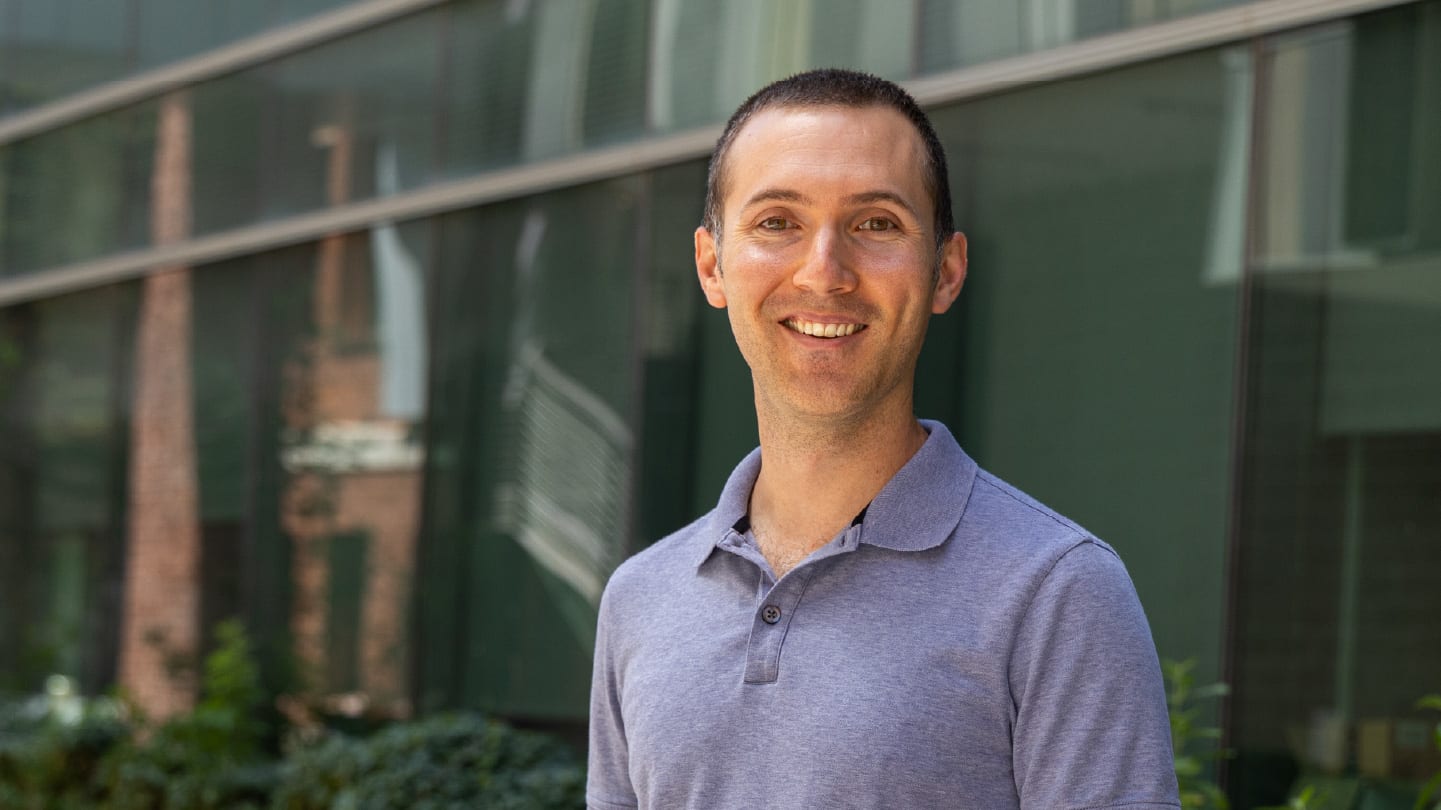
Michael Marty is Associate Professor in the Department of Chemistry at The University of Texas at Austin, USA.
Explore The Analytical Scientist 40 Under 40 Power List 2026
Newsletters
Receive the latest analytical science news, personalities, education, and career development – weekly to your inbox.