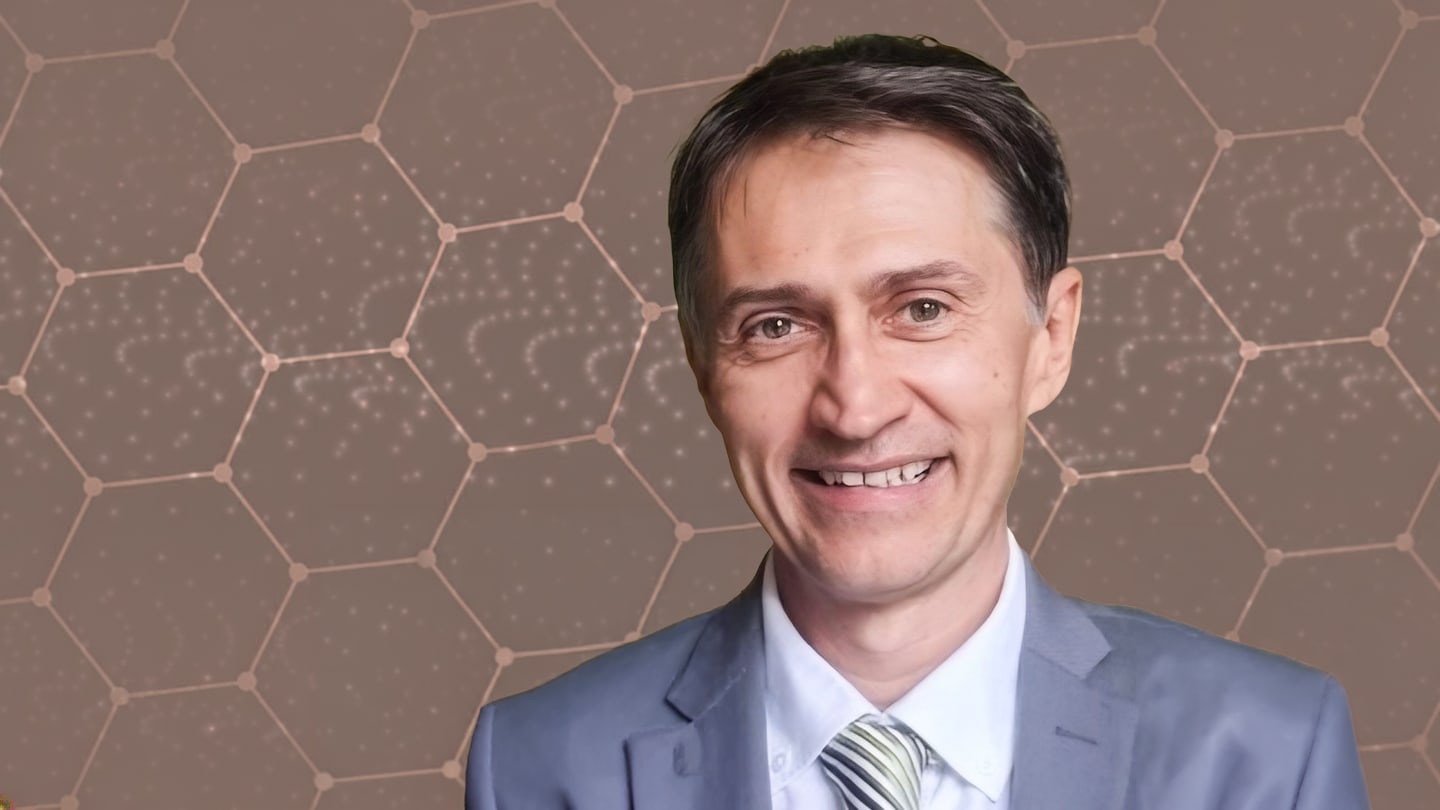
For Michele Suman, developing an analytical method is only part of the job. His motivation comes from making it available to others: helping laboratories and food companies use research to detect problems, assess risks, and improve food safety.
Having moved between academia and industry, Suman now works between Barilla and the Food-ER consortium, alongside university teaching in Parma, Piacenza, and Prague. In this first installment of our RAFA series, he reflects on the collaborations that have shaped his career, explains thework he is going to present on natural toxins in cereals and spices, and argues that food science must give sustainability a more rigorous foundation.
What connects the different stages of your career?
My career has always been marked by a constant desire to unite basic and applied research, academia and industry.
During my university thesis, I also worked at Shell’s Natta research center in Ferrara. I initially joined Barilla to work on food packaging research, then became passionate about supramolecular chemistry, sensors, and mass spectrometry. I moved on to a doctorate at university before returning to Barilla in a “second life” to coordinate research activities in food safety and authenticity.
Today, I work between the company and Food-ER, a consortium that brings together universities and many companies in the Emilia-Romagna region. I have also been teaching at university as an adjunct professor for several years. I would say that the common thread in my professional life has always been “electrified” – in alternating-current mode!
What motivates you?
One of my strongest motivations is to transform a method born in the laboratory into a tool for wider, shared use – to make solutions available and build bridges and collaborations. This has been very rewarding because I have had the opportunity to work in different environments and put my studies to use for public and private organizations, as well as standards bodies.
I have worked on many European-funded projects, which have created wonderful opportunities for interdisciplinary networking. I have also had the opportunity to mentor many interns, graduate students, and doctoral students, who have always fueled my journey with youthful energy, ideas, and positivity.
Which challenges and developments in food science interest you most?
I believe the greatest and most urgent challenge is to see food science through the lens of our global climate emergency. We must work toward solutions in which the word “sustainable” – which we use so much in all sectors, sometimes inappropriately – is truly substantiated by a comprehensive study of food throughout the supply chain. This poses significant challenges for nutrition, safety, and quality.
I also believe that today’s instrumental technology has reached a more than satisfactory level for research and monitoring needs. We should now devote more resources and energy to applying it to study phenomena and assess the risks of new solutions for raw materials, products, and packaging.
What will you discuss at RAFA, and why does it matter?
In recent years, there has been growing attention to natural toxins that can contaminate cereals and other plant-based foods. To better understand and manage these risks, we need analytical methods that are sensitive and reliable, but also practical for routine monitoring.
The first study I will discuss focuses on pyrrolizidine and tropane alkaloids, natural toxins receiving increasing attention in Europe. A new LC-MS-based method was developed to detect several of these compounds in cereals and spices at very low levels and in line with EU requirements.
The second study looked at ergot alkaloids, fungal toxins that can occur in cereals. The goal was to develop a fast, practical LC-MS method that could be applied to different cereal-based products. The method proved suitable as an industrial oriented accurate screening tool, helping identify potential contamination before more detailed confirmatory analyses.
Both studies show how modern LC-MS methods can provide reliable, efficient tools for monitoring natural toxins in real food samples. The common message is simple: good analytical methods can help the food industry detect problems early, assess risks more effectively, and improve food safety.
What do you get from a meeting like RAFA?
RAFA is really about seeing where food analysis is heading next. Key topics include artificial intelligence and big data, food authenticity and fraud, natural toxins, PFAS, microplastics, packaging migrants, allergens, exposomics, alternative proteins, and faster, greener analytical tools.
You get a quick but broad overview of what is changing in food analysis: new risks, technologies, regulations, and ways of working. It is also a chance to compare ideas with people from different countries and understand which research developments may soon become useful in real laboratories and food companies.
RAFA is also about meeting people, building collaborations, and becoming part of an international community that shares the same passion for analytical food science. It offers international friendship and valuable collaboration on both the scientific and human side.
The 12th International Symposium on Recent Advances in Food Analysis (RAFA 2026) takes place November 3–6, 2026, at the Clarion Congress Hotel Prague, Czech Republic. Find out more at rafa2026.eu.
Newsletters
Receive the latest analytical science news, personalities, education, and career development – weekly to your inbox.