In this installment of our GC×GC Detective Stories series, Meriem Gaida reflects on the international journey that took her from Tunis to Zurich and explains how she established a new Product Safety Science function at fragrance manufacturer LUZI. She also discusses how GC×GC-TOFMS can reveal hidden allergens and other co-eluting compounds, support investigations into off-odours and discoloration, and help address emerging regulatory and quality challenges.
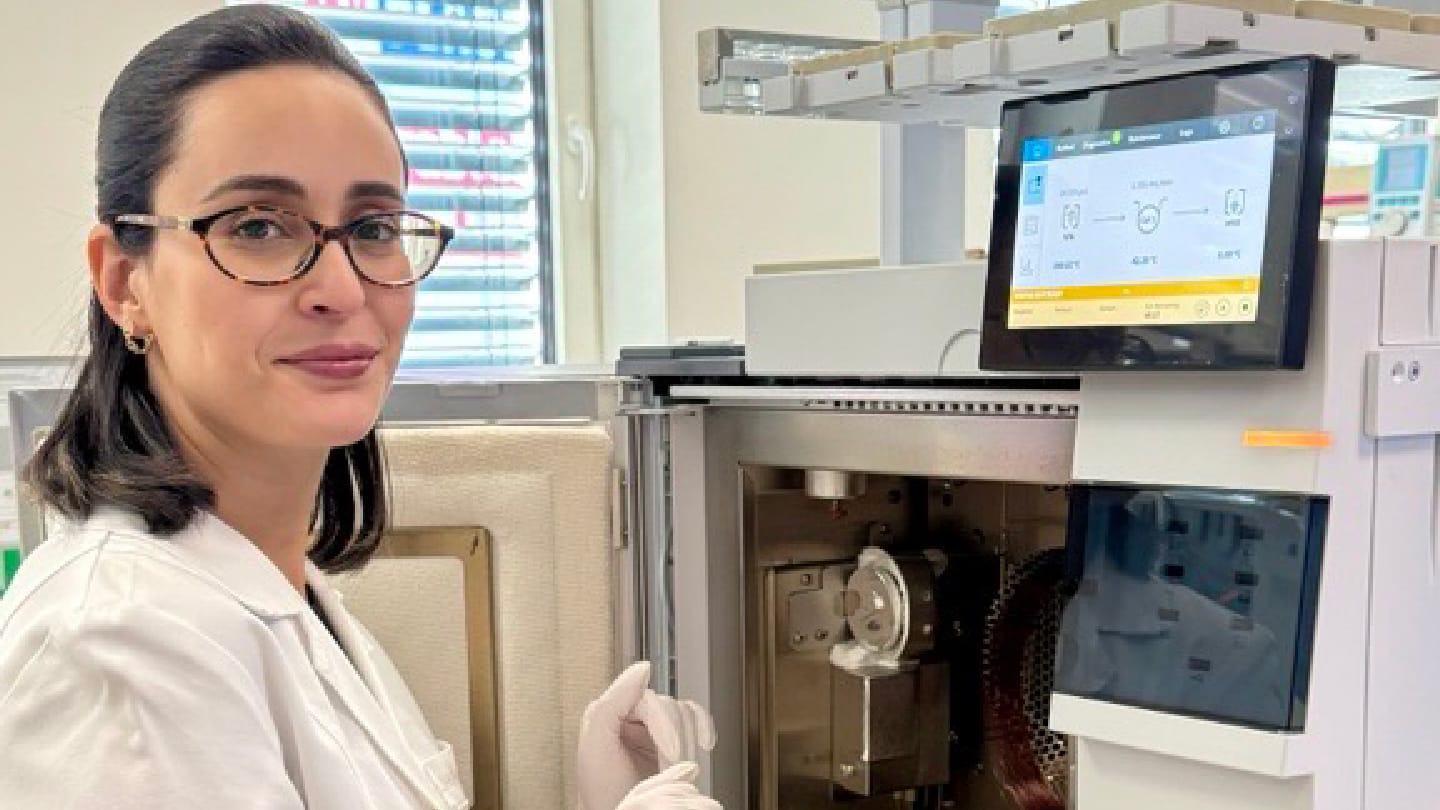
Please describe your professional journey so far
I was born and raised in Tunis, Tunisia, and from a young age I was fortunate to have travel opportunities, which broadened my perspective and fostered a strong interest in international experiences. My journey so far has taken me across three continents and six countries, shaping both my personal and professional life.
My travel adventure began in high school when, for family reasons, I moved to Belgium and spent a year studying there before returning to Tunis to complete my secondary education. I then relocated back to Belgium to pursue my university studies. Throughout my academic journey, I actively sought international experiences. During the first year of my master’s degree, I took part in the Erasmus exchange program in Paris, and later, in the final year of my PhD, I completed a research internship in Seattle.
After earning my PhD, I moved to the United Kingdom, where I worked in Peterborough, a city north of London. After a year there, a new professional opportunity with the fragrance manufacturer LUZI brought me to Zurich, where I have been living and working for the past two years.
What has driven you to pursue such an international path?
Curiosity has always been the main driving force behind my journey alongside the desire to keep learning, exploring, and challenging myself both professionally and personally. I have never liked staying within my comfort zone, and I am constantly looking for new challenges that push me to grow. Each move I made was an opportunity to learn, adapt, and discover something new about the world and about myself.
What have been the main challenges and highlights of living abroad?
One of the biggest challenges along the way was learning to live independently at a relatively young age. I was 19 when I first moved abroad on my own, away from my family. Coming from a very close-knit family, the transition was not always easy. The journey had its moments of loneliness, uncertainty, and self-doubt, especially in the beginning when everything felt unfamiliar and finding a sense of belonging seemed difficult.
Another challenge of moving so often is that each new chapter required rebuilding life from scratch. It felt like every time I moved, I left pieces of my identity behind. While exciting, constantly starting over can also be emotionally draining. There is often a feeling of living between worlds, with a lot of uncertainty regarding the future and life always feeling temporary.
Another important motivation has been the opportunity to experience different cultures and meet people from a wide range of backgrounds. I enjoy being in diverse environments where perspectives, experiences, and ways of thinking differ from my own. These encounters have broadened my understanding of the world, challenged my assumptions, fostered empathy, and stimulated my creativity and imagination.
And although expatriate life can sometimes feel isolating, it offers a unique opportunity for personal growth and self-discovery. I learned how to adapt to unfamiliar situations, embrace discomfort, and navigate periods of uncertainty. Living abroad has made me more resilient, independent, and appreciative of the people and opportunities in my life. It has also helped me better understand who I am, what I value, and what I want from both my personal and professional life.
How have these experiences shaped the way you work and communicate?
The most valuable lesson I have learned is that effective communication is not about speaking the same language or sharing the same culture, but about making the effort to understand one another. In many ways, I see science as a universal language that can bring people together across borders and backgrounds. This is one of the reasons I am passionate about making science more accessible and relatable to a broader audience. I have always believed that true expertise is not demonstrated by making simple things sound complicated, but by making complex ideas understandable and more accessible. Bridging that gap between complexity and accessibility is something I find both challenging and deeply rewarding.
Can you introduce your current role at LUZI, and explain what you were brought into the company to achieve?
I was hired to establish and lead a new Product Safety Science unit within the company, with a focus on ensuring consumer safety and compliance with EU regulations related to fragrance allergens. As part of this initiative, the company had invested in two GC×GC-TOFMS instruments and wanted to leverage this technology to support regulatory compliance and product safety assessments. They were looking for a specialist who could manage the analytical platform, develop and validate methods, and define a clear strategic vision for the new function, including its role, capabilities, and long-term objectives within the organization.
How did you approach the challenge?
The project was particularly rewarding because it involved establishing a new structure within the company. So, it was important to take a holistic approach, focusing first on understanding the broader business needs before moving into the technical implementation. My priority was to identify how this new structure could create value for the company, engage with key stakeholders, and determine how the data generated could support product quality, consumer safety, and regulatory compliance. With this foundation in place, I worked closely with cross-functional teams to define analytical requirements and ensure alignment with business objectives. I then focused on developing and optimizing analytical methods using the GC×GC-TOFMS platform. My key goal was to establish a robust method capable of resolving co-eluting compounds while maintaining a runtime suitable for routine industrial applications.
What added value has GC×GC brought to LUZI?
GC×GC delivered significant added value to the company, both technically and strategically. The technology was very well received across the company, particularly because most teams were only familiar with conventional one-dimensional GC data. The enhanced separation power and two-dimensional chromatographic visualizations made it easier to communicate complex analytical findings and demonstrated the capabilities of product safety science.
From an analytical perspective, GC×GC enabled us to overcome limitations associated with conventional GC, particularly in cases where co-eluting compounds could hide regulated substances. The improved resolution allowed us to detect, identify, and quantify compounds that would otherwise have remained hidden, providing greater confidence in our safety and compliance assessments.
In addition, combining GC×GC data with chemometric approaches proved to be a powerful tool for discovery-based analyses. As a result, we were able to address complex product issues such as off-odours and discoloration more efficiently and with a higher degree of scientific confidence. The technology not only strengthened our regulatory compliance capabilities but also became an important resource for product quality troubleshooting.
Could GC×GC become the gold standard for fragrance analysis?
For many years, GC×GC use was largely limited to academic research due to the complexity of the instrumentation, data processing, and method development. However, as the technology has matured, it is increasingly being adopted in industrial environments and implemented as a routine analytical tool.
Despite its advantages in terms of higher resolution, increased sensitivity, and better compound characterization compared to conventional one-dimensional GC methods, introducing GC×GC into a routine industrial workflow presents several challenges. One of the main hurdles is the limited availability of trained personnel with hands-on experience in GC×GC method development and data interpretation. The technique involves a complex interplay of parameters that requires a deeper level of expertise than traditional GC methods. Troubleshooting can also be more demanding, as issues may arise from multiple components of the system and their interactions. In addition, the large volume of data generated by GC×GC requires appropriate software tools and a structured approach to data management and interpretation.
From an implementation perspective, companies should view GC×GC as a medium- to long-term investment. While basic operations can be learned relatively quickly, developing robust routine methods, building internal expertise, and fully integrating the technology into business processes often takes several months to a few years. Success depends not only on acquiring the instrumentation but also on investing in training, method standardization, and demonstrating clear business value through practical applications.
How has your work with GC×GC been received across LUZI?
The work was received very positively. The outcome was highly appreciated, and the team recognized the value of GC×GC in supporting the continuous improvement of our product quality. The technique also generated considerable interest across the company, with many colleagues expressing a desire to visit the laboratory to learn more about the technology, understand how it works, and see the instruments in operation.
What are the next steps for GC×GC at LUZI?
Now that the method has been successfully established and is delivering positive results, we are looking to expand its application to address new regulatory challenges and broaden the scope of its use. The implementation of the technique has also helped us build a strong collaboration with the QC department. Together, we are using the method to evaluate the quality of raw materials and to assess the reliability and consistency of the data provided by our suppliers. This partnership is creating additional opportunities to leverage GC×GC as a valuable tool for quality assurance and continuous improvement.
Newsletters
Receive the latest analytical science news, personalities, education, and career development – weekly to your inbox.