Newsletters
Receive the latest analytical science news, personalities, education, and career development – weekly to your inbox.

False
Tracking boron uptake cell by cell could help explain therapy failures – and guide better drug design
Receive the latest analytical science news, personalities, education, and career development – weekly to your inbox.
December 4, 2024
4 min read
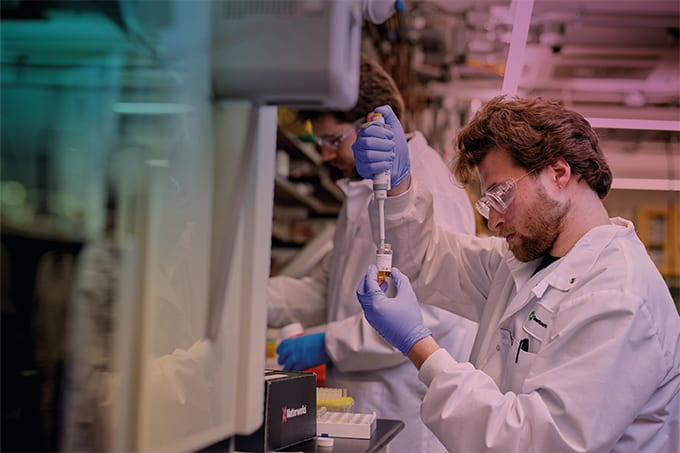
Welcome to the 5th ranked Innovation, Pyxis – introduced here by Matterworks co-founder Jack Geremia

December 5, 2024
6 min read
Thermo Fisher Scientific’s high-sensitivity mass spec for translational omics research – the Stellar MS – is ranked 4th in our annual Innovation Awards

December 6, 2024
4 min read
Bruker’s multiphoton microscopy module, OptoVolt, ranks third in our Innovation Awards. Here, Jimmy Fong, product development lead, walks us through the major moments during development.

December 4, 2024
1 min read
Saliva-based PA-MS test detects paracetamol overdose in just 10 minutes
False