Conexiant
Login
  • The Analytical Scientist
  • The Cannabis Scientist
  • The Medicine Maker
  • The Ophthalmologist
  • The Pathologist
  • The Traditional Scientist
The Analytical Scientist
  • Explore

    Explore

    • Latest
    • News & Research
    • Trends & Challenges
    • Keynote Interviews
    • Opinion & Personal Narratives
    • Product Profiles
    • App Notes
    • The Product Book

    Featured Topics

    • Mass Spectrometry
    • Chromatography
    • Spectroscopy

    Issues

    • Latest Issue
    • Archive
  • Topics

    Techniques & Tools

    • Mass Spectrometry
    • Chromatography
    • Spectroscopy
    • Microscopy
    • Sensors
    • Data and AI

    • View All Topics

    Applications & Fields

    • Clinical
    • Environmental
    • Food, Beverage & Agriculture
    • Pharma and Biopharma
    • Omics
    • Forensics
  • People & Profiles

    People & Profiles

    • Power List
    • Voices in the Community
    • Sitting Down With
    • Authors & Contributors
  • Business & Education

    Business & Education

    • Innovation
    • Business & Entrepreneurship
    • Career Pathways
  • Events
    • Live Events
    • Webinars
  • Multimedia
    • Video
    • Content Hubs
Subscribe
Subscribe

False

The Analytical Scientist / Issues / 2026 / April / Extraction at Scale: Meeting the Demands of Environmental Monitoring
Sample Preparation Environmental Keynote Interviews

Extraction at Scale: Meeting the Demands of Environmental Monitoring

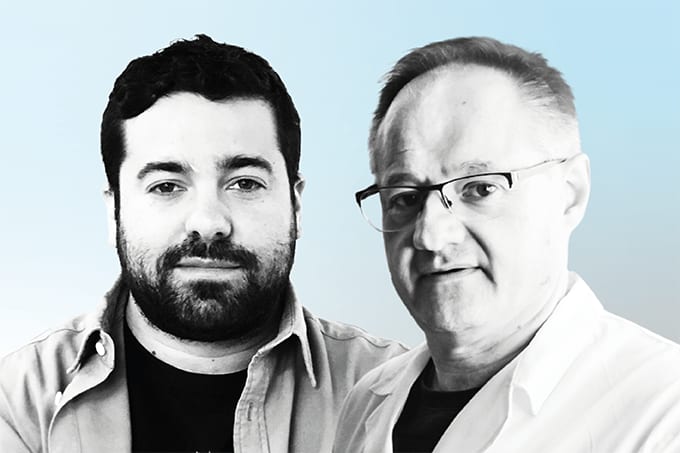
Ahead of ExTech 2026, Leon Barron explores high-throughput workflows, PFAS detection, and real-world sample complexity

By James Strachan, Frank van Geel 04/30/2026 4 min read
  • Full Article
  • Summary
  • Listen
  • Report
  • Scorecard
  • Quiz
  • Top Institutions

Share

Clinical Report: Extraction at Scale: Meeting the Demands of Environmental Monitoring

Overview

This report discusses advancements in extraction techniques for environmental monitoring, emphasizing the importance of efficient sample preparation in large-scale projects. Key innovations include miniaturized extraction methods and automated workflows that enhance throughput and sustainability.

Background

Efficient sample preparation is critical for environmental monitoring, particularly in identifying contaminants like PFAS and emerging pollutants in water sources. As regulatory demands increase, laboratories must adopt high-throughput methods to ensure accurate and timely analysis of environmental samples. The integration of advanced extraction techniques is essential for meeting these challenges.

Data Highlights

No numerical data or trial results were provided in the source material.

Key Findings

  • Robotic platforms have been utilized for high-throughput extraction and filtration of complex environmental samples.
  • Miniaturized 3D-printed passive samplers have been developed for cost-effective monitoring of chemical contaminants.
  • Solid-phase microextraction and liquid-phase microextraction are emerging as faster, greener alternatives to traditional methods.
  • Evaluation of cleaning protocols for single-use pipette tips showed over 98% carryover reduction with a four-wash method.
  • New projects focus on the impacts of PFAS pollution on freshwater species at a national scale.

Clinical Implications

The advancements in extraction techniques can significantly enhance the ability of laboratories to monitor environmental contaminants effectively. Clinicians and public health officials should be aware of these innovations to improve risk assessment and management strategies related to environmental exposures.

Conclusion

The ongoing development of efficient extraction methods is vital for addressing the increasing demands of environmental monitoring. These innovations not only improve analytical capabilities but also support public health initiatives aimed at mitigating exposure to harmful contaminants.

References

  1. the analytical scientist, Source, 2026 -- Why Extraction Still Matters in Food Analysis
  2. the analytical scientist, Source, 2026 -- Where Non-Target Screening Still Falls Short
  3. Frontiers in Digital Health, Source, 2026 -- Harvesting and Analyzing Intensive Care Chart Information from Patient Data Management Systems
  4. National Report on Human Exposure to Environmental Chemicals | NBP | CDC, Source, 2023
  5. EPA Document No., Source, 2024 -- National Primary Drinking Water Regulation for PFAS
  6. Archives of Toxicology — Advancements in High-Resolution Mass Spectrometry for Analyzing New Psychoactive Substances
  7. National Report on Human Exposure to Environmental Chemicals | NBP | CDC
  8. EPA Document No.

This content is an AI-generated, fully rewritten summary based on a published scholarly article. It does not reproduce the original text and is not a substitute for the original publication. Readers are encouraged to consult the source for full context, data, and methodology.

Newsletters

Receive the latest analytical science news, personalities, education, and career development – weekly to your inbox.

Newsletter Signup Image

References

  1. 1. D. Ciccarelli et al., Journal of Hazardous Materials, 448 (2023).
  2. 2. M Egli et al., Environment International, 180 (2023). 
  3. 3. KT Ng et al., Journal of Hazardous Materials, 398 (2020).
  4. 4. A Vaughan et al., RSC Sustainability 3, 5470-85 (2025).
  5. 5. AK Richardson et al, Science of the Total Environment, 839 (2022).
  6. 6. AK Richardson et al., npj Emerging Contaminants, 2, 1 (2026). 
  7. 7. AK Richardson et al., Environmental Science: Processes and Impacts, 28, 42-55 (2026).
  8. 8. TH Miller et al., Environment International, 129, 595-606 (2019).
  9. 9. TH Miller et al., Environmental Pollution, 270 (2021).
  10. 10. AE Lindell et al., Nature Microbiology. 2025, 10, 1630-47.

About the Author(s)

James Strachan

Over the course of my Biomedical Sciences degree it dawned on me that my goal of becoming a scientist didn’t quite mesh with my lack of affinity for lab work. Thinking on my decision to pursue biology rather than English at age 15 – despite an aptitude for the latter – I realized that science writing was a way to combine what I loved with what I was good at. From there I set out to gather as much freelancing experience as I could, spending 2 years developing scientific content for International Innovation, before completing an MSc in Science Communication. After gaining invaluable experience in supporting the communications efforts of CERN and IN-PART, I joined Texere – where I am focused on producing consistently engaging, cutting-edge and innovative content for our specialist audiences around the world.

More Articles by James Strachan

Frank van Geel

Frank van Geel is owner of educational website Chromedia and Scientific Director of The Analytical Scientist. He studied analytical chemistry, specialized in mass spectrometry in the Netherlands and did several years of post-doc work in spectroscopy with Jim Winefordner at the University of Florida in the US. Then he became a science teacher and later publisher in chemistry and physics related topics. He developed numerous publications in chemistry and other sciences. He strongly supports the mission: Building online communities is the road to take. We need to strengthen the quality of analytical chemistry and we need to strengthen our community by sharing know-how and by sharing our opinions, visions and our views of the future of analytical science.

More Articles by Frank van Geel

False

Advertisement

Recommended

False

Related Content

Molecularly Imprinted Polymers: The Future of Smart and Sustainable Sensing
Sample Preparation
Molecularly Imprinted Polymers: The Future of Smart and Sustainable Sensing

October 14, 2024

4 min read

Unlocking the potential of synthetic receptors for precise, eco-friendly diagnostics and environmental monitoring – paving the way for next-gen sensor technology

The mRNA Moment
Sample Preparation
The mRNA Moment

October 17, 2024

16 min read

The success of the mRNA vaccines during the COVID-19 pandemic has supercharged the field of nucleotide-based therapies more broadly. Can analytical science rise to the challenge of increasing complexity?

Impactful Sample Prep Series: The 3D Printing Paradigm Shift
Sample Preparation
Impactful Sample Prep Series: The 3D Printing Paradigm Shift

October 23, 2024

6 min read

From printable sorptive materials to multi-material, unibody devices with customizable architectures, opportunities provided by 3D printing in the sample preparation field have just one limit: the user’s imagination

Impactful Sample Prep Series: EME Turns 20
Sample Preparation
Impactful Sample Prep Series: EME Turns 20

September 9, 2024

5 min read

Recently commercialized, amenable to operation in multi-well plates and microfluidic devices, and fundamentally green – has electromembrane extraction (EME) reached an inflection point?

Affiliations:

Specialties:

Areas of Expertise:

Contributions:

False

The Analytical Scientist
Subscribe

About

  • About Us
  • Work at Conexiant Europe
  • Terms and Conditions
  • Privacy Policy
  • Advertise With Us
  • Contact Us

Copyright © 2026 Texere Publishing Limited (trading as Conexiant), with registered number 08113419 whose registered office is at Booths No. 1, Booths Park, Chelford Road, Knutsford, England, WA16 8GS.