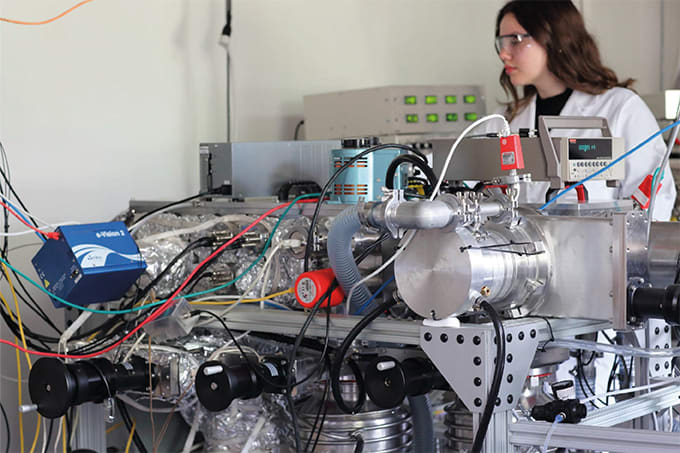
Clinical Report: Tao Chen and the Future of Pharmaceutical Analytics
Overview
Tao Chen's work at Genentech exemplifies the critical role of analytical science in drug development, emphasizing the need for robust characterization and high-quality data. Her insights highlight the importance of analytical chemistry in addressing unmet medical needs and advancing therapeutic modalities.
Background
The field of pharmaceutical analytics is essential for the development of effective therapies, particularly as new modalities emerge. With increasing complexity in drug formulations, the demand for precise analytical methods is paramount to ensure patient safety and regulatory compliance. Understanding the evolving landscape of analytical science is crucial for healthcare professionals involved in drug development.
Data Highlights
No numerical data provided in the source material.
Key Findings
- Tao Chen emphasizes the importance of translating scientific knowledge into impactful therapies.
- Analytical science is recognized as the backbone of biopharmaceutical innovation.
- Robust analytical characterization is critical for successful drug development, especially for complex modalities.
- Soft skills, alongside technical expertise, are essential for early-career scientists in industry.
- Automation and machine learning are set to transform analytical workflows in drug development.
Clinical Implications
Healthcare professionals should recognize the integral role of analytical science in ensuring the safety and efficacy of new therapies. Emphasizing collaboration and communication skills can enhance the effectiveness of scientific teams in the pharmaceutical industry.
Conclusion
Tao Chen's insights into the field of analytical science underscore its vital role in the future of drug development. As the industry evolves, the integration of advanced analytical techniques will be crucial for meeting patient needs.
Related Resources & Content
- The ASCO Post — Expert Point of View: Toni K. Choueiri, MD
- The ASCO Post — Expert Point of View: Sarat Chandarlapaty, MD, PhD
- The ASCO Post — Expert Point of View: Sarina Anne Piha-Paul, MD, and Benjamin Besse, MD, PhD
- The ASCO Post — Neoadjuvant T-DXd Shows Clinical Activity in Patients With HER2-Low Breast Cancer
- Guideline on quality, non-clinical and clinical requirements for investigational advanced therapy medicinal products in clinical trials - Scientific guideline | European Medicines Agency (EMA)
- ENHERTU® (fam-trastuzumab deruxtecan-nxki) demonstrated highly statistically significant and clinically meaningful improvement in invasive disease-free survival vs. T-DM1 in DESTINY-Breast05 Phase III trial in patients with high-risk early breast cancer following neoadjuvant therapy
- INTERNATIONAL COUNCIL FOR HARMONISATION OF TECHNICAL
- Guideline on quality, non-clinical and clinical requirements for investigational advanced therapy medicinal products in clinical trials - Scientific guideline | European Medicines Agency (EMA)
- ENHERTU® (fam-trastuzumab deruxtecan-nxki) demonstrated highly statistically significant and clinically meaningful improvement in invasive disease-free survival vs. T-DM1 in DESTINY-Breast05 Phase III trial in patients with high-risk early breast cancer following neoadjuvant therapy
- INTERNATIONAL COUNCIL FOR HARMONISATION OF TECHNICAL
This content is an AI-generated, fully rewritten summary based on a published scholarly article. It does not reproduce the original text and is not a substitute for the original publication. Readers are encouraged to consult the source for full context, data, and methodology.
Newsletters
Receive the latest analytical science news, personalities, education, and career development – weekly to your inbox.
About the Author(s)
James Strachan
Over the course of my Biomedical Sciences degree it dawned on me that my goal of becoming a scientist didn’t quite mesh with my lack of affinity for lab work. Thinking on my decision to pursue biology rather than English at age 15 – despite an aptitude for the latter – I realized that science writing was a way to combine what I loved with what I was good at. From there I set out to gather as much freelancing experience as I could, spending 2 years developing scientific content for International Innovation, before completing an MSc in Science Communication. After gaining invaluable experience in supporting the communications efforts of CERN and IN-PART, I joined Texere – where I am focused on producing consistently engaging, cutting-edge and innovative content for our specialist audiences around the world.