Conexiant
Login
  • The Analytical Scientist
  • The Cannabis Scientist
  • The Medicine Maker
  • The Ophthalmologist
  • The Pathologist
  • The Traditional Scientist
The Analytical Scientist
  • Explore

    Explore

    • Latest
    • News & Research
    • Trends & Challenges
    • Keynote Interviews
    • Opinion & Personal Narratives
    • Product Profiles
    • App Notes
    • The Product Book

    Featured Topics

    • Mass Spectrometry
    • Chromatography
    • Spectroscopy

    Issues

    • Latest Issue
    • Archive
  • Topics

    Techniques & Tools

    • Mass Spectrometry
    • Chromatography
    • Spectroscopy
    • Microscopy
    • Sensors
    • Data and AI

    • View All Topics

    Applications & Fields

    • Clinical
    • Environmental
    • Food, Beverage & Agriculture
    • Pharma and Biopharma
    • Omics
    • Forensics
  • People & Profiles

    People & Profiles

    • Power List
    • Voices in the Community
    • Sitting Down With
    • Authors & Contributors
  • Business & Education

    Business & Education

    • Innovation
    • Business & Entrepreneurship
    • Career Pathways
  • Events
    • Live Events
    • Webinars
  • Multimedia
    • Video
    • Content Hubs
Subscribe
Subscribe

False

The Analytical Scientist / Issues / 2026 / April / The Scent of an Ancient Mummy
Forensics Gas Chromatography News and Research Mass Spectrometry

The Scent of an Ancient Mummy

Airborne chemical fingerprints uncover evolving preservation recipes and offer a non-destructive way to study ancient remains

04/02/2026 1 min read
  • Full Article
  • Summary
  • Takeaways
  • Listen
  • Report
  • Scorecard
  • Quiz
  • Poll
  • Top Institutions

Share

Clinical Report: The Scent of an Ancient Mummy

Overview

This study reveals the evolution of mummification practices through the analysis of volatile organic compounds (VOCs) from ancient mummies. The findings indicate that embalming techniques became increasingly sophisticated over time, reflecting advancements in technology and trade.

Background

Understanding mummification practices is crucial for unraveling ancient Egyptian history and cultural rituals. The study of VOCs offers a non-destructive method to analyze mummified remains, providing insights into the materials and techniques used in embalming. This research not only enhances historical knowledge but also presents innovative approaches for studying fragile artifacts.

Data Highlights

Sample CountTime PeriodVOCs Identified
353200 BC to 395 AD81

Key Findings

  • 81 VOCs linked to embalming ingredients were identified across 35 samples.
  • Earlier mummies had simpler chemical profiles dominated by fats and oils.
  • Later mummies incorporated complex materials like imported resins and bitumen.
  • Chemical signatures varied by historical period and body region, indicating tailored embalming recipes.
  • The method allows for non-destructive analysis of fragile remains.

Clinical Implications

The findings underscore the potential of VOC analysis in studying historical artifacts without causing damage. This approach can be applied to museum collections, enhancing our understanding of ancient practices while preserving the integrity of the remains.

Conclusion

This research marks a significant advancement in the study of mummification, providing new insights into ancient practices and the evolution of embalming techniques. The non-destructive methodology opens new avenues for future archaeological and historical research.

Related Resources & Content

  1. the analytical scientist, The Scent of an Ancient Mummy, 2023 -- The Scent of an Ancient Mummy
  2. the analytical scientist, Chemical Fingerprints Reveal What’s Really in Artisanal Chocolate, 2023 -- Chemical Fingerprints Reveal What’s Really in Artisanal Chocolate
  3. Associated Press Health, Ways to improve indoor air quality during the holiday season, 2023 -- Ways to improve indoor air quality during the holiday season
  4. Archives of Toxicology — The neurotoxin β-N-methylamino-l-alanine (BMAA) from cyanobacteria affects the olfactory bulb area
  5. Diagnostic accuracy of breath tests based on volatile organic compounds for cancer: A systematic review and meta-analysis - ScienceDirect
  6. Final Recommendation Statement: Lung Cancer: Screening | United States Preventive Services Taskforce
  7. Autopsy and Handling of Human Remains of Patients with Monkeypox | Monkeypox | CDC

This content is an AI-generated, fully rewritten summary based on a published scholarly article. It does not reproduce the original text and is not a substitute for the original publication. Readers are encouraged to consult the source for full context, data, and methodology.

Newsletters

Receive the latest analytical science news, personalities, education, and career development – weekly to your inbox.
Newsletter Signup Image

False

Advertisement

Recommended

False

Related Content

How Dinosaurs Ate Their Way to Dominance
Forensics
How Dinosaurs Ate Their Way to Dominance

December 10, 2024

2 min read

Analyses of fossilized feces, intestinal contents, and vomit reveal how dinosaurs adapted to climate shifts
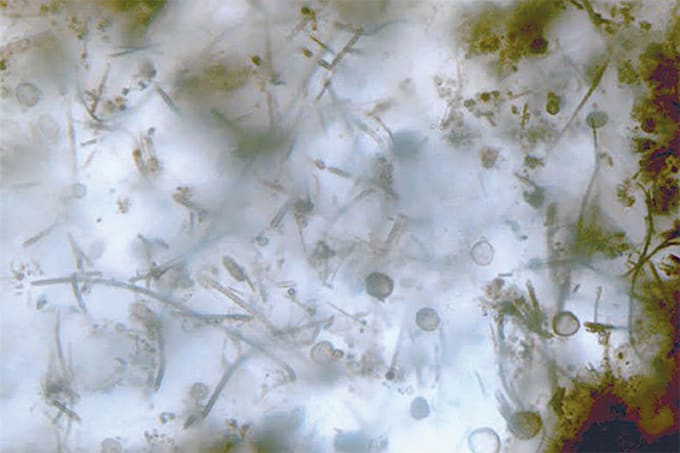
New Window into Ancient Microfossils
Forensics
New Window into Ancient Microfossils

October 4, 2024

1 min read

A new imaging technique using specially coated indium tin oxide (ITO) glass slides reveals key bioessential elements in ancient microfossils – suggesting that life 1...

New Window Into Ancient Microfossils: Part Two
Forensics
New Window Into Ancient Microfossils: Part Two

October 11, 2024

8 min read

Why the discovery of indium tin oxide glass slides ultimately led Akizumi Ishida and Kohei Sasaki to shed new light on early life on Earth – and to jump for joy

Mystery Solved: These Iron Age Infants Died of Natural Causes
Forensics
Mystery Solved: These Iron Age Infants Died of Natural Causes

October 17, 2024

5 min read

Ani Martirosyan walks us through her histological and synchrotron X-ray analysis that provides new insights into infant mortality in Iron Age Iberian populations

Affiliations:

Specialties:

Areas of Expertise:

Contributions:

False

The Analytical Scientist
Subscribe

About

  • About Us
  • Work at Conexiant Europe
  • Terms and Conditions
  • Privacy Policy
  • Advertise With Us
  • Contact Us

Copyright © 2026 Texere Publishing Limited (trading as Conexiant), with registered number 08113419 whose registered office is at Booths No. 1, Booths Park, Chelford Road, Knutsford, England, WA16 8GS.