Conexiant
Login
  • The Analytical Scientist
  • The Cannabis Scientist
  • The Medicine Maker
  • The Ophthalmologist
  • The Pathologist
  • The Traditional Scientist
The Analytical Scientist
  • Explore

    Explore

    • Latest
    • News & Research
    • Trends & Challenges
    • Keynote Interviews
    • Opinion & Personal Narratives
    • Product Profiles
    • App Notes
    • The Product Book

    Featured Topics

    • Mass Spectrometry
    • Chromatography
    • Spectroscopy

    Issues

    • Latest Issue
    • Archive
  • Topics

    Techniques & Tools

    • Mass Spectrometry
    • Chromatography
    • Spectroscopy
    • Microscopy
    • Sensors
    • Data and AI

    • View All Topics

    Applications & Fields

    • Clinical
    • Environmental
    • Food, Beverage & Agriculture
    • Pharma and Biopharma
    • Omics
    • Forensics
  • People & Profiles

    People & Profiles

    • Power List
    • Voices in the Community
    • Sitting Down With
    • Authors & Contributors
  • Business & Education

    Business & Education

    • Innovation
    • Business & Entrepreneurship
    • Career Pathways
  • Events
    • Live Events
    • Webinars
  • Multimedia
    • Video
    • Content Hubs
Subscribe
Subscribe

False

The Analytical Scientist / Issues / 2026 / February / Inside the Netherlands Water Monitoring Success Story
Environmental News and Research Liquid Chromatography

Inside the Netherlands’ Water Monitoring Success Story

How a harmonized HPLC-DAD early warning system became a cornerstone of Dutch surface water protection

By James Strachan 02/11/2026 4 min read
  • Full Article
  • Summary
  • Takeaways
  • Listen
  • Report
  • Scorecard
  • Quiz
  • Poll
  • Top Institutions
  • Top Thought Leaders

Share

Clinical Scorecard: Inside the Netherlands’ Water Monitoring Success Story

At a Glance

CategoryDetail
Condition
Key Mechanisms
Target Population
Care SettingEnvironmental monitoring and water management, with a focus on public health protection.

Key Highlights

  • Interlaboratory studies every two years ensure method consistency and reliability.

Guideline-Based Recommendations

Diagnosis

    Management

      Monitoring & Follow-up

        Risks

        • R
        • e
        • c
        • o
        • g
        • n
        • i
        • z
        • e
        • l
        • i
        • m
        • i
        • t
        • a
        • t
        • i
        • o
        • n
        • s
        • i
        • n
        • d
        • e
        • t
        • e
        • c
        • t
        • i
        • n
        • g
        • n
        • o
        • n
        • -
        • U
        • V
        • -
        • a
        • c
        • t
        • i
        • v
        • e
        • c
        • o
        • m
        • p
        • o
        • u
        • n
        • d
        • s
        • ;
        • u
        • s
        • e
        • c
        • o
        • m
        • p
        • l
        • e
        • m
        • e
        • n
        • t
        • a
        • r
        • y
        • t
        • e
        • c
        • h
        • n
        • i
        • q
        • u
        • e
        • s
        • l
        • i
        • k
        • e
        • H
        • R
        • M
        • S
        • a
        • n
        • d
        • G
        • C
        • -
        • M
        • S
        • .

        Patient & Prescribing Data

        Not applicable; focuses on environmental monitoring.

        HPLC-DAD is a reliable tool for tracing contaminants in water supplies.

        Clinical Best Practices

        • Integrate HPLC-DAD into existing alarm systems for enhanced water quality monitoring.
        • Encourage collaboration among laboratories for data sharing and method harmonization.
        • Utilize rapid communication protocols to ensure timely responses to contamination alerts.
        • Provide training for staff on effective use of HPLC-DAD.

        References

        • KWR Water Research Institute

        This content is an AI-generated, fully rewritten summary based on a published scholarly article. It does not reproduce the original text and is not a substitute for the original publication. Readers are encouraged to consult the source for full context, data, and methodology.

        Newsletters

        Receive the latest analytical science news, personalities, education, and career development – weekly to your inbox.
        Newsletter Signup Image

        About the Author(s)

        James Strachan

        Over the course of my Biomedical Sciences degree it dawned on me that my goal of becoming a scientist didn’t quite mesh with my lack of affinity for lab work. Thinking on my decision to pursue biology rather than English at age 15 – despite an aptitude for the latter – I realized that science writing was a way to combine what I loved with what I was good at. From there I set out to gather as much freelancing experience as I could, spending 2 years developing scientific content for International Innovation, before completing an MSc in Science Communication. After gaining invaluable experience in supporting the communications efforts of CERN and IN-PART, I joined Texere – where I am focused on producing consistently engaging, cutting-edge and innovative content for our specialist audiences around the world.

        More Articles by James Strachan

        False

        Advertisement

        Recommended

        False

        Related Content

         This Week’s Mass Spec News
        Environmental
        This Week’s Mass Spec News

        April 4, 2025

        2 min read

        The Climate Conversation: Part Two – Michael Gonsior
        Environmental
        The Climate Conversation: Part Two – Michael Gonsior

        December 5, 2024

        7 min read

        In the second part of our interview, Michael Gonsior explores the pressing challenges in carbon cycle research, transformative tools and technologies, as well as analytical glimmers of hope

        More Bang for Your Buck
        Environmental
        More Bang for Your Buck

        December 4, 2024

        1 min read

        Researchers develop more stable catalysts for dry reforming of methane – a promising method for carbon capture and utilization (CCU)
        Portable PFAS Profiling
        Environmental
        Portable PFAS Profiling

        December 13, 2024

        1 min read

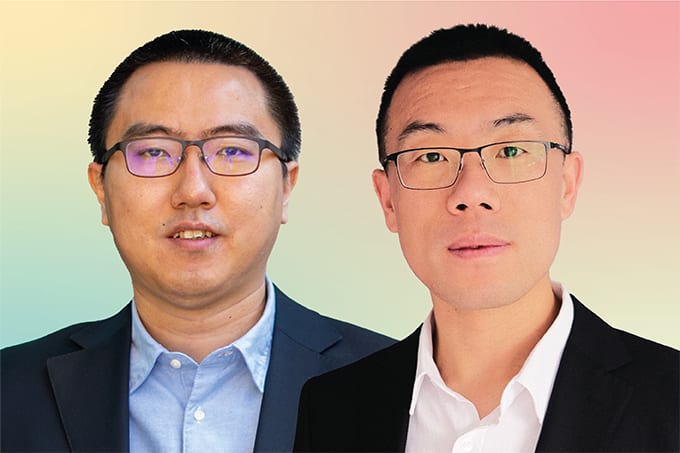
        Using nanopore technology, Chang Liu and Xiaojun Wei discuss their accessible and inexpensive new option for detecting “forever chemicals” PFAS

        Affiliations:

        Specialties:

        Areas of Expertise:

        Contributions:

        False

        The Analytical Scientist
        Subscribe

        About

        • About Us
        • Work at Conexiant Europe
        • Terms and Conditions
        • Privacy Policy
        • Advertise With Us
        • Contact Us

        Copyright © 2026 Texere Publishing Limited (trading as Conexiant), with registered number 08113419 whose registered office is at Booths No. 1, Booths Park, Chelford Road, Knutsford, England, WA16 8GS.