Conexiant
Login
  • The Analytical Scientist
  • The Cannabis Scientist
  • The Medicine Maker
  • The Ophthalmologist
  • The Pathologist
  • The Traditional Scientist
The Analytical Scientist
  • Explore

    Explore

    • Latest
    • News & Research
    • Trends & Challenges
    • Keynote Interviews
    • Opinion & Personal Narratives
    • Product Profiles
    • App Notes
    • The Product Book

    Featured Topics

    • Mass Spectrometry
    • Chromatography
    • Spectroscopy

    Issues

    • Latest Issue
    • Archive
  • Topics

    Techniques & Tools

    • Mass Spectrometry
    • Chromatography
    • Spectroscopy
    • Microscopy
    • Sensors
    • Data and AI

    • View All Topics

    Applications & Fields

    • Clinical
    • Environmental
    • Food, Beverage & Agriculture
    • Pharma and Biopharma
    • Omics
    • Forensics
  • People & Profiles

    People & Profiles

    • Power List
    • Voices in the Community
    • Sitting Down With
    • Authors & Contributors
  • Business & Education

    Business & Education

    • Innovation
    • Business & Entrepreneurship
    • Career Pathways
  • Events
    • Live Events
    • Webinars
  • Multimedia
    • Video
    • Content Hubs
Subscribe
Subscribe

False

The Analytical Scientist / Issues / 2026 / January / Interpreting Lifes Earliest Chemical Traces
Forensics Data and AI Mass Spectrometry Gas Chromatography

Interpreting Life’s Earliest Chemical Traces 

A machine learning strategy extends molecular biosignatures to early Earth and planetary exploration 

By Henry Thomas 01/21/2026 3 min read
  • Full Article
  • Summary
  • Takeaways
  • Listen
  • Report
  • Scorecard
  • Quiz
  • Poll
  • Top Institutions

Share

Objective:

To establish reliable chemical criteria for identifying ancient life using fragmented organic mixtures, addressing challenges in geochemistry and astrobiology.

Key Findings:
  • Samples as old as 2.5 billion years were identified as photosynthetic, extending the known timeline of life.
  • Samples as old as 3.33 billion years were identified as biotic, challenging previous assumptions about the age of life.
  • The method corrected previous misclassifications of samples, improving the accuracy of ancient life detection.
Interpretation:

The findings extend the record of life based on molecular remains and reinforce existing paleontological evidence regarding the antiquity of life and photosynthesis, suggesting a deeper understanding of early life forms.

Limitations:
  • Limited number of samples in certain classes, particularly fossil animals, which may skew results.
  • Machine learning performance is affected by unbalanced training datasets, leading to potential inaccuracies in classification.
Conclusion:

This research opens pathways for detecting older life and understanding biochemical details, necessitating larger datasets and diverse analytical methods for future studies to enhance reliability.

This content is an AI-generated, fully rewritten summary based on a published scholarly article. It does not reproduce the original text and is not a substitute for the original publication. Readers are encouraged to consult the source for full context, data, and methodology.

Newsletters

Receive the latest analytical science news, personalities, education, and career development – weekly to your inbox.

Newsletter Signup Image

About the Author(s)

Henry Thomas

Deputy Editor of The Analytical Scientist

More Articles by Henry Thomas

False

Advertisement

Recommended

False

Related Content

How Dinosaurs Ate Their Way to Dominance
Forensics
How Dinosaurs Ate Their Way to Dominance

December 10, 2024

2 min read

Analyses of fossilized feces, intestinal contents, and vomit reveal how dinosaurs adapted to climate shifts
New Window into Ancient Microfossils
Forensics
New Window into Ancient Microfossils

October 4, 2024

1 min read

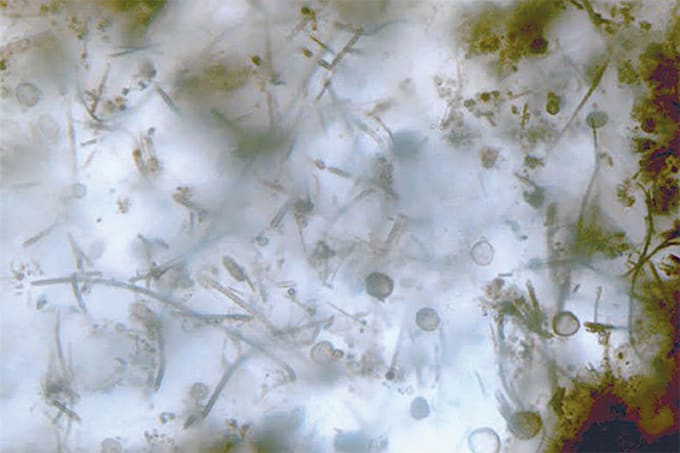
A new imaging technique using specially coated indium tin oxide (ITO) glass slides reveals key bioessential elements in ancient microfossils – suggesting that life 1...

New Window Into Ancient Microfossils: Part Two
Forensics
New Window Into Ancient Microfossils: Part Two

October 11, 2024

8 min read

Why the discovery of indium tin oxide glass slides ultimately led Akizumi Ishida and Kohei Sasaki to shed new light on early life on Earth – and to jump for joy

Mystery Solved: These Iron Age Infants Died of Natural Causes
Forensics
Mystery Solved: These Iron Age Infants Died of Natural Causes

October 17, 2024

5 min read

Ani Martirosyan walks us through her histological and synchrotron X-ray analysis that provides new insights into infant mortality in Iron Age Iberian populations

Affiliations:

Specialties:

Areas of Expertise:

Contributions:

False

The Analytical Scientist
Subscribe

About

  • About Us
  • Work at Conexiant Europe
  • Terms and Conditions
  • Privacy Policy
  • Advertise With Us
  • Contact Us

Copyright © 2026 Texere Publishing Limited (trading as Conexiant), with registered number 08113419 whose registered office is at Booths No. 1, Booths Park, Chelford Road, Knutsford, England, WA16 8GS.