Clinical Report: Beating Biopharma Manufacturing Bottlenecks with Raman Spectroscopy
Overview
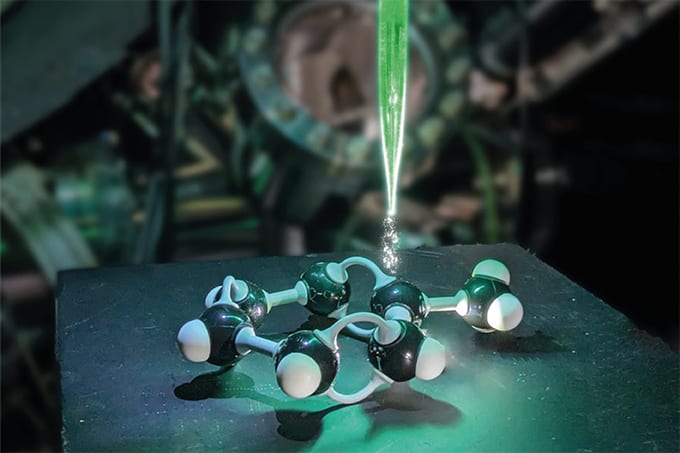
Raman spectroscopy offers a transformative approach to biopharmaceutical manufacturing by enabling real-time quality control and predictive process management. This technology significantly reduces delays associated with traditional QC methods, enhancing product safety and manufacturing efficiency.
Background
The biopharmaceutical industry faces critical challenges in balancing rapid product commercialization with stringent Good Manufacturing Practices (GMP). Traditional off-line quality control methods introduce significant delays, often resulting in costly batch failures. The adoption of Raman spectroscopy presents a solution that allows for continuous monitoring and proactive adjustments in manufacturing processes.
Data Highlights
No numerical data available in the source material.
Key Findings
- Raman spectroscopy provides instantaneous analysis, reducing the time from sample collection to results.
- It enhances protein stability assessments, allowing for rapid identification of structural weaknesses in drug candidates.
- Continuous monitoring of critical nutrients and metabolites in bioreactors can lead to significant increases in drug yield and consistency.
- Implementation of Raman technology has resulted in a documented 20% reduction in formulation failures during early development.
- Raman's compatibility with aqueous systems minimizes background noise, improving the clarity of analytical results.
Clinical Implications
The integration of Raman spectroscopy into biopharmaceutical manufacturing can lead to more efficient processes and improved product quality. Clinicians and manufacturers should consider adopting this technology to enhance real-time monitoring and reduce the risk of batch failures.
Conclusion
Raman spectroscopy represents a pivotal advancement in biopharmaceutical manufacturing, enabling a shift from reactive to proactive quality control. Its implementation can significantly enhance both product safety and operational efficiency.
Related Resources & Content
- the analytical scientist, Accelerating Biopharmaceutical Development with CE-MS, 2026 -- Accelerating Biopharmaceutical Development with CE-MS
- the analytical scientist, Spectroscopy Roundup: Rover Dogs and Raman Vision, 2026 -- Spectroscopy Roundup: Rover Dogs and Raman Vision
- the analytical scientist, Meeting the GLP-1 Challenge with High-Resolution Mass Spec, 2026 -- Meeting the GLP-1 Challenge with High-Resolution Mass Spec
- the analytical scientist, Raman Spectroscopy Moves to the Front Line of Pandemic Preparedness, 2026 -- Raman Spectroscopy Moves to the Front Line of Pandemic Preparedness
- INTERNATIONAL COUNCIL FOR HARMONISATION OF TECHNICAL, 2023 -- ICH Q14 Guideline
- Implementation of inline Raman spectroscopy for buffer exchange monitoring in monoclonal antibody formulation, ScienceDirect, 2025 -- Implementation of inline Raman spectroscopy for buffer exchange monitoring in monoclonal antibody formulation
- Advancing Product Quality | FDA -- Advancing Product Quality
- INTERNATIONAL COUNCIL FOR HARMONISATION OF TECHNICAL
- Implementation of inline Raman spectroscopy for buffer exchange monitoring in monoclonal antibody formulation - ScienceDirect
- Advancing Product Quality | FDA
This content is an AI-generated, fully rewritten summary based on a published scholarly article. It does not reproduce the original text and is not a substitute for the original publication. Readers are encouraged to consult the source for full context, data, and methodology.
Newsletters
Receive the latest analytical science news, personalities, education, and career development – weekly to your inbox.