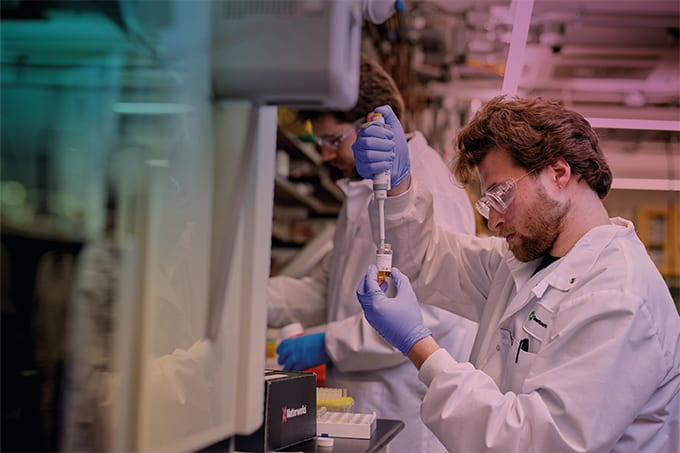
Clinical Report: When AI Meets Physics in Liquid Chromatography
Overview
This report discusses the transformative potential of artificial intelligence (AI) techniques, such as machine learning, in enhancing the prediction of retention times in liquid chromatography (LC), which is crucial for pharmaceutical development. By leveraging these AI methods, the efficiency of drug development processes can be significantly improved, leading to faster delivery of safe and effective treatments.
Background
The integration of AI and machine learning into analytical chemistry represents a significant advancement in the field, particularly in liquid chromatography. Accurate prediction of retention times is essential for streamlining method development and improving the identification of unknown compounds. As the pharmaceutical industry seeks to expedite the life cycle of new medicines, AI's capabilities in data processing and pattern recognition become increasingly vital, especially in overcoming the limitations of traditional models.
Data Highlights
No numerical data or trial results were provided in the source material, which limits the ability to quantify the impact of AI on retention time predictions.Key Findings
- AI can enhance the prediction of retention times in liquid chromatography, addressing challenges posed by traditional models.
- Current models, including physics-based, descriptor-based, and statistical methods, have limitations in accurately predicting retention phenomena.
- AI's ability to analyze large datasets rapidly allows for the recognition of complex patterns that traditional methods may overlook.
- Improved retention time predictions can streamline method development and reduce human error in the drug development process.
- The integration of AI technologies can facilitate automation throughout the drug life cycle, enhancing efficiency.
Clinical Implications
Healthcare professionals should consider the potential of AI-driven approaches to improve the accuracy and efficiency of liquid chromatography in drug development. By adopting these technologies, laboratories can enhance their analytical capabilities, leading to better patient outcomes through faster and more reliable drug testing. Practical implementation strategies should be explored to maximize the benefits of AI in laboratory settings.
Conclusion
The application of AI in liquid chromatography signifies a pivotal shift in analytical chemistry, promising to enhance the efficiency of pharmaceutical development. Continued exploration and integration of these technologies will be essential for advancing clinical practices and addressing future challenges in drug development.
Related Resources & Content
- The analytical scientist, The Future of Countercurrent Chromatography, 2026 -- The Future of Countercurrent Chromatography
- The analytical scientist, Why Countercurrent Chromatography Still Matters, 2026 -- Why Countercurrent Chromatography Still Matters
- The medicine maker, What I Learned Bringing Slalom Chromatography Back from the Dead, 2026 -- What I Learned Bringing Slalom Chromatography Back from the Dead
- The analytical scientist, Ronak Chawla on Innovation and the Future of the Analytical Lab, 2026 -- Ronak Chawla on Innovation and the Future of the Analytical Lab
- FDA, Marketing Submission Recommendations for a Predetermined Change Control Plan for Artificial Intelligence-Enabled Device Software Functions, 2025 -- Marketing Submission Recommendations for a Predetermined Change Control Plan for Artificial Intelligence-Enabled Device Software Functions
- Nature Communications, 2025 -- A study on LC-based omics and ML in acute illness
- Journal of Zhejiang University-SCIENCE B, A practice guideline for therapeutic drug monitoring of mycophenolic acid for solid organ transplants -- A practice guideline for therapeutic drug monitoring of mycophenolic acid for solid organ transplants
- Marketing Submission Recommendations for a Predetermined Change Control Plan for Artificial Intelligence-Enabled Device Software Functions | FDA
- Article https://doi.org/10.1038/s41467-025-65271-4
- A practice guideline for therapeutic drug monitoring of mycophenolic acid for solid organ transplants | Journal of Zhejiang University-SCIENCE B | Springer Nature Link
This content is an AI-generated, fully rewritten summary based on a published scholarly article. It does not reproduce the original text and is not a substitute for the original publication. Readers are encouraged to consult the source for full context, data, and methodology.
Newsletters
Receive the latest analytical science news, personalities, education, and career development – weekly to your inbox.

About the Author(s)
Fabrice Gritti
Fabrice Gritti is based at the Waters Corporation, Milford, USA.