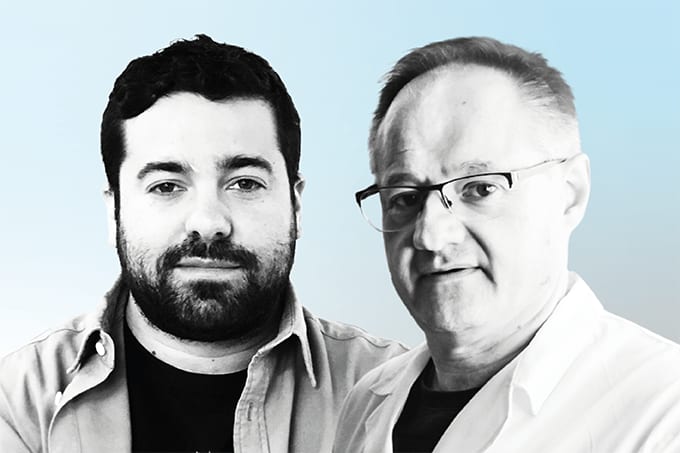
Clinical Report: State-of-the-Art Sample Preparation Roundtable: Part Three
Overview
This report discusses the challenges and advancements in sustainable sample preparation methods in analytical chemistry. Key obstacles include regulatory demands and the need for reliable results while minimizing environmental impact.
Background
Sustainable sample preparation is crucial in analytical chemistry as it balances the need for accurate results with environmental responsibility. The transition to greener methods is hindered by regulatory frameworks and the inertia of established practices. Understanding these dynamics is essential for future innovations in the field.
Data Highlights
No numerical data presented in the article.
Key Findings
- Balancing analytical quality with environmental impact is a primary challenge in sample preparation.
- Regulatory demands are a significant barrier to the adoption of greener methods.
- Current greenness assessment tools are functional but lack a unified standard.
- Transitioning to sustainable methods requires overcoming cost and training barriers.
- The next generation of scientists is expected to drive the adoption of greener practices.
Clinical Implications
Laboratories must navigate the complexities of regulatory compliance while striving for sustainable practices in sample preparation. Emphasizing education and training for new methodologies will be vital for future advancements.
Conclusion
The roundtable highlights the ongoing need for innovation in sample preparation methods, emphasizing the importance of balancing sustainability with analytical rigor.
Related Resources & Content
- the analytical scientist, State-of-the-Art Sample Preparation Roundtable: Part One, 2026 -- State-of-the-Art Sample Preparation Roundtable: Part One
- the analytical scientist, State-of-the-Art Sample Preparation Roundtable: Part Two, 2026 -- State-of-the-Art Sample Preparation Roundtable: Part Two
- the analytical scientist, Why Extraction Still Matters in Food Analysis, 2026 -- Why Extraction Still Matters in Food Analysis
- IAS AccreditCom, JUNE 2025 -- IAS AccreditCom ® Medical Laboratories A
- FDA, M10 Bioanalytical Method Validation and Study Sample Analysis -- M10 Bioanalytical Method Validation and Study Sample Analysis
- Archives of Toxicology — Multi-Target Forensic Toxicology Screening in Biological Samples Using MRM-IDA-EPI Techniques
- JUNE 2025 IAS AccreditCom ® Medical Laboratories A
- M10 Bioanalytical Method Validation and Study Sample Analysis | FDA
- Development and Clinical Validation of a Volumetric Absorptive Capillary Microsampling Method for Quantification of Mycophenolic Acid and Mycophenolic Acid Glucuronide in Kidney Transplant Recipients - PubMed
This content is an AI-generated, fully rewritten summary based on a published scholarly article. It does not reproduce the original text and is not a substitute for the original publication. Readers are encouraged to consult the source for full context, data, and methodology.
Newsletters
Receive the latest analytical science news, personalities, education, and career development – weekly to your inbox.
About the Author(s)
James Strachan
Over the course of my Biomedical Sciences degree it dawned on me that my goal of becoming a scientist didn’t quite mesh with my lack of affinity for lab work. Thinking on my decision to pursue biology rather than English at age 15 – despite an aptitude for the latter – I realized that science writing was a way to combine what I loved with what I was good at. From there I set out to gather as much freelancing experience as I could, spending 2 years developing scientific content for International Innovation, before completing an MSc in Science Communication. After gaining invaluable experience in supporting the communications efforts of CERN and IN-PART, I joined Texere – where I am focused on producing consistently engaging, cutting-edge and innovative content for our specialist audiences around the world.