Clinical Report: Microlaser Droplets Deliver Thousands of Viscosity Readouts
Overview
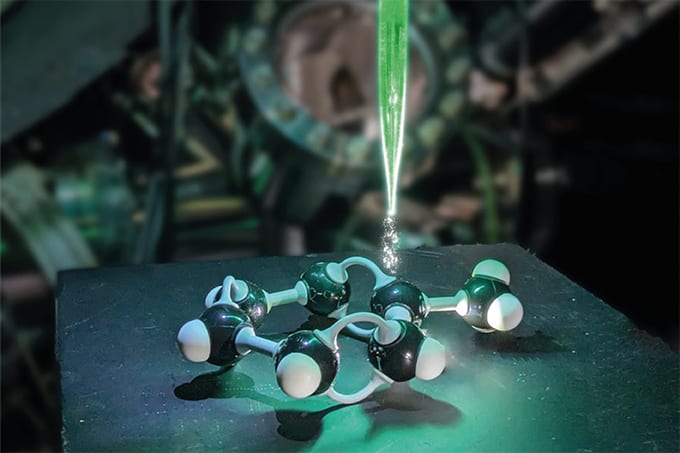
A novel laser-emission vibrational microscopy (LEVM) technique enables over 2,000 viscosity measurements from picoliter blood droplets in just 25 minutes. This high-throughput method offers a promising alternative to traditional lipid assays and rheological tools, potentially enhancing clinical diagnostics.
Background
The ability to accurately measure viscosity is crucial in various clinical settings, particularly for diagnosing conditions like hyperlipidemia. Traditional methods often require larger sample volumes and are time-consuming, limiting their utility in rapid diagnostics. The development of LEVM addresses these limitations by allowing for rapid, microscale viscosity assessments from trace-volume samples.
Data Highlights
No numerical data available in the provided source material.
Key Findings
- LEVM can perform over 2,000 viscosity measurements in 25 minutes.
- The technique utilizes picoliter blood droplets as optical microcavities.
- Ultrasound-induced vibrations in droplets correlate with viscosity, enabling precise measurements.
- LEVM offers a high-throughput alternative to conventional lipid assays.
- Single drops of blood can theoretically yield over seven million individual viscosity measurements.
Clinical Implications
The LEVM technique could significantly enhance the speed and efficiency of viscosity testing in clinical settings, supporting earlier detection of conditions like hyperlipidemia. By integrating this method with traditional lipid panel tests, clinicians may achieve a more comprehensive assessment of cardiovascular health.
Conclusion
LEVM represents a promising advancement in the field of clinical diagnostics, potentially transforming how viscosity is measured and interpreted in patient care.
Related Resources & Content
- British Society for Haematology, PubMed, 2025 -- Apheresis procedures for the treatment of patients and for the collection of cellular therapy products
- AABB, 2025 -- Viscoelastic Testing in Patient Blood Management
- Retinal Physician — The Capabilities of Navigation in Microsecond Pulsing Laser Therapy
- Contact Lens Spectrum — product spectrum
- Retinal Physician — Rediscovering Micropulse Laser Therapy
- Ophthalmology Management — When shots and steroids won’t do
- Apheresis procedures for the treatment of patients and for the collection of cellular therapy products: A British Society for Haematology guideline - PubMed
- OCTOBER 2025
- PLOS ONERESEARCH ARTICLE
This content is an AI-generated, fully rewritten summary based on a published scholarly article. It does not reproduce the original text and is not a substitute for the original publication. Readers are encouraged to consult the source for full context, data, and methodology.
Newsletters
Receive the latest analytical science news, personalities, education, and career development – weekly to your inbox.
About the Author(s)
James Strachan
Over the course of my Biomedical Sciences degree it dawned on me that my goal of becoming a scientist didn’t quite mesh with my lack of affinity for lab work. Thinking on my decision to pursue biology rather than English at age 15 – despite an aptitude for the latter – I realized that science writing was a way to combine what I loved with what I was good at. From there I set out to gather as much freelancing experience as I could, spending 2 years developing scientific content for International Innovation, before completing an MSc in Science Communication. After gaining invaluable experience in supporting the communications efforts of CERN and IN-PART, I joined Texere – where I am focused on producing consistently engaging, cutting-edge and innovative content for our specialist audiences around the world.