Objective:
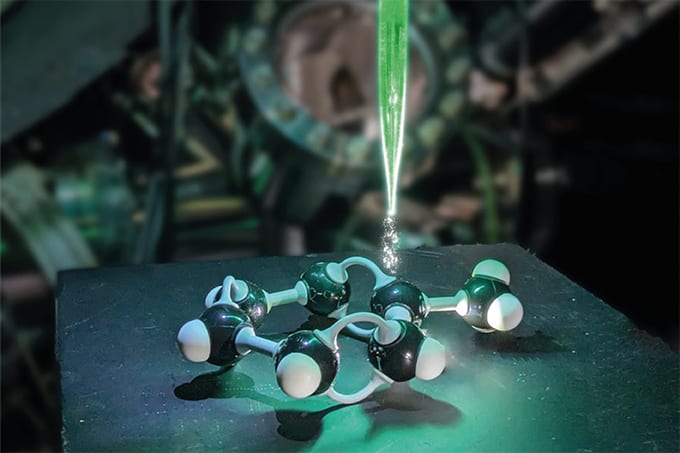
To develop a high-throughput method for viscosity measurement using laser-emission vibrational microscopy (LEVM) that overcomes limitations of conventional diagnostic techniques.
Key Findings:
- LEVM can perform over 2,000 viscosity measurements in 25 minutes.
- The technique allows for high-throughput analysis from trace-volume clinical samples.
- Microdroplet vibrations provide a reliable indicator of mechanical properties correlated with viscosity.
Interpretation:
LEVM represents a significant advancement in clinical diagnostics, enabling rapid and detailed viscosity assessments that can aid in early detection of hyperlipidemia.
Limitations:
- The technique does not directly quantify lipid subtypes like traditional assays.
- Further validation with a larger number of blood samples is needed to establish robust correlations.
Conclusion:
LEVM has the potential to transform clinical diagnostics by providing a fast, efficient, and comprehensive method for assessing cardiovascular health.
This content is an AI-generated, fully rewritten summary based on a published scholarly article. It does not reproduce the original text and is not a substitute for the original publication. Readers are encouraged to consult the source for full context, data, and methodology.
Newsletters
Receive the latest analytical science news, personalities, education, and career development – weekly to your inbox.
About the Author(s)
James Strachan
Over the course of my Biomedical Sciences degree it dawned on me that my goal of becoming a scientist didn’t quite mesh with my lack of affinity for lab work. Thinking on my decision to pursue biology rather than English at age 15 – despite an aptitude for the latter – I realized that science writing was a way to combine what I loved with what I was good at. From there I set out to gather as much freelancing experience as I could, spending 2 years developing scientific content for International Innovation, before completing an MSc in Science Communication. After gaining invaluable experience in supporting the communications efforts of CERN and IN-PART, I joined Texere – where I am focused on producing consistently engaging, cutting-edge and innovative content for our specialist audiences around the world.