Objective:
To share insights into the evolving challenges and advancements in separation science, particularly in chromatography and mass spectrometry, emphasizing the urgency of these issues.
Approach:
- Enhanced-fluidity liquid chromatography improves chromatographic performance for biological samples, which is crucial for accurate analysis.
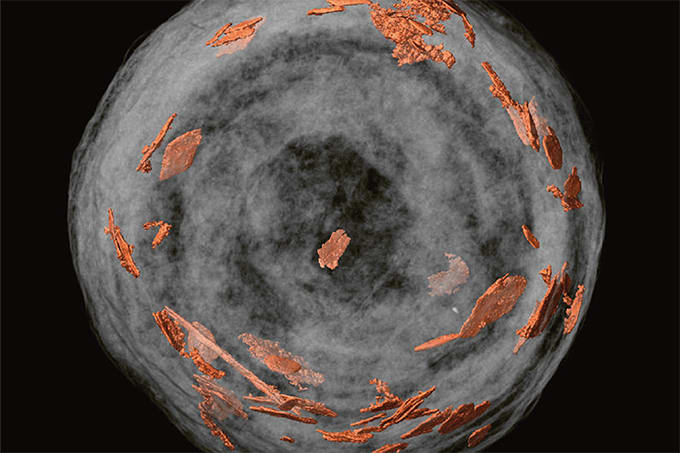
- Carbon nanomaterials can significantly enhance separation efficiency and selectivity, impacting various application areas.
- Networking at HPLC 2026 is crucial for knowledge exchange and collaboration among researchers, fostering innovation.
- Current budget challenges in the US may hinder research funding and training of new scientists, risking a loss of expertise.
- Uncertainty in federal research funding could impact the future of separation science, necessitating community strategies for sustainability.
Key Findings:
Interpretation:
The advancements in separation science are critical for addressing complex analytical challenges in various fields, including biomaterials, environmental science, and pharmaceuticals.
Limitations:
Conclusion:
Collaboration and continued support for scientific training are essential to navigate the challenges facing the field of separation science, ensuring progress and innovation.
This content is an AI-generated, fully rewritten summary based on a published scholarly article. It does not reproduce the original text and is not a substitute for the original publication. Readers are encouraged to consult the source for full context, data, and methodology.
Newsletters
Receive the latest analytical science news, personalities, education, and career development – weekly to your inbox.
About the Author(s)
Frank van Geel
Frank van Geel is owner of educational website Chromedia and Scientific Director of The Analytical Scientist. He studied analytical chemistry, specialized in mass spectrometry in the Netherlands and did several years of post-doc work in spectroscopy with Jim Winefordner at the University of Florida in the US. Then he became a science teacher and later publisher in chemistry and physics related topics. He developed numerous publications in chemistry and other sciences. He strongly supports the mission: Building online communities is the road to take. We need to strengthen the quality of analytical chemistry and we need to strengthen our community by sharing know-how and by sharing our opinions, visions and our views of the future of analytical science.
James Strachan
Over the course of my Biomedical Sciences degree it dawned on me that my goal of becoming a scientist didn’t quite mesh with my lack of affinity for lab work. Thinking on my decision to pursue biology rather than English at age 15 – despite an aptitude for the latter – I realized that science writing was a way to combine what I loved with what I was good at. From there I set out to gather as much freelancing experience as I could, spending 2 years developing scientific content for International Innovation, before completing an MSc in Science Communication. After gaining invaluable experience in supporting the communications efforts of CERN and IN-PART, I joined Texere – where I am focused on producing consistently engaging, cutting-edge and innovative content for our specialist audiences around the world.