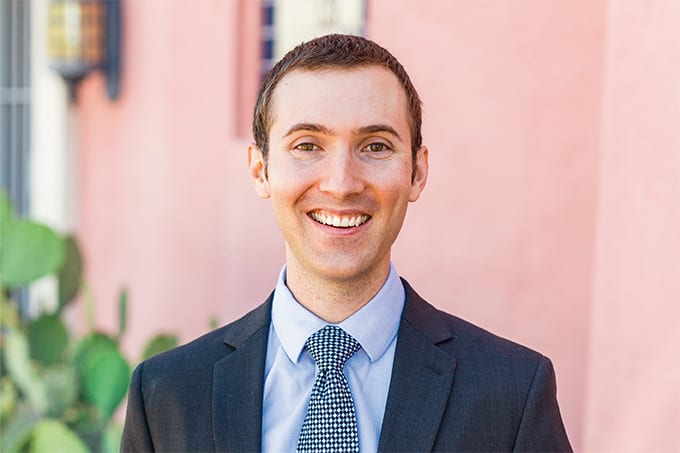
Few scientists have done more to bring the hidden world of research misconduct into public view than Elisabeth Bik. A Dutch microbiologist by training, Bik spent 15 years at Stanford University studying the microbiomes of humans and marine mammals before turning toward scientific integrity – first as a hobby after discovering her own work had been plagiarized, and later through the duplicated and manipulated images she began spotting across the literature.
Today, Bik works full time as an independent scientific integrity consultant, using a combination of sharp-eyed image analysis and software tools to flag problematic papers. Her efforts have earned wide recognition, including the 2021 John Maddox Prize and the 2024 Einstein Foundation Individual Award for research integrity.
Ahead of her keynote lecture at ASMS, we spoke with Bik about the industrialization of research fraud, the rise of paper mills and AI-generated “slop,” the role of platforms such as PubPeer, and why analytical scientists may need to look more closely at the data types they know best.

Could you begin with a brief introduction – especially in relation to the work you’re doing now?
My name is Elisabeth Bik. I was born and raised in the Netherlands, where I also completed my PhD in microbiology. I moved to the US at the end of 2001, joining David Relman’s lab at Stanford University. I worked there for 15 years, studying the microbiome of humans and dolphins. But in 2013, I came across the issue of scientific integrity after someone plagiarized my work. That experience led me into what was then a new field for me. It became a hobby, and I started looking into plagiarism.
Then, by another coincidence, I began finding duplicated images in scientific papers and PhD theses. The same photo had sometimes been used twice to represent two different experiments – occasionally mirrored, rotated, or otherwise altered.
I suppose I have some talent for spotting duplicated images. I began scanning the scientific literature for those kinds of duplications as a hobby. Then, in 2019, I quit my job – I was working at a startup at the time – and I now do this work full time.
What are your current activities in relation to scientific integrity and fraud?
I still look for duplicated images. That is my bread and butter. When I started doing this work, I did everything by eye. I would scan papers and look for duplications. Now I use software to help me find them.
The software tools I use have libraries of images, so I can find duplications not only within papers, but also between papers. I can also detect cases where people steal or reuse an image from another paper – sometimes from their own research group. Occasionally, I find people presenting images as their own when they have simply taken them from random papers. The software allows me to find those cases in a sea of millions and millions of papers.
Images are my main focus, but I also look at other issues, such as conflicts of interest, plots, standard deviations that are always the same percentage of the mean, or duplicated values in supplemental tables. My field is a little wider than just images.
I also give talks on this topic. I attend conferences, give keynotes, and work with publishers or universities. Sometimes I work as a consultant. So, what I do is very diverse, but the main focus is still looking at scientific papers for all kinds of problems.
What is the next step when you find problems in a paper?
What I mainly do is post my findings on a website called PubPeer. It is a website where you can leave comments on a scientific paper. It works with the paper’s unique identifier – the DOI. You type the DOI into the website, and it creates a new page where you can comment on that paper.
The advantage is that PubPeer provides a central place where people can ask questions of the authors, comment on something they do not quite understand, or raise concerns about problems they have noticed. Most of the issues posted there relate to images because they are the visible part of a paper. That might include graphs, photographs, Western blots, microscopy images, mice, tumors, plants, and so on.
Sometimes, it also includes graphs of the kind you might find in analytical chemistry. For example, the noise between peaks may have been copied and pasted – perhaps to cover up a peak that the author did not want you to see. All kinds of issues are discussed there.
You can also install a PubPeer plugin that works with your browser. When you are doing a literature search, if the DOI of a paper that has received comments appears on a website, the plugin will show a green banner indicating that the paper has a PubPeer comment. It is a useful tool for people who know about PubPeer and want to be alerted when concerns have been raised about a particular paper.
Have you seen an increase in attention around research integrity – and in the use of PubPeer?
Absolutely. I believe PubPeer has a growing user base, with more and more people using the platform. But in general, I also feel there is much more interest now in research integrity than when I started doing this 12 or 13 years ago. Back then I felt I had to fight very hard to have these concerns taken seriously.
Now, there is a much wider understanding among publishers, universities, and scientists in general that this is a growing problem. Research integrity issues and scientific fraud appear to be on the rise. It is very difficult to put a number on it, because the number of papers being published is also rising so incredibly quickly. But it does seem that all kinds of integrity problems are increasing.
You recently received an award for your work. Could you describe what it was – and what you plan to do with it?
Yes, it was a prize from the Einstein Foundation, which is based in Berlin. The prize is for people who work, in a broad sense, to make science better.
Every year, they give three prizes. One is for an individual, which is the one I won. Another is for a company or group of people working together – that was won last year by PubPeer. And then there is an early-career award for a young person, or a group of young people, who are working to make science better. That award was given to a group working on better guidelines for microscopy images.
The award I received is €200,000, which is an enormous amount of money. I was thinking, “What do I do with that?” For my work, I really only need a monitor, my eyes, a computer, and Wi-Fi – and I already have all of that. So I thought I should do something meaningful with this money.
There are so many people doing this work anonymously, including a lot of early-career scientists who are working to make science better, and I wanted to share my award with them. So, with the help of Retraction Watch, I put the money into the Center for Scientific Integrity, which is the main organization that supports Retraction Watch and some other activities. It is a nonprofit in the US, so there are quite a lot of rules around how the money can be used.
I can use the money to help other people, for example, to attend conferences. A lot of people who look for problems in scientific papers have a day job and do this work as a hobby. They are very passionate about it, but when they want to meet other sleuths, as people call us, their employer often will not pay for them to attend these conferences because it is not related to their main work.
So I am helping them with small grants – just enough to buy a plane ticket, pay for a hotel, or cover similar costs. I hope to use the money to support a lot of other people doing this type of work.
Could you briefly describe the main players involved in research fraud and integrity issues?
There are many different parties involved. Of course, there are scientists who feel pressure to publish. I think that pressure exists for most scientists, but it is much greater now than when I did my PhD in the late 1990s.
Back then, I could have one published paper in my PhD thesis, and that was fine. But I think a lot of universities now have stricter rules – for example, requiring two or three publications. When you put that much pressure on people to publish, some people might start to cut corners.
Some scientists may start to make up results, make their results look better, or completely fabricate or falsify data. There may be plagiarism, and nowadays, of course, people may also use AI to fabricate results. It is this incentive to publish that drives fraud.
It is also becoming a global problem. What we see now is a group of organizations that we call paper mills, which have industrialized this type of fraud. They may hire skilled English-language writers to write fake papers, make up data, invent patients, or fabricate experiments.
In the past, they sometimes used real photos. Now, they are probably generating AI images that look realistic. Sometimes they would steal photos from a microscope in their lab and reuse them, claiming they showed a certain type of experiment when, in reality, they showed something else.
These paper mills sell papers to authors who want a publication on their CV. The people whose names appear on these papers did not write them; they simply paid to be listed as authors.
So we see strange papers where, for example, an experiment describes someone sampling soil, growing a plant in it, and testing which plants grew better – a small, local experiment. But then there are 20 authors from 18 different countries. That is unusual for that kind of experiment. You might expect large global collaborations in studies involving patient data, where 20 hospitals work together, but not for this type of small experiment. Those are typically paper mill products.
It is very hard to prove that the listed authors were not involved. Everyone will insist that they wrote the paper and did the experiments. But if you dig deeper, you can usually find major flaws in these papers.
Then there are publishers, who are increasingly aware that this is a problem. There are also universities, some of which actually encourage this kind of behavior. Some universities want to climb higher in national or international rankings, because that can mean more graduate students and more money. So they may actively encourage paper mills, fake papers, or fabricated publications. They tell faculty to publish as much as possible; it does not matter how they reach that goal, as long as the publications appear and the university moves up in the rankings.
And then there are sleuths like me – people who act as detectives. Some call themselves data detectives, data warriors, image forensics experts, or data forensics experts. These are people scanning the literature for these kinds of problems. Some, like me, look for image problems. Others work on a much larger scale; we call them metascientists. They look across millions of papers, trying to find patterns that may indicate fraud.
So there are many parties involved and many moving parts. But yes, it is a growing problem. It is also a kind of cat-and-mouse game, where the paper mills always seem to be one step ahead. When we catch them, they change their strategy – and then they become much harder to catch.
What is your view on the role of AI in these developments?
AI is very important. I think it is here to stay; it is a new technology, and I am playing with it myself. We can use it for good and for bad.
The software I mentioned earlier, which helps detect image problems, is partly based on AI. It is a pattern-recognition type of AI. But generative AI, of course, can create a lot of problems, because it has become so good that we can no longer easily distinguish a real photo from a fake one.
I think all of us have seen short movie clips or photos that look believable. We know they are fake because they might involve something impossible – a flying turtle, for example – but they still look incredibly realistic. That is very scary.
It is probably very easy now, and we assume it is already happening, to generate photos of cells, tissues, Western blots, or whatever else you can think of. It may even be possible to generate data that results in a plot. This is becoming a real problem because we can no longer believe our eyes. The phrase “a photo or it didn’t happen” no longer works, because we can now see a “photo” of something that did not happen.
I am very worried about this. How am I going to catch it? I have always used my eyes, along with some software, to find duplications as an indication of potential fraud. But that type of analysis will no longer be enough.
I hope other people – people who are better at computer science than I am – can help solve this by analyzing images to determine whether they are fake or real. But I think, in the end, the only way to tackle this problem is to authenticate that a photo is real. That is where we need to be heading. Otherwise, we cannot trust our eyes, and we cannot properly do peer review anymore.
For example, you could imagine software integrated into a microscope, licensed to a lab, that certifies the photo is real and has not been tampered with. I am not a computer scientist, but I think that is the direction we need to move in. C2PA is one example of this kind of provenance and authentication technology. It could potentially be integrated into microscopes or cameras.
And, of course, this is not just a problem in science. It is a problem in journalism and in newsrooms all over the world. If you are running the BBC, for example, and a photographer brings you a photo of a big explosion somewhere in the world, you need to know whether that photo is real or AI-generated.
Could you give any examples of where fraud may affect analytical science?
That is a great question, but it is not really my background. I am a microbiologist and molecular biologist, so traditionally I have looked at photos rather than spectra or other kinds of data.
But we do see images, for example, from scanning electron microscopy or transmission electron microscopy. We have seen examples of Photoshopping or people stealing each other’s images.
We have seen problems with EDX plots – energy-dispersive X-ray spectroscopy. I learned how to look at those because one of the other sleuths, who has more of a physics background, taught me. He also helped write a guideline on how to find fraud in EDX plots. My basic understanding is that certain elements are expected to have peaks at certain positions. Essentially you can use a table: oxygen should appear at a certain position, and elements such as platinum, gold, or silver have their expected peaks.
We have seen plots where those peaks appear in completely different positions. That suggests the plot is made up, because if silver is supposed to be at one position and appears somewhere else, that cannot be true. Usually, these are plots copied from other people, with another element added at the wrong position.
So that is the type of plot where, even though I do not have a deep background in the technique, I feel educated enough to point out a fake. That is why we have written the COSIG guidelines, which are about open science and scientific integrity: how can we identify problems in certain types of plots?
I have not tackled mass spectrometry yet, so I cannot give a specific example there. But hopefully I can learn more from other experts. I am trying to expand the range of things I can detect, but I do not want to veer too far outside what I know. If I raise concerns about a paper, I need to understand what the concern is.
What will you be speaking about at ASMS?
I will give a general overview of science fraud. I will show some examples from molecular biology, and I have already gathered some examples of mass spectrometry papers that have fraud problems – although not in the MS plots themselves. Again, I just do not have the experience for that.
For example, I will show an AI-generated paper, or at least a paper where part of the introduction appears to have been AI-generated. I will also show an example involving an ethical approval problem, where patient samples were analyzed – or bacteria isolated from patients were analyzed – but the human ethical approval was not in order. That paper was retracted, and it was part of a much larger problem in that particular lab.
So I will be talking more about adjacent problems and giving an overview of different types of issues.
I will probably invite the audience to think about their own field. You might assume that this does not happen in your particular specialty, but it probably does. Look at the plots and data types you are familiar with – the ones you understand. You might suddenly see problems that point to deeper issues: potentially fraudulent data, data that looks too clean, too few peaks in a sample that you would expect to be messier, or peaks in the wrong position.
Again, I would not necessarily know how to recognize those problems myself, but I want to encourage people to be aware that this is very likely happening in their field as well. There is probably fraud everywhere. I can only recognize part of it, but if you see a problem, raise concerns and post them on PubPeer.
Are you thinking about solutions, either in the short term or the long term? Where might those solutions lie?
I think this is all related to the fact that fraud is no longer just about an individual fraudster – perhaps a struggling postdoc or PI making up data. It has become an industrialized problem.
I was just at another conference, and we heard from publishers that they are now overwhelmed with submissions – two or three times more than last year, or even more. We assume a lot of this is AI-generated, or at least much of it. AI-generated slop is becoming a huge problem.
All of this is driven by the pressure to publish. People want to publish more because it makes their resumes look better. So maybe we need to think about limits – perhaps one paper per year, or something that depends on career stage. Maybe a PI can have five papers a year. But how can people possibly write 20, 30, or 40 papers a year? At least in my field, that seems very unlikely.
Review papers also need to be much more carefully scrutinized. Do we really need another review paper on a particular topic? I feel the bar needs to be much higher.
So we need to be much more diligent in screening submissions. We need to remove the incentives and be much stricter about what we publish. That could mean stronger filters, verification of photos or data, and requirements to see raw data. Of course, that will place a greater burden on honest scientists as well, but I think it is the only way forward.
There also need to be more consequences when people are caught submitting fake data or working with a paper mill.
If you are speeding in traffic, you might get a speeding ticket. The knowledge that there are cameras or police officers who can pull you over keeps most people driving at a reasonable speed. In sports, if you are caught doping, you might lose your medal or be banned from participating for a year. I feel science needs consequences too.
That could mean retractions, or perhaps a ban on applying for funding or submitting papers to a particular journal or publisher. Publishers are also working on stronger technologies to help catch these problems. Those are all measures we can think about.
Of course, that does not mean simply throwing the junior postdoc who may have done the Photoshopping under the bus. There also need to be consequences for professors who bully, or put so much pressure on their staff and students that people start fabricating results.
We probably all know some big egos who behave like that. Very often, they will put the blame on junior people, even though they created an atmosphere in their lab of lying, cheating, and fabricating results just to please the professor.
So I feel senior people – corresponding authors, and those responsible for mentoring – should also be held accountable.
Newsletters
Receive the latest analytical science news, personalities, education, and career development – weekly to your inbox.