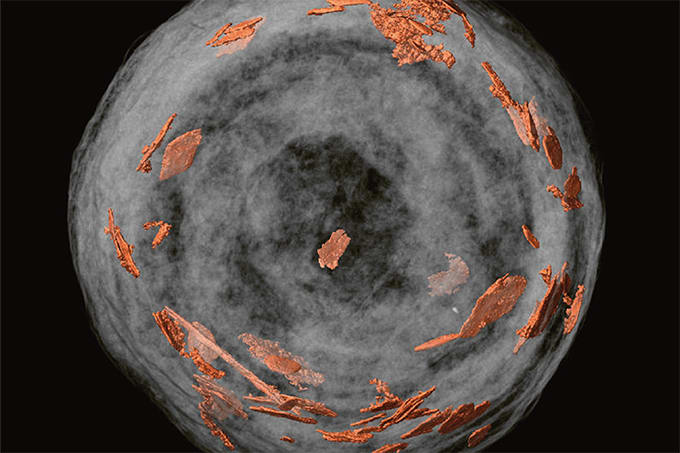
Clinical Report: GC×GC Detective Stories: Biomarkers, Biofuels, and Shape-Shifting Molecules
Background
The identification of biomarkers for inborn errors of metabolism (IEMs) is crucial for early diagnosis and treatment. Traditional analytical methods often struggle with complex biological matrices, making it difficult to detect specific metabolites. The evolution of analytical techniques, particularly GC×GC, offers enhanced resolution and sensitivity, which is essential for accurate biomarker discovery.
Data Highlights
No numerical data or trial results were provided in the source material.
Key Findings
- GC×GC-TOFMS successfully identified crotonylglycine as a novel urinary biomarker for HMGCS2 deficiency.
- The biomarker was previously undetectable using one-dimensional GC-MS due to coelution with adipic acid.
- Inborn errors of metabolism often result in the accumulation of metabolites that can be detected in urine.
- GC-MS remains the reference technique for urinary organic acid analysis due to its ability to handle small, diverse organic acids.
- LC-MS/MS is also used in metabolic laboratories, but it has limitations compared to GC-MS.
Clinical Implications
The use of GC×GC can significantly improve the detection of specific biomarkers in newborn screening, potentially leading to earlier diagnosis of metabolic disorders. This advancement underscores the importance of utilizing advanced analytical techniques in clinical laboratories to enhance diagnostic accuracy.
Conclusion
The application of GC×GC in identifying hidden biomarkers represents a significant advancement in the field of metabolic disorder diagnostics. This technique provides a valuable tool for researchers and clinicians in the ongoing effort to improve newborn screening outcomes.
Related Resources & Content
- Marriott P, Webster R, Kouremenos K, The Analytical Scientist, 2026 -- GC×GC Detective Stories: Biomarkers, Biofuels, and Shape-Shifting Molecules
- the analytical scientist — GCxGC Detective Stories: Follow Your Nose
- the analytical scientist — GCxGC Detective Stories: The Smell of Adventure
- the analytical scientist — GCxGC Detective Stories: Not Just a Pretty Face
- Recommended Uniform Screening Panel | Newborn Screening
- Classic Isovaleric Acidemia - GeneReviews® - NCBI Bookshelf
- Evidence Regarding Duchenne Muscular Dystrophy Newborn Screening | Pediatrics | American Academy of Pediatrics
This content is an AI-generated, fully rewritten summary based on a published scholarly article. It does not reproduce the original text and is not a substitute for the original publication. Readers are encouraged to consult the source for full context, data, and methodology.
Newsletters
Receive the latest analytical science news, personalities, education, and career development – weekly to your inbox.
About the Author(s)
James Strachan
Over the course of my Biomedical Sciences degree it dawned on me that my goal of becoming a scientist didn’t quite mesh with my lack of affinity for lab work. Thinking on my decision to pursue biology rather than English at age 15 – despite an aptitude for the latter – I realized that science writing was a way to combine what I loved with what I was good at. From there I set out to gather as much freelancing experience as I could, spending 2 years developing scientific content for International Innovation, before completing an MSc in Science Communication. After gaining invaluable experience in supporting the communications efforts of CERN and IN-PART, I joined Texere – where I am focused on producing consistently engaging, cutting-edge and innovative content for our specialist audiences around the world.
Frank van Geel
Frank van Geel is owner of educational website Chromedia and Scientific Director of The Analytical Scientist. He studied analytical chemistry, specialized in mass spectrometry in the Netherlands and did several years of post-doc work in spectroscopy with Jim Winefordner at the University of Florida in the US. Then he became a science teacher and later publisher in chemistry and physics related topics. He developed numerous publications in chemistry and other sciences. He strongly supports the mission: Building online communities is the road to take. We need to strengthen the quality of analytical chemistry and we need to strengthen our community by sharing know-how and by sharing our opinions, visions and our views of the future of analytical science.