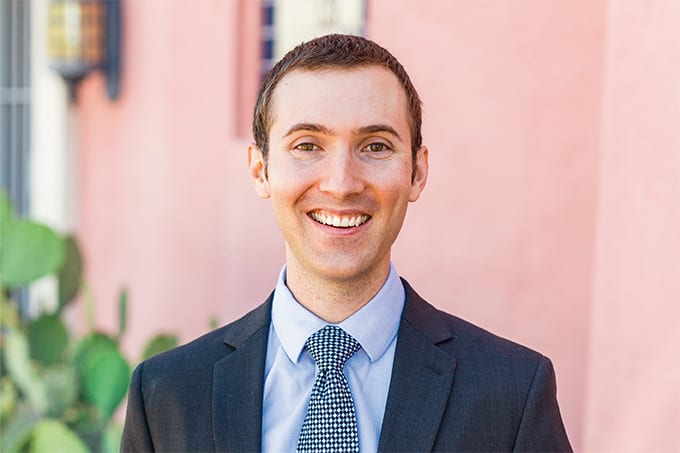
Clinical Report: The Coffee Break: With James Grinias
Overview
This report highlights the evolving trends in interdisciplinary research and the role of AI in analytical chemistry as discussed by Professor James Grinias. Key themes include the integration of various chemistry disciplines and the importance of fundamental knowledge amidst increasing automation.
Background
The integration of interdisciplinary research is becoming crucial in fields such as pharmaceutical development and biomedical devices. As conferences adapt to lower attendance and rising costs, the collaboration between analytical, biological, and synthetic chemists is essential for innovation. Understanding the implications of AI and automation in analytical chemistry is vital for future practitioners.
Data Highlights
No numerical or trial data was provided in the source material.
Key Findings
- Interdisciplinary collaboration is increasingly emphasized at scientific meetings.
- Key themes in research include pharmaceutical development, biomedical devices, and energy.
- AI and automation are changing the landscape of analytical chemistry, but fundamental knowledge remains critical.
- There is a debate on the reliance on AI tools versus understanding core scientific principles.
- Automation may lead to more integrated laboratory systems, but cost remains a barrier to widespread adoption.
Clinical Implications
Healthcare professionals should encourage students to maintain a strong foundation in scientific principles while integrating new technologies. Understanding the fundamentals will enhance troubleshooting skills and critical assessment of AI-generated information.
Conclusion
The conversation around interdisciplinary research and the role of AI in analytical chemistry underscores the need for a balanced approach to education and practice in the field.
Related Resources & Content
- Eyecare Business, Eyecare Business, 2019 -- The Consumer Connection
- Eyecare Business, Eyecare Business, 2012 -- Last Word
- The New Gastroenterologist, The New Gastroenterologist, 2025 -- A Colorado Gastroenterologist Shares Insights on the Dynamic Nature of Private Practice
- AAIC, AAIC, 2025 -- New Clinical Practice Guideline for Blood-Based Biomarkers
- Natera, Inc., Natera, Inc., 2025 -- NCCN Strengthens Guidance on ctDNA in Colon Cancer, Rectal Cancer, and Merkel Cell Carcinoma
- The New Gastroenterologist — Guidance for Starting Your First Position in Medicine
- New Clinical Practice Guideline for Blood-Based Biomarkers | AAIC
- Natera, Inc. | NCCN Strengthens Guidance on ctDNA in Colon Cancer, Rectal Cancer, and Merkel Cell Carcinoma
- Biomarker testing for lysosomal diseases: A technical standard of the American College of Medical Genetics and Genomics (ACMG) - PubMed
This content is an AI-generated, fully rewritten summary based on a published scholarly article. It does not reproduce the original text and is not a substitute for the original publication. Readers are encouraged to consult the source for full context, data, and methodology.
Newsletters
Receive the latest analytical science news, personalities, education, and career development – weekly to your inbox.

About the Author(s)
James Strachan
Over the course of my Biomedical Sciences degree it dawned on me that my goal of becoming a scientist didn’t quite mesh with my lack of affinity for lab work. Thinking on my decision to pursue biology rather than English at age 15 – despite an aptitude for the latter – I realized that science writing was a way to combine what I loved with what I was good at. From there I set out to gather as much freelancing experience as I could, spending 2 years developing scientific content for International Innovation, before completing an MSc in Science Communication. After gaining invaluable experience in supporting the communications efforts of CERN and IN-PART, I joined Texere – where I am focused on producing consistently engaging, cutting-edge and innovative content for our specialist audiences around the world.